
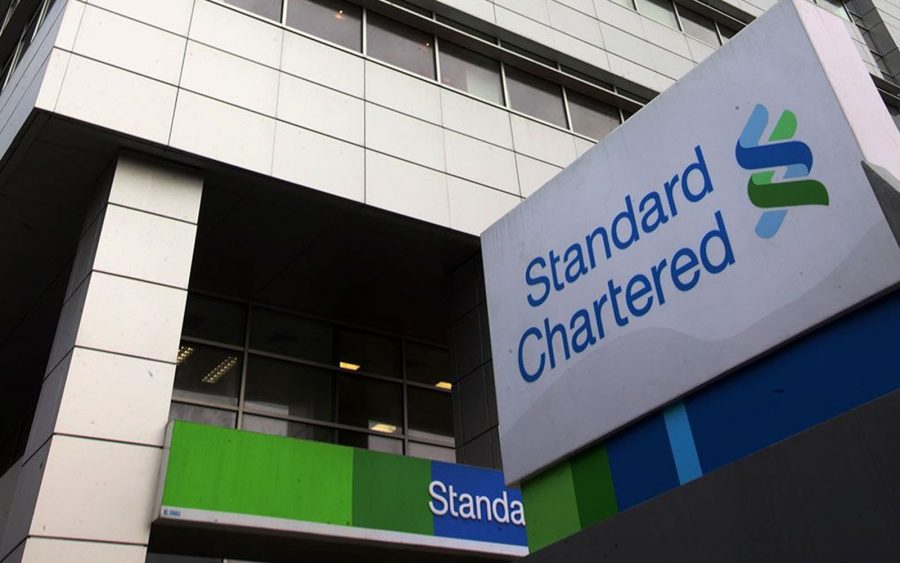
Standard Chartered PLC: The British Bank Powering the World’s Fastest-Growing Economies
Standard Chartered PLC: The British Bank Powering the World’s Fastest-Growing Economies
Introduction: A Global Bank with an Unconventional Center of Gravity
Standard Chartered PLC is one of the world’s most distinctive multinational banks. Headquartered in the United Kingdom yet earning nearly 90% of its profits from Asia, Africa, and the Middle East, the bank defies traditional Western banking models. Rather than competing in saturated domestic retail markets, Standard Chartered has built its strength around emerging economies, global trade, and cross-border financial flows.
This review explores how Standard Chartered’s strategy positions it as a critical enabler of global commerce and development.
1. A British Bank Built for Emerging Markets
Unlike many UK-based banks, Standard Chartered does not operate retail banking services in the UK. Instead, it focuses on regions experiencing demographic growth, industrial expansion, and rising trade volumes.
With deep historical roots across Asia and Africa, the bank has transformed legacy presence into strategic advantage—embedding itself in local economies while maintaining global standards of governance and compliance.
Key Insight:
Standard Chartered’s growth narrative mirrors the shift of economic power from the West to emerging markets.
2. Powering Global Trade and Capital Flows
At the heart of Standard Chartered’s business is transaction banking, trade finance, and cross-border treasury services. The bank plays a pivotal role in:
-
Facilitating international trade between Asia, Africa, and the Middle East
-
Supporting multinational corporations operating in frontier and growth markets
-
Providing liquidity and risk-management solutions for global supply chains
In a world of increasing trade complexity, Standard Chartered positions itself as a connector bank—linking capital, currencies, and commerce across continents.
3. Wealth Management and Corporate Banking in Growth Economies
Standard Chartered has expanded its wealth management and private banking services to serve high-net-worth individuals and fast-growing enterprises in emerging markets. This strategy allows the bank to capture value from:
-
Rising middle classes
-
Family-owned conglomerates
-
Cross-border investors seeking exposure to high-growth regions
The bank’s corporate and investment banking arm further strengthens its footprint in infrastructure, energy, and large-scale development projects.
4. Digital Banking Across Diverse Markets
Operating across multiple jurisdictions requires advanced digital capabilities. Standard Chartered has invested heavily in:
-
Digital banking platforms
-
Data-driven risk management
-
Fintech partnerships and innovation hubs
These investments allow the bank to scale efficiently while navigating regulatory diversity—an advantage few global banks can match.
5. Sustainability, ESG, and Transition Finance
Standard Chartered has positioned itself as a leader in sustainable and transition finance, particularly in emerging economies where climate action and development must go hand in hand.
The bank supports:
-
Renewable energy and green infrastructure
-
Sustainable trade finance
-
ESG-aligned corporate lending
This approach aligns profitability with long-term societal impact, reinforcing its relevance in a climate-conscious global economy.
6. Managing Risk in a Volatile World
Operating in emerging markets brings exposure to geopolitical shifts, currency fluctuations, and regulatory changes. Standard Chartered’s resilience lies in:
-
Strong capital discipline
-
Robust compliance frameworks
-
Geographic diversification
Rather than avoiding complexity, the bank has learned to price, manage, and navigate risk as a core competency.
Conclusion: A Blueprint for the Future of Global Banking
Standard Chartered PLC represents a new banking archetype—global, emerging-market-focused, digitally enabled, and sustainability-driven. Its success highlights where the future of banking growth truly lies: not in saturated Western markets, but in the interconnected economies of Asia, Africa, and the Middle East.
For institutions seeking relevance in a shifting global order, Standard Chartered offers a compelling case study.










Leave a Reply