

JETSTAR: CAN LOW FARES AND STRONG PROFITABILITY COEXIST?
JETSTAR: THE BUSINESS OF AFFORDABLE FLYING
How Qantas Built a Profitable Low-Cost Challenger
A Strategic Business Review by H.G.&W Consulting
Executive Summary
Jetstar Airways is one of Australia’s most recognisable low-cost airlines. Established by Qantas Group in 2003 and commencing Australian domestic operations in May 2004, the airline was created in response to the competitive threat posed by Virgin Blue. Its mission was straightforward: provide affordable air travel while allowing Qantas to compete more effectively for price-sensitive passengers.
More than two decades later, Jetstar represents an important example of how an established company can respond to disruption by building a separate business with a different operating model, customer proposition and cost structure.
The strategy has delivered substantial commercial results. In the financial year ending 30 June 2026, the consolidated Jetstar Group reported approximately A$6.02 billion in revenue and A$723 million in underlying earnings before interest and tax (EBIT). Its operating margin was 12%, while its seat factor—the proportion of available seats occupied—reached 89.1%. Revenue increased by approximately 5.4% from the previous financial year, although underlying EBIT declined by about 6%.
These results illustrate both the strengths and challenges of the low-cost model. Strong leisure demand, high aircraft utilisation, ancillary revenue and fleet renewal can support profitability. However, rising fuel prices, airport charges, supplier costs and customer-service expectations can reduce margins.
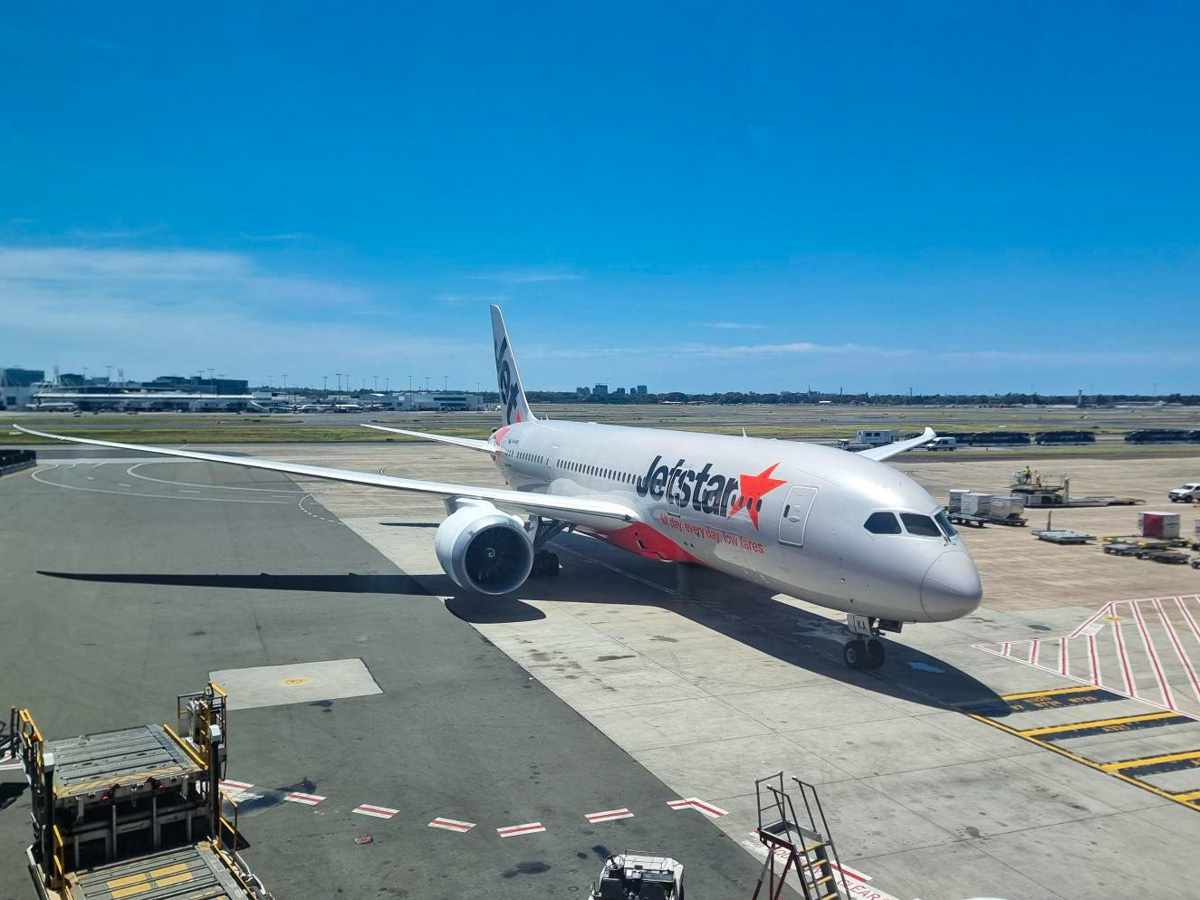
Jetstar is also adapting its strategy. Its aircraft renewal programme is supporting capacity growth, while the refurbishment of its Boeing 787 fleet is intended to improve the international customer experience. In October 2026, Jetstar also began operating from Western Sydney International Airport, opening another opportunity for domestic network development.
Yet strategic decisions involving its wider branded airline portfolio show that international expansion is not always successful. Jetstar Asia ceased operations in July 2025, and Qantas subsequently announced plans to divest its interest in Jetstar Japan. These developments highlight the importance of evaluating each market on its own economics rather than assuming that a successful brand can be replicated everywhere.
The central question is whether Jetstar can preserve its low-fare advantage while maintaining profitability, improving reliability and earning customer loyalty.
1. Company Overview: A Challenger Within an Established Airline Group
Jetstar Airways Pty Ltd is a wholly owned subsidiary of Qantas Group, headquartered in Melbourne, Victoria. It forms part of Qantas’s two-brand strategy, which separates the premium, full-service proposition of Qantas from Jetstar’s value-focused offering.
The airline launched Australian domestic operations in May 2004. Its network subsequently expanded into New Zealand, international leisure destinations and longer-haul services.
According to Jetstar’s corporate profile, the Australian and New Zealand-based Jetstar Airways operation has a fleet of 76 aircraft. It serves domestic destinations and international markets across the Asia-Pacific region. The company’s official profile identifies it as Australia’s third-largest airline by domestic market share.
Jetstar’s operating model centres on providing competitive base fares while allowing customers to pay for selected extras. Depending on the fare and route, these can include checked baggage, seat selection, food and beverages, and other optional services.
This structure differs from a traditional full-service model in which more services may be included in the ticket price.
Jetstar’s commercial proposition is therefore built on three connected elements:
- Low-cost operations: Controlling costs to maintain competitive fares.
- Revenue flexibility: Generating additional income from optional products and services.
- Group support: Benefiting from Qantas’s broader resources, purchasing scale, distribution and customer ecosystem.
The model allows Jetstar to target passengers who prioritise price while enabling Qantas Group to serve a broader range of travel needs.
However, the relationship between the two brands requires careful management. Jetstar must remain sufficiently distinct to attract value-focused customers without unnecessarily undermining the premium positioning of Qantas.
2. The Strategic Origins: Responding to Competitive Disruption
Jetstar’s establishment illustrates an important principle of competitive strategy: an established company may need to develop a different business model to respond to a disruptive competitor.
In the early 2000s, the growth of Virgin Blue increased competition in Australia’s domestic aviation market. Its low-fare positioning challenged established airline pricing and attracted customers who were more sensitive to ticket prices than to traditional full-service benefits.
Qantas faced a strategic choice. It could respond by reducing fares across its existing operation, potentially weakening the economics of its premium proposition, or establish a separate low-cost airline with a structure designed for price competition.
The Jetstar strategy allowed Qantas to pursue the second option.
By creating a distinct brand, Qantas could target a different customer segment, offer lower headline fares and compete more directly in leisure travel without requiring its principal brand to adopt the same operating model.
This approach reflects a wider business concept: strategic separation can allow one corporate group to compete through different value propositions.
Similar approaches appear in banking, retail, hospitality and telecommunications, where companies use separate brands or business units to serve customers with different expectations and willingness to pay.
However, the strategy works only when the separate business has genuine operating advantages. A new logo and cheaper ticket are not enough. The business needs cost structures, service processes, distribution systems and performance measures aligned with its market.
Jetstar’s long-term significance lies in how it has helped Qantas compete across different segments of the aviation market.
3. Financial Performance: Strong Revenue, but Margins Under Pressure
Jetstar’s FY2026 results demonstrate the financial potential of a large low-cost airline, while also revealing the pressure of operating in a capital-intensive industry.
Selected Jetstar Group indicators
| Financial indicator | FY2025 | FY2026 |
|---|---|---|
| Revenue | A$5.711bn | A$6.022bn |
| Underlying EBIT | A$769m | A$723m |
| Operating margin | 13.5% | 12.0% |
| Seat factor | 88.3% | 89.1% |
| Available seat kilometres | 57.754bn | 57.736bn |
Source: Qantas Group’s FY2026 annual report. Figures refer to the consolidated Jetstar Group, not solely Jetstar Airways Pty Ltd. The group reporting perimeter includes consolidated Jetstar operations and should not be confused with the Australian airline’s standalone financial statements.
Revenue grew by approximately 5.4%, but underlying EBIT fell by approximately 6%. The operating margin consequently declined by 1.5 percentage points.
This divergence is important. It shows that higher revenue does not automatically translate into higher profit.
The airline’s performance was supported by strong demand among price-sensitive leisure travellers, new aircraft, operational improvements and the growth of ancillary revenue. At the same time, higher fuel costs, airport and industry charges, inflationary pressures and fleet-transition expenses affected the cost base.
The seat factor rose to 89.1%, indicating that a high proportion of available seats were occupied. High seat occupancy helps spread fixed costs across more passengers, but airlines must still consider the revenue earned per passenger and the cost of carrying each additional traveller.
A flight can be full and still underperform financially if fares are too low or operating costs are too high.
For Jetstar, the essential measures include:
- Revenue per available seat kilometre.
- Cost per available seat kilometre.
- Average fare and ancillary revenue per passenger.
- Aircraft utilisation and turnaround time.
- Fuel consumption and fuel costs.
- On-time performance and cancellation costs.
- Route-level profitability.
The financial lesson is clear: occupancy creates opportunity, but disciplined yield and cost management determine profitability.
4. The Low-Cost Model: Affordable Fares, Optional Extras and Customer Perception
Jetstar’s low-fare model is designed to make the headline ticket price attractive while allowing customers to choose which additional services they need.
A passenger travelling with a small bag may pay less than someone requiring checked luggage, a particular seat and additional onboard services. This allows the airline to serve customers with different preferences without building every service into every fare.
Ancillary revenue is therefore a fundamental part of the low-cost airline business model.
These revenues can help offset fuel, aircraft, airport and other operating expenses. They also allow the airline to earn more from customers who value additional convenience.
However, the model creates a commercial tension between low advertised fares and the total price customers ultimately pay.
In August 2026, Reuters reported that Jetstar planned to introduce charges from February 2027 for passengers wanting to place larger carry-on bags in overhead lockers. One small under-seat item would remain free, while the larger carry-on option was expected to cost approximately A$25–A$52 per flight depending on the route. Jetstar said the change would help reduce gate baggage checks and competition for overhead space, supporting smoother boarding and on-time performance. The policy also attracted criticism from some travellers and consumer representatives over the potential gap between advertised fares and the total cost of travel.
This is a revealing strategic case.
From the airline’s perspective, pricing baggage separately can help allocate costs, manage cabin space and encourage customers to select the services they need.
From the customer’s perspective, the same policy can feel like a price increase if a previously expected service becomes chargeable.
The commercial outcome depends on how transparently the airline communicates the fare structure and whether customers perceive the total price as fair.
Jetstar must therefore manage ancillary revenue as a customer-experience issue as well as a financial one.
Clear disclosures, easy-to-understand fare bundles and predictable charges can protect trust while preserving the benefits of a flexible pricing model.
5. Fleet Renewal: Technology as an Economic Advantage
Aircraft are among an airline’s largest operating and capital commitments. Fleet decisions affect fuel consumption, maintenance requirements, capacity, reliability, customer comfort and the routes an airline can serve.
Jetstar has been renewing its fleet with more efficient aircraft, including Airbus A321LRs and A320neo-family aircraft.
The FY2026 results indicated that Jetstar Australia’s new narrowbody fleet had grown to 25 A321LRs and five A320neo aircraft by 30 June 2026. These aircraft represented approximately 47% of the relevant narrowbody capacity reported for the Jetstar Group, excluding Jetstar Asia and Jetstar Japan.
New-generation aircraft can offer several advantages.
First, improved fuel efficiency can lower operating costs per seat, particularly when the aircraft is used effectively. Second, newer aircraft may require less maintenance than ageing equipment, although actual outcomes depend on utilisation, maintenance programmes and technical performance. Third, additional capacity can allow the airline to introduce new routes or increase frequencies on existing services.
Jetstar’s A321LR fleet can also support longer or thinner routes that may not be well suited to larger aircraft.
However, fleet renewal requires significant capital and introduces transition costs. New aircraft must be integrated into crew training, maintenance systems, airport operations and scheduling. Deliveries may also be affected by manufacturer delays and supply-chain constraints.
The commercial case therefore depends on lifecycle economics rather than the aircraft purchase alone.
Jetstar needs to measure whether the new fleet delivers lower costs per seat, improved reliability, stronger passenger demand and acceptable returns on the investment.
6. Customer Experience and Operational Reliability
Low fares are a powerful acquisition tool, but they are not the only determinant of customer loyalty.
Passengers also care about whether flights depart on time, cancellations are managed effectively, baggage arrives as expected and customer support is available when problems arise.
For an airline operating at scale, small operational weaknesses can become expensive. A delay may disrupt aircraft rotations, increase crew costs and affect later services. A cancellation can generate rebooking costs, customer dissatisfaction and reputational damage.
Operational reliability is therefore both a service-quality issue and a financial-performance measure.
Qantas Group reported improvements in operational performance and customer satisfaction during FY2026, including a higher Jetstar Net Promoter Score compared with FY2025. The group attributed its broader progress to operational improvements, fleet renewal and investment in customer experience.
Jetstar’s challenge is to ensure that its low-cost structure does not compromise the basic service expectations that customers reasonably hold.
This requires investment in engineering support, crew planning, disruption management, digital communication and accurate operational data.
The airline should also recognise that customers evaluate service quality relative to the price they paid. A value-focused passenger may accept fewer onboard inclusions, but may be less forgiving when an unexpected disruption is handled poorly.
The objective is not to replicate every feature of a premium airline. It is to deliver a dependable experience consistent with Jetstar’s promise of affordable travel.
7. International Expansion: Growth Requires Selective Investment
Jetstar has expanded beyond its original Australian domestic market into New Zealand and numerous international destinations.
International services create opportunities to attract inbound tourism, connect Australians with leisure destinations and increase aircraft utilisation. They can also diversify revenue across routes and markets.
Yet international expansion introduces additional complexity.
Airlines must assess route demand, airport costs, competition, fuel requirements, aircraft range, foreign-exchange exposure and regulatory restrictions. A route that appears attractive during a period of strong leisure demand may become less profitable if costs rise or customer preferences change.
The experience of Jetstar’s wider branded airline portfolio demonstrates this risk.
Jetstar Asia, based in Singapore, ceased operations on 31 July 2025. Qantas subsequently announced plans to sell its 33.32% interest in Jetstar Japan, with the proposed transaction subject to regulatory approvals and completion requirements. The decisions reflected a strategic move to concentrate resources on core operations in Australia and New Zealand and support fleet renewal.
These developments concern the wider Jetstar-branded airline portfolio and should not be confused with the performance of Jetstar Airways itself.
Nevertheless, they provide a useful strategic lesson: a brand’s international reach does not guarantee that every overseas operation will be commercially sustainable.
Each market must be assessed on its own demand, cost structure, ownership arrangements, competitive position and long-term investment requirements.
Jetstar’s future international strategy should prioritise routes where the company can achieve durable demand, competitive costs and operational advantages.
8. Western Sydney International Airport: A New Network Opportunity
Jetstar’s entry into Western Sydney International Airport represents an important development in its domestic network strategy.
The airport, also known as Nancy-Bird Walton Airport, commenced passenger operations on 25 October 2026. Qantas Group announced that Jetstar would be among the airlines serving the airport from its opening, with planned services connecting Western Sydney to Melbourne, the Gold Coast and Brisbane.
The opportunity is not simply about adding another airport to the network.
Western Sydney is a substantial population and economic region. A new airport can create alternative travel options, reduce the need for some passengers to travel across metropolitan Sydney to reach existing terminals and support regional tourism and business activity.
For Jetstar, the commercial question is whether the airport can support attractive route economics and generate demand that would otherwise be difficult to capture.
A new operating base also creates costs. Jetstar must coordinate aircraft, staff, ground handling, maintenance support and airport processes while ensuring that new routes fit its broader network.
The airline will need to assess passenger demand, schedule convenience, competitive fares and aircraft utilisation as the airport’s operations develop.
If successful, the expansion could strengthen Jetstar’s position in Australia’s domestic leisure market. Its performance should be measured through sustainable route profitability and customer demand, rather than the number of new routes alone.
9. Sustainability: Efficiency and Emissions in a Low-Cost Model
Aviation faces increasing pressure to reduce emissions while maintaining affordability and connectivity.
Jetstar’s fleet-renewal programme can contribute to improved fuel efficiency per seat, particularly when newer aircraft replace less efficient equipment and achieve high utilisation.
However, greater efficiency per passenger does not automatically mean that total emissions will fall. If the airline significantly expands capacity, overall fuel consumption and emissions may remain elevated or increase even when individual flights become more efficient.
A meaningful sustainability strategy therefore needs to consider both operational efficiency and the total scale of activity.
Relevant measures include:
- Fuel consumption per passenger and per available seat kilometre.
- Fleet age and aircraft utilisation.
- Emissions intensity across domestic and international operations.
- Waste management and onboard resource use.
- Operational practices that reduce unnecessary fuel burn.
- Credible progress against group-level climate commitments.
The airline must also account for the economic realities of the sector. Sustainable aviation fuel and other lower-emission technologies can help reduce lifecycle emissions, but supply, pricing and availability remain important challenges.
For Jetstar, the practical approach is to integrate environmental performance into fleet investment and operational decisions rather than treating sustainability as a separate communications initiative.
10. Principal Risks and Challenges
Jetstar’s business model is commercially attractive, but several risks require continuing attention.
Fuel-price volatility: Fuel is a major airline operating expense. Sharp increases can reduce margins when fare increases cannot fully offset the additional cost.
Airport and supplier costs: Airport charges, maintenance expenses and supplier pricing can rise faster than the airline can improve productivity.
Customer trust and ancillary fees: Optional charges support revenue, but unclear pricing can create frustration and damage the perception of value.
Operational disruption: Aircraft maintenance issues, crew shortages, weather events and airport congestion can increase costs and weaken customer satisfaction.
Fleet-transition risk: New aircraft can improve efficiency, but acquisition costs, delivery delays and transition expenses can affect financial performance.
Competitive pressure: Other low-cost carriers and full-service airlines may respond with aggressive fares, additional capacity or improved customer offerings.
International portfolio risk: Overseas operations may struggle when local costs, market conditions or competitive dynamics differ from those of the core business.
Environmental pressure: Emissions expectations, sustainable aviation fuel availability and climate-related regulation may create additional investment requirements.
Managing these risks requires disciplined planning, reliable operational data, flexible capacity decisions and a willingness to adjust the network when commercial conditions change.
11. Strategic Priorities for the Next Phase
Jetstar can strengthen its position by focusing on seven priorities.
1. Protect the cost advantage. Continue improving aircraft utilisation, fleet efficiency, turnaround times and operating productivity.
2. Maintain transparent pricing. Make the total cost of travel easy to understand, particularly where baggage, seating and other services are charged separately.
3. Improve reliability. Invest in maintenance, operational planning, crew resources and disruption management to protect the customer experience and reduce avoidable costs.
4. Allocate capital selectively. Prioritise aircraft and routes that offer credible long-term returns rather than pursuing growth for its own sake.
5. Develop the new fleet strategically. Use aircraft capabilities to support efficient capacity growth and routes that fit the airline’s operating model.
6. Build customer loyalty. Use customer feedback, service recovery and clear communication to encourage repeat purchases without losing the airline’s value proposition.
7. Measure sustainability alongside profitability. Track emissions intensity, fuel efficiency and fleet performance while maintaining a realistic approach to the economics of aviation.
12. Lessons for Business Leaders
Jetstar’s experience offers several lessons that apply beyond aviation.
Disruption can be answered with a new business model. Qantas responded to a low-cost competitor by creating a distinct operation rather than relying solely on its existing brand.
Low prices require operational discipline. A lower price is sustainable only when the underlying cost structure supports it.
Revenue diversification can strengthen the model. Ancillary services allow businesses to tailor their offerings and capture additional value, but customers must understand what they are paying for.
Growth must be selective. International expansion can create opportunities, but each market needs a clear commercial case.
Technology investments must produce measurable returns. New aircraft and digital systems matter when they improve efficiency, reliability, customer experience or profitability.
Customer trust is part of the business model. Clear pricing and dependable service protect long-term demand.
Financial success requires constant adaptation. Even a profitable operation must respond to changing costs, customer expectations and competitive conditions.
Conclusion: Affordable Flying Is a Strategy, Not Just a Price
Jetstar demonstrates how an established company can use a distinct low-cost business to compete in a market transformed by price-sensitive consumers and disruptive competitors.
Its financial performance, high seat factors and expanding domestic and international networks illustrate the potential of the model. Fleet renewal and operational improvements offer further opportunities to strengthen the business.
However, the pressures are equally clear. Revenue growth does not always translate into higher profit, optional charges can affect customer perceptions, and international expansion can create risks when local economics do not support sustainable returns.
Jetstar’s next phase will depend on its ability to protect the fundamentals of low-cost aviation: efficient operations, competitive fares, productive aircraft, transparent pricing and reliable service.
For Qantas, Jetstar remains a strategic tool for serving a different customer segment and competing across the aviation market. For business leaders, it offers a broader lesson about responding to disruption without abandoning the strengths of an established organisation.
The real achievement is not simply making flying cheaper. It is building a business that can keep flying affordably, reliably and profitably.
Disclaimer: This report is a business research and strategic review based on publicly available information. It is not investment advice. Jetstar Group figures include consolidated operations and should not be interpreted as standalone financial results for Jetstar Airways Pty Ltd.











Leave a Reply