
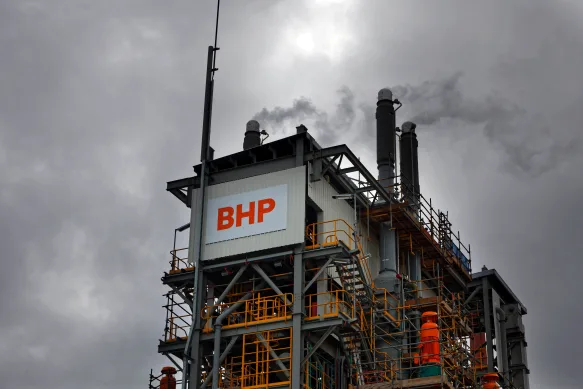
BHP Group: Building a Mining Giant for a Resource-Constrained Future
BHP Group: Building a Mining Giant for a Resource-Constrained Future
Executive Overview
Founded in 1885 as the Broken Hill Proprietary Company, BHP Group Limited has grown into one of the world’s largest mining and metals corporations. Headquartered in Melbourne, Australia, the company plays a critical role in supplying essential resources such as iron ore, copper, and coal to global markets.
With operations spanning multiple continents, BHP sits at the intersection of industrial development, global trade, and the energy transition.
Its story is not just about mining—it is about strategic positioning in a resource-constrained and rapidly evolving world.
1. A Legacy of Scale and Industrial Evolution
BHP’s history reflects the broader trajectory of global industrialization. From its origins in silver and lead mining, the company has continuously evolved to align with shifting demand cycles.
Its longevity highlights:
- Strategic adaptability
- Operational resilience
- Long-term capital planning
For business leaders, BHP demonstrates that sustained relevance requires continuous reinvention aligned with global economic trends.
2. Focused Commodity Strategy
BHP has deliberately streamlined its portfolio to focus on high-value, high-demand commodities:
- Iron ore – critical for infrastructure and construction
- Copper – essential for electrification and renewable energy
- Coal – still relevant for energy and steel production
By concentrating on these core resources, BHP ensures operational efficiency and strategic clarity.
This focus also reduces exposure to less profitable or volatile segments.
3. Positioned for the Energy Transition
As the world shifts toward cleaner energy systems, demand for certain minerals is rising sharply. Copper, in particular, is essential for:
- Electric vehicles
- Renewable energy infrastructure
- Power transmission networks
BHP’s strong copper portfolio positions it as a key enabler of global decarbonization efforts.
At the same time, the company continues to manage its coal operations, reflecting the complex reality of energy transition—where legacy and future energy systems coexist.
4. Capital Discipline and Shareholder Value
Mining is a capital-intensive industry, and BHP has built a reputation for disciplined capital allocation.
Its approach includes:
- Maintaining strong balance sheets
- Returning capital to shareholders
- Investing selectively in high-return projects
This balance between growth and returns provides a model for companies operating in cyclical industries.
5. ESG and the Social License to Operate
Environmental, social, and governance (ESG) considerations are central to modern mining operations. BHP faces increasing expectations to:
- Reduce carbon emissions
- Improve environmental practices
- Engage with local communities
- Ensure transparent governance
The company’s ability to manage these factors directly impacts its long-term viability.
For global businesses, the key lesson is clear: operational success must align with societal and environmental expectations.
6. Geopolitics and Global Supply Chains
BHP operates within a complex global landscape where resource access is increasingly strategic. Its operations influence:
- International trade flows
- Industrial supply chains
- Resource security for nations
As demand for critical minerals rises, mining companies like BHP will play an even more central role in shaping geopolitical dynamics.
HG&W Strategic Conclusion
BHP Group represents a powerful example of how scale, focus, and strategic discipline can sustain leadership in a highly cyclical and capital-intensive industry.
As the world faces increasing demand for critical resources alongside growing sustainability pressures, BHP’s ability to balance these competing forces will define its future.
For business leaders, the company offers a clear lesson: long-term success lies in aligning resource strategy with global economic and environmental shifts.







Leave a Reply