
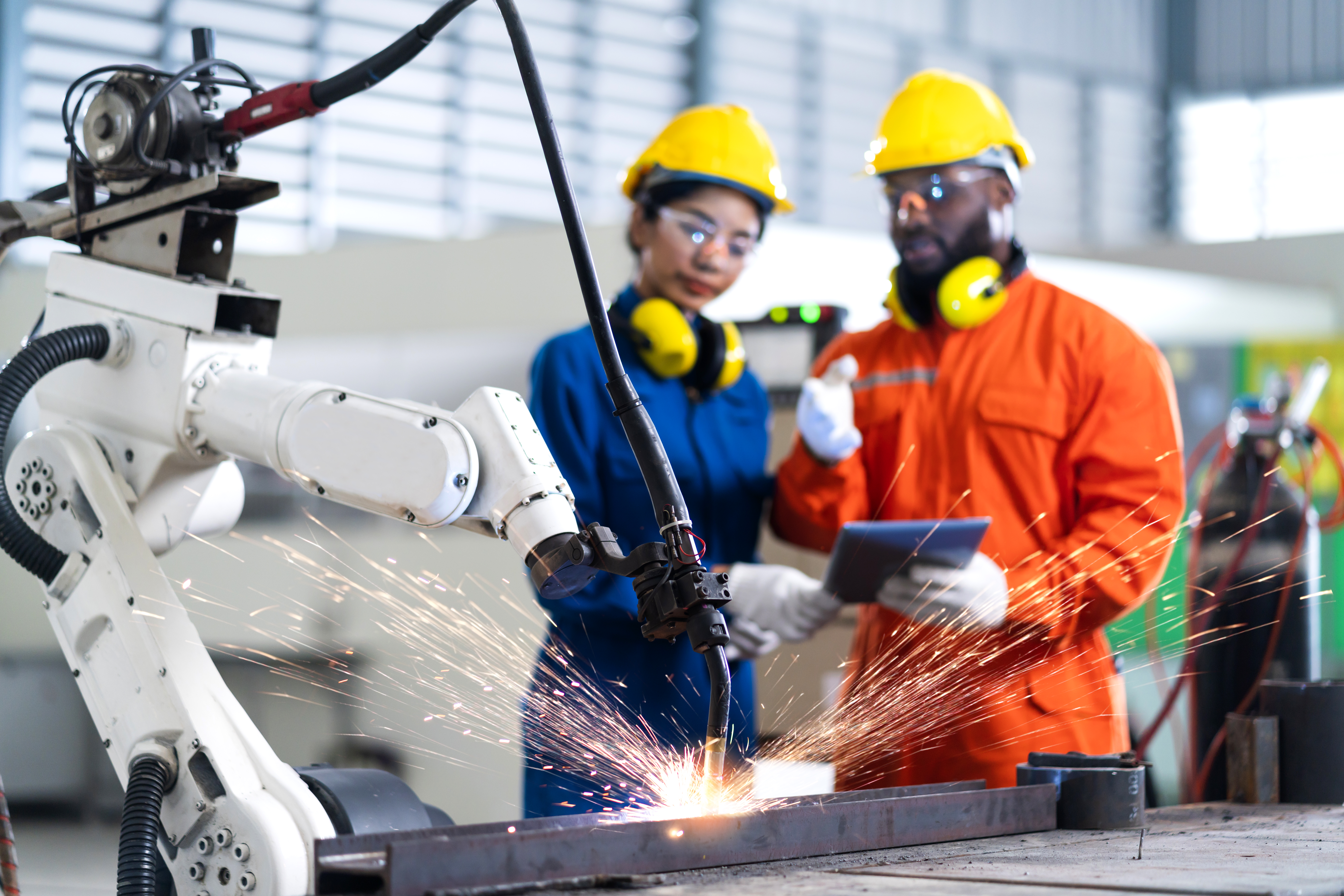
AI-Powered Smart Factories: Driving Productivity, Resilience, and Sustainable Growth at Scale
AI-Powered Smart Factories: Driving Productivity, Resilience, and Sustainable Growth at Scale
By H.G&W – Global Management Consulting
Introduction: Manufacturing at a Strategic Inflection Point
Manufacturing is undergoing one of the most significant transformations in its history. The convergence of Artificial Intelligence (AI), data analytics, robotics, and connected systems is redefining how factories operate, compete, and scale.
What was once a linear, labor-intensive system is evolving into a dynamic, intelligent, and self-optimizing ecosystem—the AI-powered smart factory.
For global organizations, this is not just an operational upgrade. It is a strategic imperative—one that drives productivity, strengthens resilience, and accelerates sustainable growth in an increasingly volatile world.
What Defines an AI-Powered Smart Factory?
A smart factory leverages AI, IoT, and real-time data to enable:
-
Autonomous decision-making
-
Predictive and adaptive operations
-
Seamless integration across production, supply chain, and logistics
-
Continuous optimization of performance
Unlike traditional automation, AI-powered systems learn, adapt, and improve over time, transforming factories into intelligent environments capable of responding to change instantly.
Driving Productivity at Scale
AI is fundamentally reshaping manufacturing productivity—not incrementally, but exponentially.
1. Predictive Maintenance and Zero Downtime
AI-driven predictive maintenance has become a cornerstone of smart factories. By analyzing real-time machine data, AI can detect anomalies and predict failures before they occur.
-
Downtime can be reduced by 30–50%
-
Equipment breakdowns reduced by up to 70–75%
-
Maintenance costs reduced by 25–30%
This shift from reactive to predictive operations ensures continuous production and significant cost savings.
2. Real-Time Production Optimization
AI systems continuously monitor and adjust production parameters based on live data.
-
Production throughput increases by 20–30%
-
Labor productivity improves by up to 40–60%
-
Quality defects reduced by up to 80%
This level of optimization is impossible with manual or static systems.
3. Intelligent Quality Control
Computer vision and machine learning enable real-time inspection and defect detection.
-
AI systems can achieve up to 99% defect detection accuracy
This reduces waste, improves consistency, and enhances customer satisfaction.
Building Resilience in a Volatile World
The COVID-19 pandemic, geopolitical shifts, and supply chain disruptions exposed the fragility of traditional manufacturing systems. AI-powered smart factories are now central to building operational resilience.
1. Adaptive Supply Chains
AI enhances forecasting, inventory management, and supplier coordination.
-
Forecast accuracy improves significantly (up to ~85%)
This reduces stockouts, overproduction, and supply chain shocks.
2. Real-Time Decision-Making
Smart factories use AI dashboards and predictive analytics to make instant operational decisions—enabling rapid responses to disruptions.
3. Workforce Augmentation
AI does not replace workers—it augments them.
-
Routine tasks are automated
-
Human workers focus on strategic, creative, and high-value activities
This improves both efficiency and workforce resilience.
Sustainability at Scale: From Compliance to Competitive Advantage
Sustainability is no longer optional—it is a core business driver. AI-powered smart factories are enabling measurable progress.
1. Energy Optimization
-
Energy consumption reduced by up to 30–45% through intelligent systems
2. Waste Reduction
-
Material waste reduced through predictive quality and process optimization
3. Circular Manufacturing Models
AI enables tracking, reuse, and lifecycle optimization of materials—supporting circular economy strategies.
Sustainability, when powered by AI, becomes not just responsible—but profitable.
From Smart Factories to Autonomous Production Systems
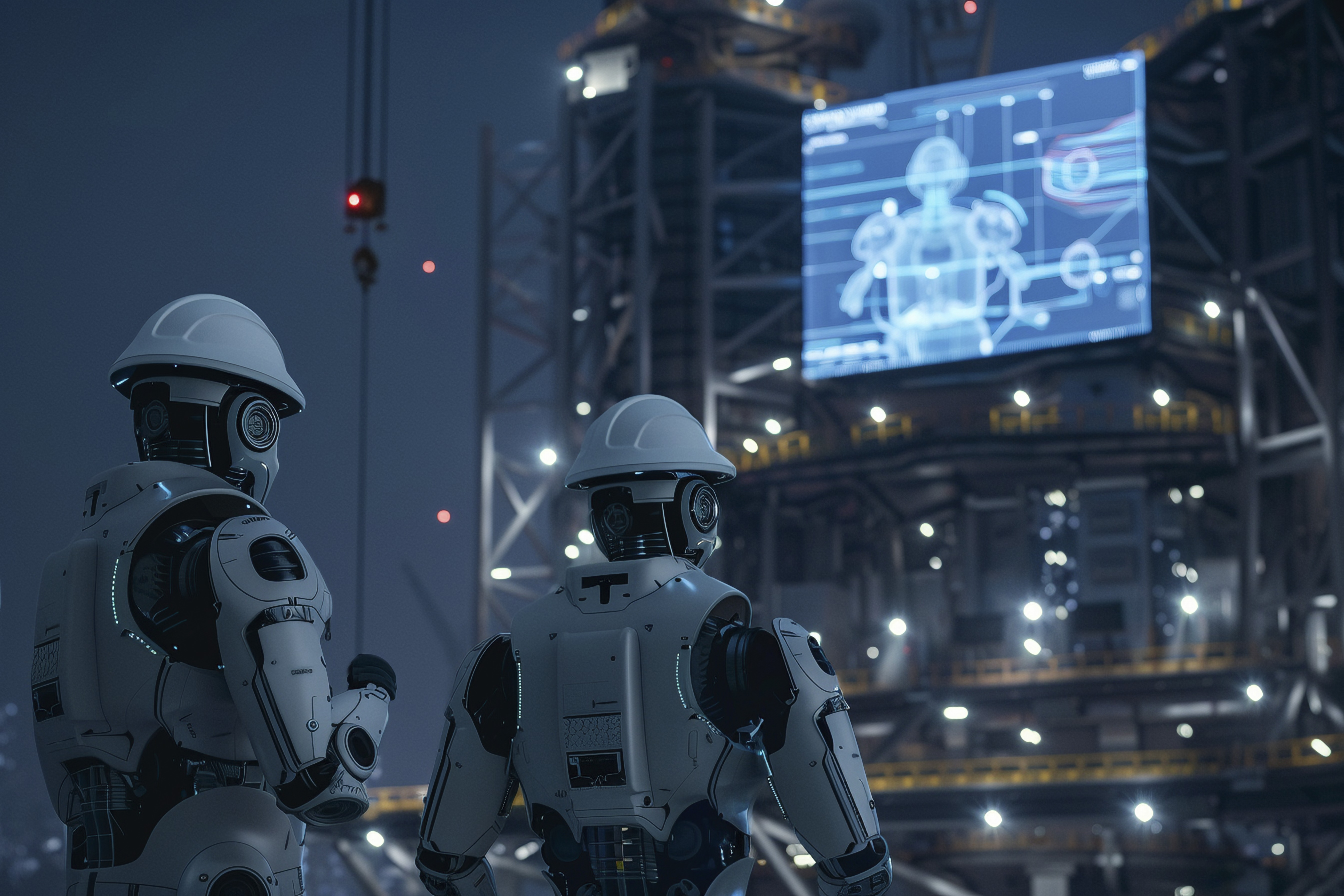
The next phase of manufacturing evolution is already emerging: autonomous factories.
These environments feature:
-
AI-driven robotics
-
Digital twins for simulation and optimization
-
Self-correcting production systems
-
End-to-end data integration
Throughput gains of around 30% are already being observed in autonomous production systems .
Challenges to Scaling AI in Manufacturing
Despite the benefits, scaling AI remains complex.
Key Barriers:
-
Legacy systems and infrastructure
-
Data silos and integration challenges
-
Skills gaps in AI and data science
-
Cybersecurity risks
-
High upfront investment
Notably, over 35% of manufacturers cite workforce adaptation as a major challenge .
Organizations must address these barriers strategically to unlock full value.
Strategic Imperatives for Business Leaders
To successfully scale AI-powered smart factories, organizations must:
1. Build a Unified Data Infrastructure
Integrate IT and operational technology (OT) systems for real-time visibility.
2. Start with High-Impact Use Cases
Focus on predictive maintenance, quality control, and supply chain optimization.
3. Invest in Workforce Transformation
Upskill employees and foster human-AI collaboration.
4. Embed AI into Core Strategy
AI must move from experimentation to enterprise-wide deployment.
5. Align with Sustainability Goals
Use AI to drive both environmental impact and operational efficiency.
Conclusion: The Future of Manufacturing Is Intelligent, Adaptive, and Scalable
AI-powered smart factories are not just improving manufacturing—they are redefining it.
Organizations that embrace this transformation will achieve:
-
Higher productivity
-
Stronger resilience
-
Sustainable growth
-
Competitive advantage at scale
Those that delay risk being outpaced in an increasingly intelligent industrial landscape.
At H.G&W, we believe the future of manufacturing belongs to organizations that integrate AI not as a tool—but as a strategic engine for growth, resilience, and innovation.






Leave a Reply