
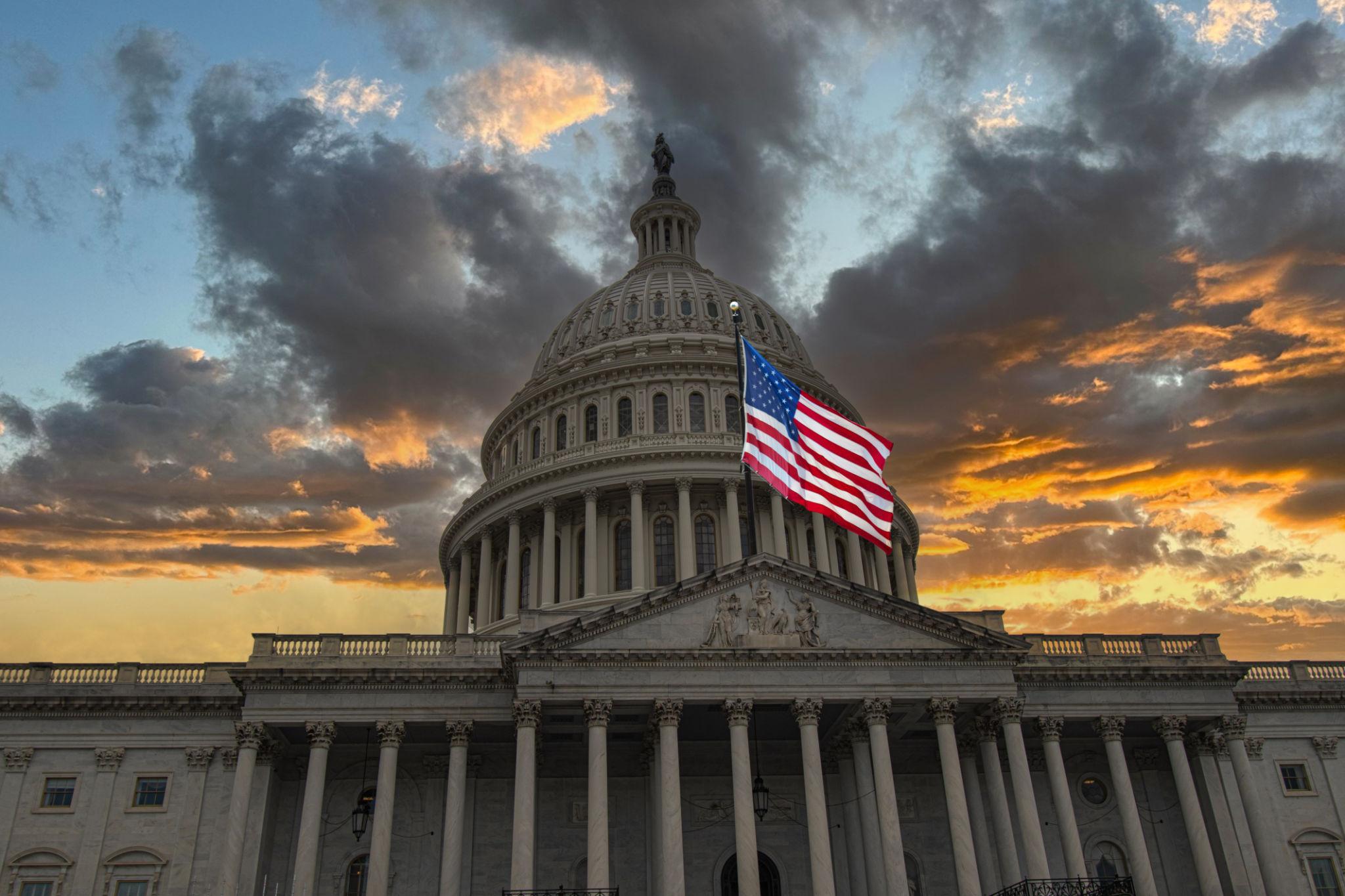
THE US MIDTERM ELECTIONS: WHY THE WORLD’S ECONOMY IS WATCHING WASHINGTON
Impact of US Midterm Elections on the Global Economy
H.G.&W. Research & Thought Leadership
Global Economics | Politics | Financial Markets | International Business
The United States midterm elections are often viewed as a domestic political event. However, their consequences extend far beyond America’s borders. Because the US is the world’s largest economy, a major financial centre, a leading trading partner and an influential participant in global institutions, changes in its political leadership can affect international trade, investment flows, financial markets, energy prices, foreign aid, technology policy and economic confidence.
The 2026 midterm elections, held on November 3, provide a timely opportunity to examine how changes in the balance of political power in Washington could influence the global economic environment. The central issue is not simply which party gains seats in Congress. It is how the election results may shape the government’s ability to legislate, approve spending, oversee the executive branch and respond to economic challenges.
The key takeaway: US midterm elections do not automatically change the direction of the global economy, but they can change the policy environment in which businesses, investors and governments make decisions.
1. Understanding the 2026 US Midterm Elections
The United States holds congressional elections every two years. Midterm elections take place halfway through a presidential term, allowing voters to elect all 435 voting members of the House of Representatives and approximately one-third of the Senate.
Unlike presidential elections, midterms do not determine who occupies the White House. Instead, they determine the political composition of Congress, which has significant constitutional authority over legislation, taxation, federal expenditure, government borrowing and oversight of the executive branch.
The November 3, 2026 elections produced a significant shift in Washington: the Democratic Party won control of both the House of Representatives and the Senate, creating a divided-government arrangement for President Donald Trump’s remaining two years in office. The result gives Democrats greater power to scrutinise the administration, influence government funding negotiations, delay or reject nominations and challenge its legislative priorities.
AP News+2
This outcome does not mean the president loses executive authority. The administration retains considerable power over areas such as trade policy, foreign relations, immigration and executive-branch regulation. However, implementing major legislative changes is likely to become more difficult.
For global businesses and investors, the important question is therefore how the new balance of power will affect policy certainty, economic cooperation and America’s relationships with the rest of the world.
2. Why US Midterm Elections Matter to the Global Economy
The US economy is deeply connected to international markets. Its currency is central to global finance, its government bond market influences international borrowing costs, and its consumers and businesses are major participants in global trade.
Consequently, political developments in Washington can influence economic decisions in countries that have no direct involvement in American elections.
The transmission mechanisms include:
-
Trade and tariffs: Changes in trade policy can affect exporters, importers, manufacturers and international supply chains.
-
Financial markets: Expectations about taxation, spending, regulation and government borrowing influence investor sentiment.
-
Interest rates and the dollar: Fiscal policy, inflation expectations and Federal Reserve leadership can affect global liquidity and currency markets.
-
Energy and commodities: American energy policy and geopolitical decisions can influence oil, gas and other commodity markets.
-
Technology and innovation: US policy on artificial intelligence, semiconductors and digital infrastructure affects international investment and competition.
-
Foreign policy and security: Decisions about sanctions, military assistance and international partnerships can alter trade routes, investment confidence and commodity prices.
The election is therefore best understood as a potential catalyst for changes in the global economic environment, rather than an isolated political event.
3. The Impact on Global Financial Markets and Investor Confidence
Financial markets respond not only to policies that have already been implemented but also to expectations about what governments might do next.
The Democratic takeover of both congressional chambers introduces a more challenging legislative environment for the Trump administration. Major policy proposals will face greater scrutiny, while negotiations over government funding, debt limits and other essential legislation may become more politically contentious.
Market volatility and investment decisions
Investors may respond to uncertainty by reassessing their exposure to US equities, government bonds, currencies and other financial assets. Companies may also reconsider the timing of major investments where future tax, regulatory or government-spending decisions remain unclear.
However, political gridlock does not automatically produce falling markets. In some circumstances, investors may welcome a divided government because it reduces the likelihood of rapid legislative changes. JPMorgan’s November 6 analysis noted that US equities have historically gained more than 13% on average in the year following midterm elections, although historical performance does not guarantee future returns.
JPMorgan+1
The broader economic environment will remain important. Corporate earnings, inflation, interest rates, consumer demand, geopolitical developments and the financial strength of major companies may exert more influence on markets than the election outcome itself.
International investment implications
A more unpredictable policy environment could encourage multinational companies to delay investment decisions, diversify their geographic exposure or reconsider the risks associated with US operations.
Emerging markets may also experience indirect effects. If global investors become more cautious, capital could move towards assets perceived as safer, potentially increasing financing pressure on countries that depend heavily on foreign investment.
Nevertheless, a more predictable regulatory environment or reduced risk of abrupt policy changes could have the opposite effect and improve confidence.
The critical variable is not simply which party controls Congress, but whether the resulting political environment produces greater policy stability or prolonged uncertainty.
4. The US Dollar, Interest Rates and Global Borrowing Costs
The US dollar occupies a central position in the international financial system. It is widely used in global trade, international borrowing, foreign-exchange reserves and commodity transactions.
As a result, changes in American economic expectations can influence currencies and borrowing conditions around the world.
The dollar’s international influence
The dollar may strengthen when investors seek relatively safe and liquid assets, particularly during periods of uncertainty. It may weaken when concerns about fiscal sustainability, political instability or declining confidence in US economic institutions become more pronounced.
The 2026 midterm outcome introduces competing possibilities. Political disagreements could raise concerns about fiscal negotiations and institutional uncertainty. Alternatively, congressional scrutiny could create expectations of greater restraint in certain areas of government spending.
Neither outcome guarantees a particular direction for the dollar.
For countries whose currencies are already under pressure, changes in the dollar’s value can have significant consequences. A stronger dollar generally makes dollar-denominated imports and debt servicing more expensive for borrowers whose revenues are earned in local currencies.
Federal Reserve independence and interest rates
The Federal Reserve is responsible for conducting US monetary policy. Its decisions influence borrowing costs, inflation expectations and financial conditions globally.
Although Congress does not set interest rates directly, the Senate has an important role in confirming presidential nominees to the Federal Reserve Board. The new Democratic Senate majority could therefore influence the confirmation process and the political debate surrounding the central bank.
Investors will watch whether the political environment affects perceptions of Federal Reserve independence. A central bank viewed as capable of making decisions based on economic evidence is important to confidence in the dollar and US financial markets.
For emerging economies, changes in US interest rates can influence capital flows, exchange rates and the cost of international borrowing. Higher US rates can make dollar assets more attractive and increase pressure on developing economies to retain foreign investment.
5. Trade Policy, Tariffs and Global Supply Chains
Trade policy is one of the most direct channels through which American politics affects the global economy.
The Trump administration has made tariffs and the renegotiation of trade relationships important parts of its economic strategy. These measures have implications for manufacturers, exporters, importers and countries integrated into US supply chains.
The new congressional balance may create additional political and institutional resistance to some aspects of the administration’s trade agenda. However, Congress’s change in composition does not automatically eliminate presidential authority over several trade-related executive actions.
This distinction is important: a divided Congress may constrain legislation without necessarily ending executive-driven trade policy.
Implications for international trade
Businesses may continue to face uncertainty over:
-
Tariff rates and exemptions.
-
Market access and bilateral trade agreements.
-
Rules of origin and local-content requirements.
-
Restrictions on strategic technologies.
-
Supply-chain security and sourcing arrangements.
-
Trade relations with China and other major economic partners.
Companies that depend on cross-border manufacturing may respond by diversifying suppliers, increasing inventory buffers or relocating parts of their production networks.
These adjustments can raise operating costs in the short term. However, they may also encourage investment in new manufacturing locations and strengthen supply-chain resilience.
The US-China economic relationship
The relationship between the United States and China remains one of the most consequential economic relationships in the world.
Competition over semiconductors, artificial intelligence, advanced manufacturing, critical minerals and strategic technologies is unlikely to disappear simply because congressional control has changed.
There may be differences in how the two parties approach particular trade measures, but strategic competition with China has support across significant parts of the American political system.
Global businesses should therefore prepare for continued scrutiny of technology transfers, investment in sensitive industries and supply-chain dependencies.
For economies across Asia, Europe and Africa, the challenge will be to manage relationships with both major economic powers while protecting access to markets, investment and technology.
6. Energy Markets, Oil Prices and the Global Economy
The United States is a major producer and consumer of energy. Its policies on oil and gas production, renewable energy, infrastructure, environmental regulation and international security can influence global energy markets.
The midterm results may increase congressional scrutiny of the administration’s energy and environmental priorities. They may also create political pressure around energy affordability, production, infrastructure approvals and the development of alternative energy sources.
However, the impact on global energy prices will depend on more than congressional control.
Oil and gas
International oil prices are shaped by global supply and demand, OPEC+ production decisions, geopolitical risks, shipping conditions, inventories and expectations about economic growth.
Changes in US energy policy can influence production incentives, investment and the country’s position in international energy markets. Yet an election result does not immediately translate into a change in oil supply.
For oil-exporting countries, including Nigeria, developments in the United States matter because energy prices influence export revenues, foreign-exchange earnings, government budgets and investment decisions.
A period of geopolitical tension or supply disruption could increase prices, while weaker global demand or higher production could place downward pressure on them.
Renewable energy and energy transition
The policy environment for renewable energy, electric vehicles, battery technology and clean-energy infrastructure may become more contested.
This matters because energy investment often involves long planning horizons and significant capital commitments. Investors need confidence that government incentives, tax arrangements and regulatory frameworks will remain sufficiently predictable.
A less certain policy environment could delay some projects. On the other hand, greater scrutiny could encourage more transparent investment decisions and improve the long-term credibility of energy programmes.
7. Technology, Artificial Intelligence and the Future of Global Business
Technology policy is increasingly central to economic competitiveness. The United States plays a leading role in artificial intelligence, cloud computing, semiconductor design, digital platforms and advanced research.
The 2026 midterm results could influence the political debate surrounding how these industries are regulated and how their economic benefits and risks are distributed.
Artificial intelligence regulation
AI has the potential to improve productivity, transform industries and create new markets. It also raises concerns about employment displacement, data privacy, misinformation, market concentration, cybersecurity and accountability.
A Democratic-controlled Congress is expected to increase scrutiny of AI governance, transparency and the broader effects of technology on society. PwC’s post-election analysis identifies AI governance, data centres and responsible technology oversight as important areas to watch.
PwC+1
This could affect global technology companies in several ways:
-
Compliance costs: Companies may need to invest more in risk management, transparency and governance.
-
Infrastructure investment: Data-centre development could face greater scrutiny over energy use, environmental impact and local infrastructure requirements.
-
International standards: US regulatory debates may influence technology governance frameworks adopted by other countries.
-
Competition: Changes in regulation could affect the competitive position of established technology firms and emerging businesses.
Implications for emerging economies
For African countries, the global AI policy environment presents both opportunities and challenges.
More robust governance standards could encourage responsible adoption of AI and improve trust in digital services. However, expensive compliance requirements could create barriers for smaller businesses and technology startups.
African policymakers and businesses should therefore focus on developing regulatory approaches that protect citizens while allowing innovation, investment and local technology development to flourish.
8. Government Spending, Public Debt and Global Economic Stability
The United States has a major influence on global financial stability because its Treasury securities are widely held by governments, financial institutions, pension funds and investors.
Government spending, taxation and borrowing decisions therefore have consequences beyond the US domestic economy.
The new congressional arrangement is likely to make negotiations over budgets and fiscal priorities more politically complicated.
Government funding and the debt ceiling
Congress has constitutional authority over federal spending and taxation. Control of both chambers gives Democrats substantial influence over appropriations, oversight and negotiations surrounding government funding.
The possibility of disagreements over government budgets and the debt ceiling is important to international markets. A prolonged funding dispute or a failure to resolve debt-ceiling negotiations could create uncertainty around government operations and US Treasury securities.
A serious disruption could affect global financial markets because Treasury securities serve as a key benchmark for pricing financial assets and assessing risk.
Fiscal sustainability
The US fiscal position is also a long-term concern. Persistent budget deficits and rising interest costs can increase the government’s financing burden.
The election may influence the political debate over spending, taxation and fiscal discipline, but it does not resolve the structural challenges associated with government debt.
For global investors, the important indicators will include the trajectory of federal borrowing, Treasury yields, fiscal negotiations and the government’s ability to maintain confidence in its debt obligations.
9. Foreign Policy, Geopolitical Risk and International Business
Economic performance is closely connected to geopolitical stability. Wars, sanctions, diplomatic disputes and changes in international alliances can affect commodity prices, trade routes, investment flows and business confidence.
The US Congress has important powers over foreign assistance, government funding, sanctions-related legislation and oversight of international commitments. Its political composition can therefore influence the resources and political support available for American foreign policy.
The 2026 election has created a new environment for debates surrounding Iran, Russia, Ukraine, NATO and other international security issues. Analysts at the Atlantic Council have highlighted the potential implications for energy policy, NATO funding, relations with Russia and the administration’s approach to Iran.
Atlantic Council+1
International aid and development finance
Changes in congressional priorities could affect the debate over foreign assistance, development programmes and international financial commitments.
For developing countries, US foreign assistance can support healthcare, education, food security, governance, infrastructure and private-sector development.
Any changes in funding priorities could affect organisations and economies that depend on these programmes.
However, foreign aid is only one part of America’s international economic influence. Trade, private investment, remittances, development finance and diplomatic relationships are also important.
Sanctions and international trade
Sanctions can restrict access to financial systems, markets, technologies and international transactions.
A shift in congressional oversight could affect debates around existing sanctions and the conditions under which they are maintained, expanded or modified.
Businesses operating across international markets should continue monitoring sanctions, export controls and geopolitical developments rather than assuming that the election will produce immediate policy reversals.
10. Implications for Africa and Nigeria
Although the US midterm elections are an American political event, their consequences are relevant to African economies because of the continent’s exposure to global trade, commodity markets, foreign investment and international financial conditions.
For Nigeria, the impact may be felt through oil prices, exchange-rate movements, external borrowing costs, trade relations, technology investment and development partnerships.
A. Oil revenue and fiscal planning
Oil remains an important source of Nigeria’s export earnings and government revenue.
Changes in global energy demand, US production policy and geopolitical developments can influence international oil prices. A period of higher oil prices may improve Nigeria’s foreign-exchange earnings and fiscal position, while falling prices could create additional budgetary pressure.
However, Nigeria’s economic performance also depends on domestic production levels, infrastructure, security, fiscal management and the effectiveness of economic reforms.
The election should therefore be treated as one external variable among several, not as the primary determinant of Nigeria’s oil revenue outlook.
B. Exchange rates and external borrowing
Changes in US monetary expectations and global investor confidence can affect capital flows into emerging markets.
If US interest rates remain attractive relative to emerging-market returns, international investors may become more selective about allocating capital to countries such as Nigeria.
This can influence exchange-rate stability, sovereign borrowing costs and access to international finance.
For Nigeria, strengthening domestic revenue generation, export diversification and foreign-exchange liquidity will remain important regardless of the political composition of the US Congress.
C. Trade and investment opportunities
A changing US policy environment could create opportunities for African businesses that can meet international standards and offer competitive products and services.
Potential areas include:
-
Agricultural exports and food processing.
-
Energy and renewable-energy projects.
-
Technology and digital services.
-
Critical minerals and mineral processing.
-
Manufacturing and regional supply-chain development.
-
Infrastructure and logistics.
African governments and businesses should focus on improving competitiveness, regulatory transparency, product quality and investment readiness.
D. Development partnerships
The United States remains an important development partner for many African countries.
Changes in congressional priorities could influence future debates around development assistance, public-health programmes, governance initiatives and private-sector support.
For African institutions, the lesson is to avoid excessive dependence on one development partner. Diversifying funding sources and strengthening local institutions can improve resilience when external priorities change.
E. Implications for Nigerian businesses
For Nigerian businesses, especially SMEs, the most relevant effects may be indirect.
Companies importing machinery, technology, raw materials or other dollar-priced inputs may be affected by exchange-rate movements and changes in international supply costs.
Exporters may face changing market-access conditions, while technology businesses may need to adapt to new international standards around data, cybersecurity and AI governance.
Businesses should monitor these developments, but they should not make major investment decisions based solely on election headlines.
11. Sector-by-Sector Global Economic Implications
| Sector | Potential implications | What businesses should monitor |
|---|---|---|
| Financial services | Greater scrutiny of financial regulation, digital assets and fiscal policy | Interest rates, dollar movements and regulatory developments |
| Energy | Increased debate over fossil fuels, renewables and infrastructure | Oil prices, production policy and energy investment incentives |
| Technology | More attention to AI governance, data centres and digital regulation | AI rules, data privacy and technology investment |
| Manufacturing | Continued uncertainty around tariffs and supply chains | Trade restrictions, sourcing costs and market access |
| Agriculture | Exposure to trade policy, commodity prices and food-security priorities | Export rules, input costs and global demand |
| Healthcare | Possible changes in funding, regulation and international health programmes | Government spending and policy priorities |
| Defence and aerospace | Greater political scrutiny of defence spending and international commitments | Procurement, security policy and geopolitical risk |
| Infrastructure | Potential changes in public investment and permitting | Funding availability, regulation and project approvals |
These are potential areas of policy pressure rather than predictions that every sector will experience immediate changes.
12. What Should Global Businesses and Investors Do?
The 2026 midterm elections reinforce the importance of political risk management as part of business strategy.
Companies should avoid reacting emotionally to political headlines. Instead, they should assess which developments could materially affect their operations, costs, investments and long-term competitiveness.
The following actions are particularly relevant.
1. Strengthen political and economic risk monitoring.
Track developments in trade, taxation, regulation, government spending, monetary policy and international relations. Businesses with US exposure should establish clear processes for monitoring policy changes.
2. Review supply-chain exposure.
Identify dependence on US suppliers, customers, technology providers and international shipping routes. Consider alternative suppliers and contingency arrangements where appropriate.
3. Reassess investment assumptions.
Review major capital expenditure decisions, financing arrangements and expansion plans against different scenarios for interest rates, exchange rates and regulatory changes.
4. Strengthen currency and financial risk management.
Businesses operating across borders should monitor foreign-exchange exposure, dollar-denominated liabilities and international borrowing costs.
5. Prepare for regulatory changes.
Companies operating in technology, finance, energy, healthcare and manufacturing should monitor developments in AI governance, data privacy, environmental compliance and trade regulation.
6. Diversify markets and revenue sources.
Overdependence on one country, customer segment or supplier can increase vulnerability to policy changes. Market diversification can improve long-term resilience.
7. Adopt scenario planning.
Businesses should consider at least three possible environments: increased political confrontation, negotiated policy compromises and selective bipartisan cooperation. Each scenario could produce different outcomes for regulation, investment and economic confidence.
13. The Road Ahead: What to Watch Between 2027 and 2028
The election results are only the beginning of a new political and economic phase. The practical implications will become clearer as the new Congress begins work in January 2027.
Several developments deserve particular attention:
-
Government funding negotiations: Whether disagreements over appropriations lead to delayed budgets or government shutdowns.
-
Debt-ceiling negotiations: Whether political disputes create additional uncertainty around US borrowing.
-
Trade and tariff policy: Whether the administration maintains its existing approach or faces pressure to modify specific measures.
-
Federal Reserve appointments: How the Senate approaches nominations and what this means for perceptions of central bank independence.
-
AI and technology regulation: Whether congressional scrutiny leads to new legislation or stronger oversight of technology companies.
-
Energy and climate policy: Whether congressional pressure changes the direction or implementation of federal energy priorities.
-
Foreign policy and international assistance: How congressional funding and oversight affect US international commitments.
-
The 2028 election cycle: Whether emerging policy proposals signal longer-term changes in taxation, regulation, trade and government spending.
These developments will help determine whether the election produces meaningful policy adjustments, prolonged political confrontation or a combination of both.
14. Conclusion: An American Political Shift with Global Economic Consequences
The 2026 US midterm elections have changed the balance of political power in Washington, with Democrats taking control of both chambers of Congress. The result creates a more complicated legislative environment for President Donald Trump and introduces new dynamics into debates over government spending, trade, regulation, technology, energy and foreign policy.
For the global economy, the consequences will not be immediate or uniform. Some sectors may benefit from greater scrutiny of government policy, while others may face increased regulatory uncertainty. Financial markets may respond to changing expectations, but underlying economic fundamentals will continue to matter.
For emerging economies such as Nigeria, the most important considerations include the dollar, international borrowing costs, oil prices, trade relationships, foreign investment and development partnerships.
Ultimately, the significance of the US midterms lies not simply in which political party wins control of Congress, but in how that political shift influences the policies and institutions that shape global economic activity.
For businesses, investors and governments, the priority should be to look beyond election headlines, understand the policy implications and prepare for a global environment in which political developments and economic decisions are increasingly interconnected.
References and Further Reading
The following sources informed this article and provide additional perspectives on the 2026 election and its economic implications:
-
Associated Press (November 2026). The Latest: Voters give Democrats control of Congress in rebuke to Trump. Read election coverage.
-
Atlantic Council (November 4, 2026). Experts react: Democrats just swept the US midterms. Here’s what it means for the world. Read global implications analysis.
-
Reuters (November 4, 2026). Trump is still in charge, but Democrats gain leverage in coming economic debate. Read Reuters analysis.
-
PwC (November 4, 2026). 2026 midterm elections: Results and business impact. Read business impact analysis.
-
J.P. Morgan (November 6, 2026). US midterms results: What’s next for markets? Read market analysis.
-
Edelman (November 4, 2026). 2026 U.S. Midterm Elections: What the Results Mean for Business. Read the business report.
-
Reuters (November 2–3, 2026). Investors gaming out Congress control for spending, AI outlook. Read investor analysis.
Disclaimer: This article is intended for research, educational and general information purposes. It does not constitute investment, legal or financial advice.









Leave a Reply