
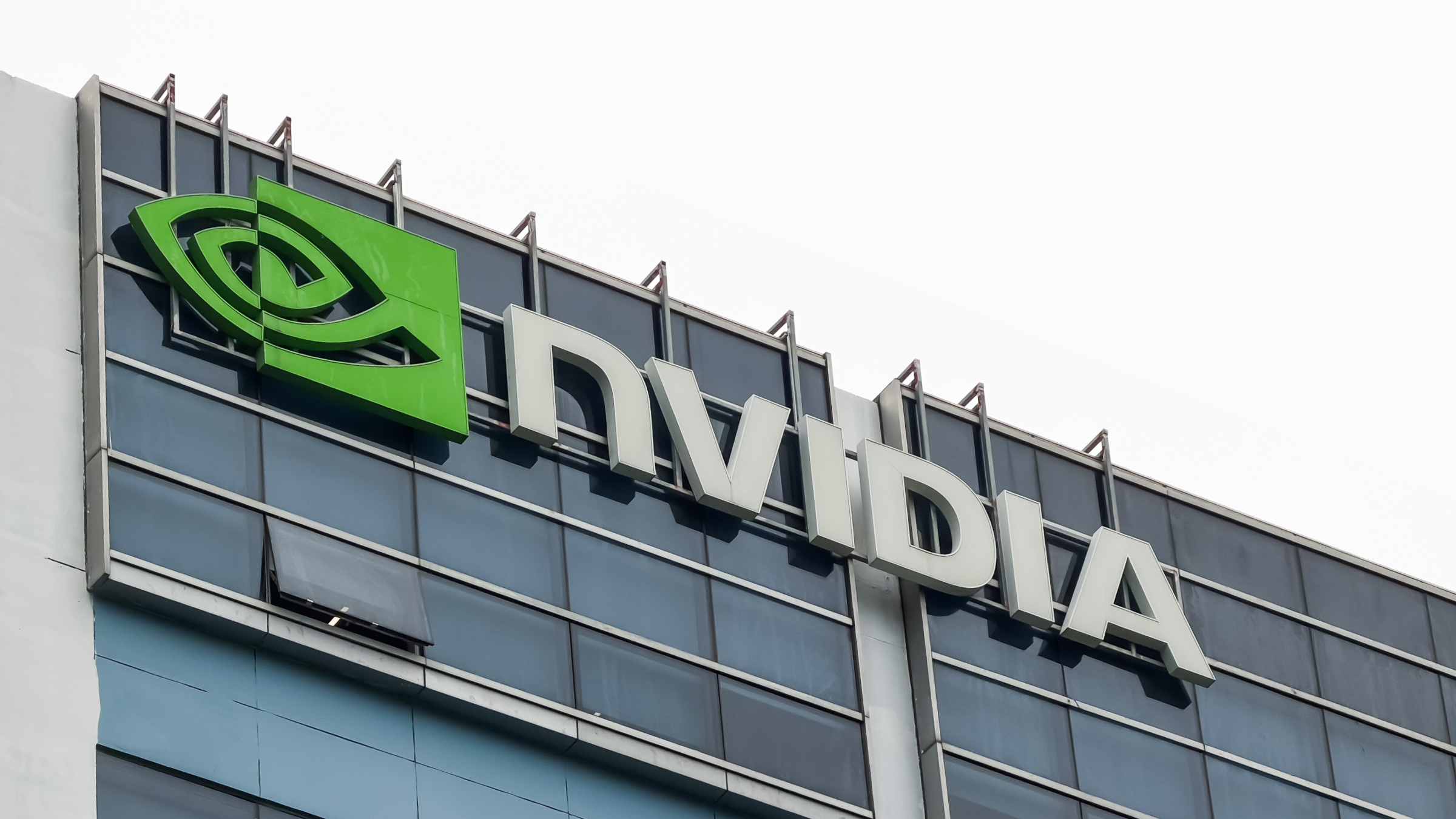
FROM AI CHIPS TO THE INFRASTRUCTURE OF INTELLIGENCE: WHAT’S NEXT FOR NVIDIA?
NVIDIA’s Next Phase: From AI Chip Dominance to Powering the Next Era of Global Intelligence
H.G.&W. Research & Thought Leadership
Artificial Intelligence | Technology | Global Business | Investment | Innovation
NVIDIA has become one of the most influential companies in the global technology industry. What began as a graphics processing company has evolved into a central force behind the artificial intelligence revolution, supplying the computing infrastructure that powers advanced AI models, cloud platforms, autonomous systems, scientific research and enterprise applications.
However, NVIDIA’s next phase will be defined by more than its ability to sell increasingly powerful chips. The company is moving towards a broader role in the global technology ecosystem: building the computing platforms, networking infrastructure, software, systems and AI capabilities that organisations need to develop and deploy intelligent machines.
This transition presents a major opportunity for NVIDIA, but it also introduces new challenges. Competition is intensifying, customers are exploring alternative AI chips, data-centre energy requirements are increasing, international technology restrictions are reshaping markets, and investors are demanding evidence that enormous AI infrastructure investments will generate sustainable economic returns.
For businesses, governments and investors, understanding NVIDIA’s next phase is therefore essential to understanding where the global technology economy may be heading.
The central question is no longer simply whether NVIDIA can maintain its leadership in AI chips. It is whether the company can become the foundational infrastructure provider for the next generation of AI-powered industries.
1. NVIDIA’s Evolution: From Graphics Processing to Global AI Infrastructure
To understand NVIDIA’s next phase, it is important to understand how the company arrived at its current position.
Founded in 1993, NVIDIA initially built its business around graphics processing units (GPUs), which were designed to accelerate the rendering of images and visual effects. Its products became particularly important in gaming, professional visualisation and computer graphics.
The company’s strategic direction changed as researchers discovered that GPUs could also accelerate highly parallel mathematical computations. This made them valuable for scientific research, machine learning and artificial intelligence.
NVIDIA subsequently developed CUDA, a parallel computing platform and programming model that enabled developers to use its GPUs for applications beyond graphics.
This investment created a significant competitive advantage. NVIDIA was no longer simply selling processors; it was building a software and hardware ecosystem that developers could use to create increasingly sophisticated computing applications.
The growth of deep learning, generative AI and large language models accelerated this transformation.
Today, NVIDIA operates across several interconnected areas:
-
AI and data-centre computing.
-
GPUs and accelerated computing.
-
High-speed networking and interconnect technology.
-
AI software, libraries and development platforms.
-
Robotics and autonomous machines.
-
Automotive computing.
-
Scientific computing and digital simulation.
-
Enterprise AI infrastructure.
The company’s evolution reflects a broader shift in the technology industry: computing is moving from general-purpose processing towards specialised, accelerated and increasingly AI-centred infrastructure.
2. The Current Business Position: NVIDIA’s AI Infrastructure Dominance
NVIDIA’s financial performance demonstrates the scale of demand for AI computing infrastructure.
In its second quarter of fiscal 2027, ended July 26, 2026, NVIDIA reported revenue of $96.2 billion, representing a 106% increase compared with the same quarter a year earlier.
Its Data Centre business generated $89 billion, up 117% year on year and accounting for approximately 92.5% of total revenue. NVIDIA also reported a gross margin of 75%.
NVIDIA Investor Relations
NVIDIA: Second-quarter fiscal 2027 performance
$96.2B
Total quarterly revenue
$89.0B
Data Centre revenue
106%
Year-on-year revenue growth
75%
Reported gross margin
Source: NVIDIA, Q2 fiscal 2027 results, August 26, 2026.
NVIDIA Investor Relations
These figures illustrate how strongly NVIDIA is positioned in the current AI infrastructure investment cycle.
However, the company’s next phase will require it to sustain growth while navigating a changing market. Demand for AI computing remains substantial, but customers are becoming more sophisticated about the cost, efficiency and commercial returns of the infrastructure they purchase.
The strategic challenge is therefore shifting from supplying computing capacity to delivering the complete infrastructure required to make AI economically useful.
3. The Vera Rubin Platform: Moving Beyond Individual AI Chips
One of the clearest indicators of NVIDIA’s next phase is the development of its Vera Rubin platform.
Announced at CES in January 2026 and expanded at NVIDIA’s GTC conference in March, Vera Rubin represents a move towards integrated AI computing systems rather than standalone GPU products.
The platform brings together multiple components, including:
-
NVIDIA Vera central processing units (CPUs).
-
NVIDIA Rubin graphics processing units (GPUs).
-
NVLink 6 high-speed interconnect technology.
-
ConnectX-9 networking technology.
-
BlueField-4 data processing units.
-
Spectrum-6 Ethernet networking.
-
NVIDIA Groq 3 LPX inference acceleration technology.
The components are designed to operate together as a coordinated computing system, supporting AI training, inference, networking, storage and large-scale deployment.
NVIDIA Investor Relations+1
Why this matters
Historically, businesses often purchased individual processors and assembled them into computing infrastructure.
NVIDIA is increasingly positioning itself as a provider of integrated AI factories: large-scale computing environments designed to train AI models, run inference workloads and support intelligent applications.
This represents a significant strategic shift.
Rather than competing only on the performance of an individual GPU, NVIDIA can compete across the entire AI computing environment.
Its advantage can therefore come from the interaction between processors, networking, software, storage, power efficiency and system design.
Commercial significance
The Vera Rubin platform is designed to reduce the cost of AI computation and improve the efficiency of large-scale workloads.
NVIDIA has stated that the Rubin NVL72 system can train large mixture-of-experts models using one-quarter of the GPUs required by its Blackwell platform, and deliver up to ten times the inference throughput per watt at one-tenth the cost per token. These are company-published performance claims, and actual results will depend on workload, deployment configuration and operating conditions.
NVIDIA Investor Relations
The broader implication is that NVIDIA’s next competitive advantage may depend increasingly on delivering better economics for AI operations, not just faster hardware.
4. The Rise of Agentic AI: NVIDIA’s Next Major Growth Opportunity
One of the most important developments shaping NVIDIA’s future is the emergence of agentic AI.
Traditional generative AI systems are primarily designed to respond to user prompts by generating text, images, code or other outputs.
Agentic AI systems go further. They can plan tasks, use software tools, retrieve information, execute workflows and interact with other systems to accomplish defined objectives, subject to their permissions and controls.
Examples include:
-
AI agents that manage customer-service enquiries.
-
Software-development agents that write, test and improve code.
-
Financial agents that analyse transactions and prepare reports.
-
Research agents that gather and synthesise information.
-
Supply-chain agents that monitor inventory and support procurement.
-
Enterprise agents that coordinate administrative workflows.
As businesses deploy these systems, demand for computing infrastructure may increase because agents perform multiple reasoning, retrieval and execution steps rather than simply generating a single response.
Why agentic AI matters to NVIDIA
Agentic systems require a combination of computing capabilities.
They need GPUs to process models, CPUs to execute software environments and tools, networking systems to coordinate workloads, and storage infrastructure to manage data.
NVIDIA’s Vera Rubin strategy reflects this broader requirement.
The company has positioned its Vera CPU and Groq 3 LPX technology as important components of the infrastructure needed for large-scale agentic AI.
At GTC 2026, NVIDIA presented the Vera Rubin platform as a system designed to support the full AI lifecycle, from model training and post-training to agentic inference.
NVIDIA Investor Relations+1
The business opportunity
The commercial opportunity could extend beyond companies developing large AI models.
As agentic AI becomes more practical, businesses may invest in infrastructure to automate customer support, software development, financial operations, research, logistics and other processes.
NVIDIA could benefit from increased demand for the computing systems that support these activities.
However, widespread adoption will depend on whether AI agents can deliver measurable productivity gains, operate reliably, protect sensitive information and justify their operating costs.
The next phase of AI infrastructure growth will therefore depend not only on technological capability but also on commercial adoption.
5. The Shift from AI Training to AI Inference
For much of the generative AI boom, attention has focused on the infrastructure required to train increasingly powerful AI models.
Training involves processing large datasets to develop or improve a model. It requires substantial computing resources and is a major source of demand for advanced GPUs.
However, as AI models move into commercial use, inference is becoming an increasingly important market.
Inference is the process through which a trained model generates responses, makes predictions or performs tasks when given new information.
Every time a business uses an AI assistant, generates a report, processes a customer request or runs an AI-powered application, inference takes place.
Why inference could become a larger opportunity
Training is often concentrated among a relatively small number of major AI laboratories and technology companies.
Inference, by contrast, can take place across millions of businesses, applications, devices and customer interactions.
As AI adoption increases, organisations will need infrastructure capable of serving large numbers of users while controlling latency, energy consumption and cost.
Reuters reported in March 2026 that NVIDIA was increasingly positioning inference as a major opportunity, with CEO Jensen Huang discussing a potential trillion-dollar chip opportunity through 2027. This is an industry opportunity estimate, not a guaranteed NVIDIA revenue forecast.
Reuters
The economics of inference
The cost of running AI applications will become a major consideration for businesses.
A model that performs impressively but costs too much to operate may struggle to achieve widespread commercial adoption.
This makes cost per token, energy efficiency, memory bandwidth and system utilisation important competitive measures.
NVIDIA’s Vera Rubin platform and Groq 3 LPX integration are designed to address these requirements.
The company is effectively positioning itself for an AI market in which the commercial value of computing will increasingly be measured by how economically and reliably intelligence can be delivered.
6. NVIDIA’s Expansion into AI Factories and Infrastructure
Another major part of NVIDIA’s next phase is its growing involvement in AI infrastructure development.
AI factories are specialised data-centre environments designed to produce AI computing capacity at industrial scale.
Unlike conventional data centres, which support a wide range of computing workloads, AI factories are designed around the intensive processing, networking, storage and cooling requirements of AI training and inference.
They require:
-
Large clusters of advanced processors.
-
High-speed networking infrastructure.
-
Advanced cooling systems.
-
Reliable electricity supply.
-
High-capacity storage.
-
Software for workload management.
-
Security and monitoring systems.
NVIDIA is positioning its hardware and software as a foundation for these facilities.
The Oracle partnership
A significant development came on October 27, 2026, when NVIDIA and Oracle announced an expansion of their infrastructure partnership.
The companies confirmed that Vera Rubin NVL72 systems and Vera CPUs were generally available on Oracle Cloud Infrastructure, with plans to expand OCI superclusters to multi-gigawatt scale.
The collaboration is designed to support large-scale AI training, inference and agentic workloads.
NVIDIA Investor Relations
This is strategically important because it illustrates how NVIDIA’s growth is connected to the investment plans of major cloud providers.
Its future is not dependent solely on selling processors. It is also tied to the expansion of the global infrastructure through which businesses access AI computing.
Infrastructure investment and capital mobilisation
The scale of AI infrastructure investment is enormous.
McKinsey’s June 2026 analysis reported that four leading hyperscalers—Amazon, Google, Meta and Microsoft—were collectively committing more than $700 billion in capital expenditure during 2026, with a substantial share directed towards AI infrastructure.
McKinsey & Company
This investment creates opportunities for NVIDIA and other companies involved in semiconductors, networking, data-centre construction, power systems and cooling technologies.
However, it also raises questions about whether the revenue generated by AI applications will justify the scale of infrastructure expenditure.
NVIDIA’s long-term opportunity is closely linked to the ability of the wider AI ecosystem to convert computing investment into sustainable commercial value.
7. The Physical AI Revolution: Robotics, Autonomous Systems and Intelligent Machines
NVIDIA’s next phase extends beyond cloud computing and digital applications.
The company is also investing in what it describes as physical AI: intelligent systems capable of perceiving, reasoning and interacting with the physical world.
This includes robotics, autonomous vehicles, industrial automation, smart manufacturing and simulation-based engineering.
Robotics
Robots are increasingly being developed to perform tasks in warehouses, factories, hospitals, agriculture and other environments.
Modern robotics requires more than mechanical movement. Machines must interpret their surroundings, recognise objects, make decisions and respond to changing conditions.
AI models can help provide these capabilities.
NVIDIA supports robotics development through computing platforms, simulation tools, AI models and software frameworks.
Autonomous vehicles
Autonomous driving systems require real-time processing of information from cameras, sensors and other vehicle systems.
They must recognise road conditions, identify objects, predict movement and make decisions within extremely short timeframes.
NVIDIA’s automotive computing business provides hardware and software platforms for companies developing advanced driver-assistance and autonomous-driving technologies.
Industrial digital twins
Digital twins are virtual representations of physical systems, facilities or processes.
Businesses can use them to simulate operations, test changes and identify potential problems before implementing them in the real world.
NVIDIA’s Omniverse platform supports the development of industrial digital twins and simulation environments.
These applications could create new markets for NVIDIA as companies seek to improve manufacturing efficiency, logistics, infrastructure planning and product development.
Why physical AI matters
The long-term opportunity is significant because it expands NVIDIA’s addressable market beyond traditional data-centre customers.
If AI becomes deeply integrated into factories, vehicles, warehouses and other physical environments, demand for specialised computing could grow across a wider range of industries.
However, adoption will depend on safety, reliability, hardware costs, regulatory approval and the ability to demonstrate measurable operational benefits.
8. Sovereign AI: Governments Want Their Own AI Infrastructure
One of the most strategically important developments in the global AI industry is the rise of sovereign AI.
Sovereign AI refers to a country’s ability to develop, operate and govern AI capabilities using infrastructure, data, talent and regulatory arrangements that support its national interests.
Governments are increasingly recognising AI as a strategic economic and security asset. They want to reduce excessive dependence on foreign technology providers, develop local AI capabilities and ensure that sensitive data and critical systems are governed appropriately.
NVIDIA is positioning itself to benefit from this trend by supplying the computing infrastructure required to build national and regional AI ecosystems.
Why countries are investing in sovereign AI
Several considerations are driving the trend:
-
National security: Governments want greater control over computing infrastructure used for sensitive applications.
-
Data sovereignty: Countries want to establish how sensitive national and commercial data is stored, processed and governed.
-
Economic competitiveness: AI capability is increasingly viewed as a source of productivity, innovation and economic growth.
-
Local innovation: Governments want domestic researchers, startups and businesses to access advanced computing resources.
-
Industrial development: AI can support manufacturing, healthcare, agriculture, education, energy and public administration.
NVIDIA’s August 2026 financial announcement highlighted sovereign AI infrastructure partnerships in countries including South Korea and Japan, demonstrating how national AI strategies are becoming part of its commercial opportunity.
NVIDIA Investor Relations
Opportunities for developing economies
For countries in Africa, sovereign AI presents an opportunity to build technological capacity rather than remain entirely dependent on imported AI services.
Potential priorities include:
-
National and regional AI research infrastructure.
-
Local-language AI models.
-
AI applications for agriculture and healthcare.
-
Public-sector digital transformation.
-
University and research computing facilities.
-
AI-enabled manufacturing and financial services.
However, sovereign AI does not necessarily mean every country should build a massive data centre or own every part of its technology infrastructure.
The economics must be considered carefully. Countries need sufficient electricity, connectivity, technical expertise, capital and sustainable demand to justify large infrastructure investments.
Regional collaboration, shared computing facilities and partnerships with established cloud providers may offer more practical routes for many developing economies.
9. The Competitive Landscape: Can NVIDIA Maintain Its Leadership?
NVIDIA’s current position is powerful, but the AI semiconductor industry is becoming increasingly competitive.
Its next phase will be shaped by its ability to defend its market position against established semiconductor companies, cloud providers developing custom processors and emerging AI chip specialists.
A. AMD
Advanced Micro Devices (AMD) is a major competitor in the GPU and data-centre computing markets.
AMD’s Instinct accelerator products provide an alternative to NVIDIA GPUs, while its ROCm software ecosystem is designed to support accelerated computing.
AMD’s opportunity is to offer customers a credible alternative in terms of performance, cost, availability and software compatibility.
B. Intel
Intel remains an important participant in the data-centre processor market.
Its strategy includes CPUs and accelerated computing technologies that can serve AI workloads and complement specialised accelerators.
C. Google’s custom AI chips
Google develops Tensor Processing Units (TPUs) for its AI and cloud infrastructure.
Custom accelerators allow large cloud providers to optimise hardware around their own models, applications and infrastructure requirements.
D. Amazon’s Trainium and Inferentia
Amazon has developed custom AI processors through AWS, including Trainium for model training and Inferentia for inference.
These products give Amazon greater control over its cloud infrastructure and provide customers with alternatives to NVIDIA-based computing.
E. Microsoft and other hyperscalers
Microsoft and other major cloud providers are also investing in custom silicon and specialised infrastructure.
These investments are strategically important because the largest AI infrastructure customers are also among the companies with the financial resources and technical expertise to develop alternatives to NVIDIA products.
Competition is moving beyond the chip
The industry is increasingly competing on the performance of complete computing systems rather than individual processors.
Customers are evaluating:
-
Performance per watt.
-
Cost per AI token.
-
Memory capacity and bandwidth.
-
Networking efficiency.
-
Software compatibility.
-
System availability.
-
Total cost of ownership.
-
Reliability and scalability.
McKinsey’s June 2026 analysis highlights the potential advantages of specialised AI inference chips. It estimates that custom accelerators can reduce token costs by 70–80% for certain workloads they are specifically designed to handle. These are workload-specific potential savings, not universal results.
McKinsey & Company
NVIDIA’s response is to offer an integrated platform that combines hardware, software, networking and system-level optimisation.
Its CUDA ecosystem remains a major competitive advantage because developers and enterprises have invested heavily in software and workflows built around NVIDIA technology.
However, this advantage is not permanent. If competing platforms become easier to use, more affordable and sufficiently powerful, customers may diversify their computing infrastructure.
A November 14, 2026 JPMorgan analysis also highlighted the growing competition for future AI infrastructure commitments. Its reported figures suggested that NVIDIA represented 39% of future frontier-lab compute agreements, compared with more than 80% in the 2023–2025 period. This is a measure of a specific group of future agreements, not NVIDIA’s overall AI-chip market share.
JPMorgan
The implication is that NVIDIA’s leadership remains substantial, but the competitive landscape is evolving.
10. China, Export Controls and Geopolitical Risk
NVIDIA’s international growth is closely connected to the geopolitical relationship between the United States and China.
Advanced semiconductors are increasingly treated as strategic assets because they support AI research, defence applications, scientific computing and economic competitiveness.
The United States has introduced export restrictions affecting the sale of certain advanced AI chips and related technologies to China.
These restrictions create a complex commercial environment for NVIDIA.
The China market challenge
China is one of the world’s most important technology markets, with substantial demand for AI infrastructure.
However, restrictions have limited NVIDIA’s ability to compete in China’s data-centre computing market.
In its fiscal 2027 second-quarter regulatory disclosures, NVIDIA stated that it was effectively foreclosed from competing in China’s data-centre computing market under the prevailing US and Chinese regulatory environment. The company also warned that these restrictions could benefit competitors building alternative technology ecosystems.
SEC+1
The competitive implications are important.
Chinese companies are developing domestic alternatives, including AI accelerators and specialised processors. Huawei and other local technology businesses are among the companies benefiting from the drive towards domestic semiconductor capability.
Reuters reported in October 2026 that NVIDIA’s share of China’s data-centre AI-chip market had fallen to 34% in the first half of 2026, while Huawei had increased its position to 28%. The report attributed the changing market structure partly to export restrictions and the expansion of Chinese alternatives.
Reuters
Why this matters beyond China
Export controls can affect more than sales to restricted markets.
They can influence:
-
International supply-chain decisions.
-
Customer confidence in product availability.
-
Investment in alternative semiconductor technologies.
-
Government procurement preferences.
-
Technology partnerships.
-
Long-term research and development priorities.
Countries may become reluctant to build critical infrastructure around products that could become difficult to obtain because of changing geopolitical restrictions.
For NVIDIA, the challenge is to maintain access to international markets while complying with regulatory requirements.
For the wider industry, the long-term consequence may be the development of more fragmented technology ecosystems.
11. The Energy Challenge: AI Growth Requires More Than Advanced Chips
One of the biggest constraints on NVIDIA’s next phase may not be semiconductor innovation. It may be the availability of electricity and supporting infrastructure.
Modern AI data centres require significant amounts of power.
Large AI clusters also generate substantial heat, making advanced cooling systems essential.
As AI infrastructure expands, data-centre operators must secure:
-
Reliable electricity supplies.
-
Grid connections and transmission capacity.
-
Cooling infrastructure.
-
Water-management systems.
-
Suitable land and construction capacity.
-
Backup power arrangements.
-
Efficient networking and storage systems.
Energy efficiency as a competitive advantage
NVIDIA’s emphasis on performance per watt reflects the importance of energy efficiency.
If new generations of computing systems can deliver substantially more AI output using less energy per unit of work, operators may be able to improve the economics of large-scale AI deployments.
However, improvements in efficiency do not automatically reduce total energy consumption.
If the cost of AI computing falls, demand may increase enough to offset some of the efficiency gains. This is an important consideration when evaluating the environmental impact of AI infrastructure.
Opportunities for the energy sector
NVIDIA’s infrastructure expansion creates opportunities for energy companies, renewable-energy developers, power-equipment manufacturers and data-centre engineering businesses.
The next stage of AI development may therefore be shaped by partnerships between technology companies and energy providers.
For governments, the ability to supply reliable and competitively priced electricity could become an important factor in attracting AI infrastructure investment.
12. NVIDIA’s Next Phase and the Global Economy
NVIDIA’s development has implications beyond the technology industry.
Its computing platforms influence investment decisions, industrial development, productivity, international competition and the future structure of the global economy.
A. The semiconductor industry
Demand for AI accelerators supports growth across the semiconductor supply chain, including chip design, advanced manufacturing, memory, packaging and networking.
NVIDIA’s success also increases the strategic importance of manufacturing partners and suppliers that produce the components required for advanced AI systems.
B. Cloud computing
Cloud providers are investing heavily in AI infrastructure to serve enterprises, developers and AI companies.
NVIDIA’s integrated systems are positioned to benefit from this demand, while custom processors give cloud providers opportunities to manage costs and differentiate their services.
C. Enterprise productivity
As AI becomes more affordable and accessible, businesses may use it to automate repetitive tasks, improve research, support customer service and strengthen decision-making.
This could create productivity gains across industries, although the benefits will depend on implementation quality, workforce adaptation and the commercial value of specific applications.
D. Labour markets
AI adoption may change the demand for certain skills and reshape existing jobs.
Some tasks may be automated, while new opportunities emerge in AI development, data management, cybersecurity, robotics, systems integration and technology governance.
The economic effect will depend on how effectively businesses and governments support reskilling and workforce adaptation.
E. International economic competition
Countries with access to advanced computing, skilled talent and reliable energy may gain an advantage in AI development.
NVIDIA’s next phase will therefore intersect with national industrial strategies, trade policy and the global competition for technological leadership.
13. What NVIDIA’s Next Phase Means for Africa and Nigeria
Africa’s position in the next AI infrastructure cycle will depend on whether the continent can move beyond being a consumer of imported AI products towards becoming an active participant in AI development, deployment and commercialisation.
NVIDIA’s expanding ecosystem creates opportunities for African governments, universities, technology companies and investors. However, these opportunities will require deliberate investment in infrastructure, skills and local innovation.
A. AI infrastructure and data-centre investment
African markets need reliable computing infrastructure to support AI applications in banking, healthcare, education, agriculture and government.
Countries such as Nigeria, South Africa, Kenya, Egypt and Morocco have opportunities to attract investment in data centres, cloud computing and AI infrastructure.
However, large-scale AI facilities require reliable power, strong connectivity, technical expertise and sufficient commercial demand.
For Nigeria, improvements in electricity generation, transmission, distribution and data-centre infrastructure will be essential to attracting substantial AI infrastructure investment.
B. Opportunities for Nigerian technology businesses
Nigerian technology companies do not necessarily need to manufacture advanced GPUs to participate in the AI economy.
There are opportunities in:
-
AI application development.
-
Enterprise AI integration.
-
AI-powered business automation.
-
Cloud infrastructure and managed services.
-
Data engineering and analytics.
-
AI cybersecurity and governance.
-
Robotics and industrial automation.
-
AI education and professional training.
-
Local-language AI solutions.
Businesses that understand the practical needs of Nigerian industries can create value by adapting existing AI technologies to local challenges.
C. Agriculture and food production
AI can support agricultural productivity through crop monitoring, weather analysis, pest detection, precision farming and supply-chain optimisation.
NVIDIA’s technologies could support the development of advanced AI applications in these areas, particularly through research institutions and technology partners.
For Nigeria, the commercial opportunity lies in using AI to improve agricultural productivity, reduce post-harvest losses and strengthen food distribution systems.
D. Healthcare and life sciences
AI applications can support medical imaging, drug discovery, clinical research and healthcare administration.
African healthcare institutions and technology startups could use advanced computing platforms to develop solutions that address local healthcare needs.
However, these applications must be supported by appropriate data governance, clinical validation, privacy protections and regulatory oversight.
E. Education and talent development
The next phase of NVIDIA’s growth will increase demand for professionals with skills in AI engineering, data science, robotics, cloud infrastructure and high-performance computing.
African universities, technology academies and professional training institutions should consider expanding programmes in these fields.
For Nigeria, this presents an opportunity to develop a workforce that can participate in the global AI economy rather than simply consume its products.
F. Investment and policy opportunities
African governments should consider creating policies that encourage AI infrastructure investment while protecting national interests.
Priority areas include:
-
Reliable and affordable electricity.
-
Digital infrastructure and high-speed connectivity.
-
Research and development funding.
-
AI skills and technical education.
-
Data protection and responsible AI governance.
-
Public-private partnerships.
-
Regional collaboration and shared infrastructure.
Africa’s opportunity is not simply to attract NVIDIA or other global technology companies. It is to build the economic and institutional capacity to participate meaningfully in the AI value chain.
14. The Risks and Challenges Facing NVIDIA
Despite its strong market position, NVIDIA’s next phase is not without significant risks.
The company’s future growth will depend on its ability to manage several challenges simultaneously.
| Strategic risk | Potential business consequence |
|---|---|
| Intensifying competition | Pressure on market share, pricing and margins |
| Custom AI chips | Customers may reduce dependence on general-purpose GPUs |
| Export restrictions | Reduced access to important international markets |
| Energy constraints | Delays and higher costs for AI infrastructure expansion |
| Supply-chain concentration | Exposure to manufacturing, memory and packaging disruptions |
| AI investment sustainability | Customers may reduce spending if returns disappoint |
| Technology transitions | Rapid product cycles may create execution and inventory risks |
| Customer concentration | Dependence on a relatively small number of large infrastructure buyers |
| Regulatory developments | Additional compliance obligations and restrictions |
The AI investment sustainability question
One of the most important questions facing NVIDIA is whether the economic value generated by AI will justify the enormous investment in computing infrastructure.
Technology companies are spending heavily on GPUs, data centres, networking, electricity and AI research.
These investments are based on expectations that AI will create substantial productivity improvements and new revenue opportunities.
If commercial adoption grows more slowly than anticipated, customers could delay infrastructure purchases or become more cautious about capital expenditure.
That would affect the entire AI supply chain, including NVIDIA.
The risk of customer diversification
NVIDIA’s largest customers are also among the most sophisticated technology companies in the world.
They have the financial resources and technical capabilities to develop their own processors and software systems.
If customers can achieve acceptable performance and lower operating costs through custom silicon, they may reduce their dependence on NVIDIA for selected workloads.
This does not mean NVIDIA will lose its position immediately. It means that maintaining leadership will require continuous innovation and strong customer value.
Execution and supply-chain risks
NVIDIA’s rapid product development cycle places considerable pressure on manufacturing partners, component suppliers and infrastructure operators.
Advanced AI systems require specialised memory, packaging, networking and cooling technologies.
Any disruption across these areas could affect product availability, deployment schedules and customer commitments.
NVIDIA must therefore manage its ecosystem as carefully as it manages its own product development.
15. Strategic Priorities for NVIDIA’s Next Phase
To sustain its position, NVIDIA will need to focus on more than increasing chip performance.
The following priorities are likely to shape its long-term competitiveness.
1. Strengthen the integrated AI platform.
Continue connecting processors, networking, storage, software and AI development tools into an integrated infrastructure ecosystem.
2. Improve inference economics.
Make AI deployment more affordable through improvements in computing efficiency, system utilisation and cost per token.
3. Expand enterprise adoption.
Help businesses move from AI experimentation to commercially productive applications across finance, healthcare, manufacturing, retail and other industries.
4. Accelerate physical AI development.
Expand opportunities in robotics, autonomous systems, industrial automation and digital twins.
5. Support sovereign AI development.
Build partnerships with governments and regional technology ecosystems seeking to develop domestic AI capabilities.
6. Maintain developer ecosystem leadership.
Continue investing in CUDA, software libraries, developer tools and enterprise partnerships that make NVIDIA platforms attractive to users.
7. Manage geopolitical exposure.
Develop strategies that respond to export restrictions, international trade developments and the growing fragmentation of semiconductor markets.
8. Address energy and infrastructure constraints.
Work with energy providers, cloud companies and infrastructure developers to make large-scale AI computing more efficient and sustainable.
16. What Businesses, Investors and Governments Should Watch
NVIDIA’s next phase will create opportunities and risks across the global economy. Stakeholders should monitor developments that indicate whether the company is successfully transitioning from AI hardware leadership to broader AI infrastructure leadership.
NVIDIA: Key indicators to watch
-
Financial performance
Data Centre revenue, gross margins, product demand and the sustainability of growth.
-
Vera Rubin deployment
Customer adoption, production execution and real-world performance across large AI deployments.
-
Inference growth
Whether AI inference becomes a major and sustainable source of computing demand.
-
Agentic AI adoption
Whether businesses move from AI experimentation to production-scale autonomous workflows.
-
Competitive pressure
Market developments involving AMD, Google, Amazon, Huawei and custom silicon providers.
-
Geopolitical developments
US export controls, China’s domestic semiconductor ecosystem and international technology policy.
-
Infrastructure economics
Electricity availability, cooling costs, data-centre investment and the commercial returns on AI infrastructure.
For business leaders, these indicators can help guide decisions about AI investments, technology partnerships and long-term digital strategy.
For investors, they provide a framework for evaluating whether NVIDIA’s growth is supported by durable demand rather than short-term enthusiasm.
For governments, they highlight the importance of infrastructure, skills, industrial policy and international technology partnerships.
17. Conclusion: NVIDIA’s Next Phase Is About Owning the Infrastructure of Intelligence
NVIDIA is entering a new stage of its evolution.
Its early success was built on graphics processing. Its next major transformation came through accelerated computing and the rise of AI training. Its current strategy is increasingly focused on integrated AI factories, inference, agentic AI, sovereign computing and physical AI.
The Vera Rubin platform demonstrates this transition. NVIDIA is seeking to provide the complete infrastructure required to develop, deploy and operate intelligent systems at scale.
The opportunity is substantial. AI adoption across industries, the expansion of data centres, the growth of AI agents and the emergence of physical AI could create new sources of demand for computing infrastructure.
However, the company’s leadership is not guaranteed. Competition from custom chips, geopolitical restrictions, energy constraints, customer diversification and uncertainty about AI investment returns will shape its future.
For Africa and Nigeria, NVIDIA’s next phase is a reminder that the AI revolution is also an economic development opportunity. The continent must strengthen its digital infrastructure, develop technical talent, attract investment and support businesses capable of creating practical AI solutions.
Ultimately, NVIDIA’s next phase is not just about building faster chips. It is about shaping the infrastructure through which the next generation of global intelligence will be created and commercialised.
The companies and countries that understand this transition early will be better positioned to participate in the next era of technological and economic transformation.
References and Further Reading
-
NVIDIA (March 16, 2026). NVIDIA Vera Rubin Opens Agentic AI Frontier. Read NVIDIA’s announcement.
-
NVIDIA (August 26, 2026). NVIDIA Announces Financial Results for Second Quarter Fiscal 2027. Read financial results.
-
NVIDIA and Oracle (October 27, 2026). NVIDIA and Oracle Expand NVIDIA Vera Rubin to Multi-Gigawatt Scale. Read partnership announcement.
-
Reuters (March 16–18, 2026). Nvidia Bets on AI Inference as Chip Revenue Opportunity Hits $1 Trillion. Read Reuters analysis.
-
McKinsey & Company (June 25, 2026). Frontiers of Compute: The Technologies to Reduce AI Inference Costs. Read McKinsey research.
-
McKinsey & Company (2026). Scaling AI Inference. Explore inference developments.
-
Reuters (October 13, 2026). Nvidia’s China AI-Chip Share Falls as Huawei Closes Gap. Read Reuters report.
-
J.P. Morgan (November 14, 2026). Eye on the Market: AI Tracker. Read market analysis.
-
U.S. Securities and Exchange Commission (August 2026). NVIDIA Quarterly Filing: Risks, Competition and Export Controls. Read regulatory filing.
Disclaimer: This article is for research, educational and general business information purposes. It does not constitute investment, financial or securities advice. Company-reported performance claims and forward-looking expectations should be assessed alongside independent evidence










Leave a Reply