
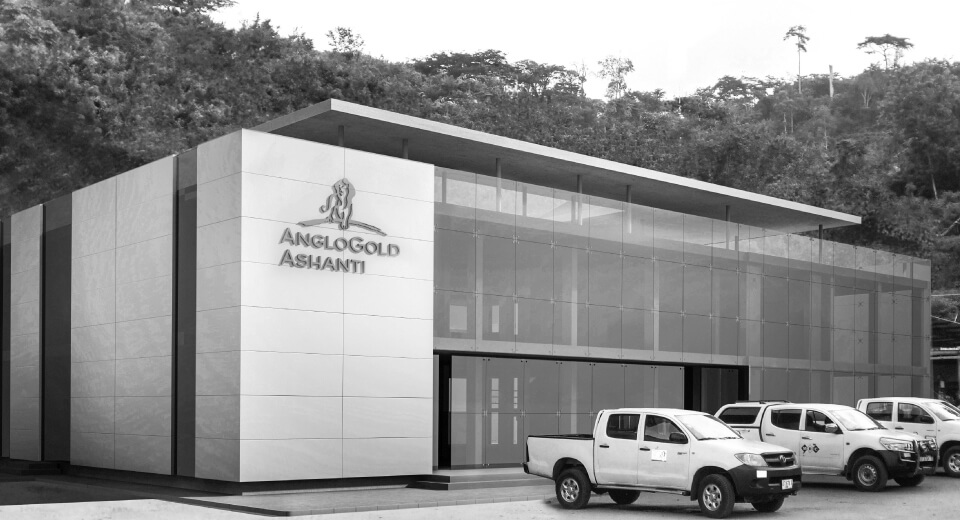
ANGLOGOLD ASHANTI: GOLD, GROWTH & THE NEW GEOGRAPHY OF GLOBAL MINING
ANGLOGOLD ASHANTI: GOLD, GROWTH & THE NEW GEOGRAPHY OF GLOBAL MINING
How a historic African mining company is repositioning itself for a new era of gold, capital discipline and responsible resource development
Executive Summary
Gold mining has always been about more than extracting a precious metal.
It is a business of geology, capital, technology, geopolitics, operational discipline and time.
Few companies illustrate this complexity better than AngloGold Ashanti.
Formed in 2004 through the merger of AngloGold and Ashanti Goldfields, the company has deep African roots but has progressively developed into a geographically diversified global gold producer.
Today, AngloGold Ashanti operates in Argentina, Australia, Brazil, the Democratic Republic of Congo, Egypt, Ghana, Guinea and Tanzania, with greenfield projects in Colombia and the United States and exploration activity across several additional jurisdictions.
The transformation is significant.
The company is no longer simply a South African mining story.
It is a global portfolio-management story.
And its latest numbers demonstrate why.
In 2025, AngloGold Ashanti produced 3.09 million ounces of gold, generated $9.9 billion in revenue, delivered $2.91 billion in free cash flow, and reported adjusted EBITDA of $6.29 billion. Its gold Mineral Reserve increased to 36.5 million ounces, from 31.2 million ounces at the end of 2024.
The company’s challenge now is equally clear:
How does AngloGold Ashanti convert a favourable gold-price environment into sustainable long-term value without allowing costs, operational risks or social and environmental liabilities to erode that opportunity?
That is the strategic story HG&W should examine.
1. The Transformation: From African Roots to Global Portfolio
AngloGold Ashanti’s history is closely connected to the South African mining industry.
But the company has progressively transformed its geographic footprint.
Its current portfolio spans four continents, providing exposure to multiple geological regions, operating environments and national economies.
That diversification is strategically important.
Mining companies face risks that are often highly localized:
- Political instability
- Tax and royalty changes
- Labour disruptions
- Infrastructure constraints
- Currency movements
- Geological uncertainty
- Regulatory changes
- Environmental liabilities
A company operating across several jurisdictions can potentially reduce the effect of any single country’s problems on the overall portfolio.
But diversification comes with its own cost.
More countries mean:
More regulations + more currencies + more stakeholders + more operational complexity.
Therefore, geographic diversification only creates value if management can effectively coordinate a complex portfolio.
2. Gold Has Entered a New Strategic Era
The economics of gold mining have changed dramatically.
Gold prices have reached historically elevated levels, creating enormous revenue opportunities for producers.
AngloGold Ashanti’s 2025 revenue reached $9.9 billion, compared with $5.8 billion in 2024.
That is a striking increase.
However, the important lesson for investors is:
Higher gold prices do not automatically equal higher profitability.
Mining costs can also rise.
In 2025, AngloGold Ashanti reported total cash costs of $1,242 per ounce and all-in sustaining costs of $1,709 per ounce.
Higher royalties, labour costs, consumables, mining costs and other operating expenses can absorb part of the benefit from higher gold prices.
This creates the fundamental mining equation:
Gold price – cost of production = economic margin
The wider the gap, the stronger the potential cash generation.
3. 2025: A Record Year
AngloGold Ashanti’s 2025 performance provides a useful snapshot of the company’s current position.
Key 2025 figures
| Metric | 2025 |
|---|---|
| Gold production | 3.09 Moz |
| Revenue | $9.9bn |
| Free cash flow | $2.91bn |
| Adjusted EBITDA | $6.29bn |
| Total cash cost | $1,242/oz |
| All-in sustaining cost | $1,709/oz |
| Gold Mineral Reserve | 36.5 Moz |
| Dividends declared | $1.8bn |
The numbers suggest that AngloGold Ashanti entered 2026 with considerable financial momentum.
But the quality of that performance matters more than the headline numbers.
A mining company must continually answer three questions:
- How much gold can we produce?
- At what cost?
- How long can we sustain production?
The third question is where reserves and exploration become critical.
4. The Reserve Challenge: Mining Today’s Gold Without Losing Tomorrow’s
Every mine eventually faces depletion.
This creates a fundamental challenge:
A mining company sells its inventory every day.
Unlike a manufacturing company that can theoretically keep producing the same product indefinitely, a mine consumes its economically recoverable mineral resource.
AngloGold Ashanti therefore needs a continuous pipeline of:
- Exploration
- Resource development
- Mine extensions
- New projects
- Acquisitions
- Geological modelling
Its 2025 Mineral Reserve increased from 31.2 million ounces to 36.5 million ounces, while Mineral Resources increased from 67.1 million ounces to 68.0 million ounces.
This is strategically significant.
Reserve growth gives the company more visibility over future production.
However, reserves are not simply “gold in the ground.”
They are economically recoverable quantities based on geological, technical and economic assumptions.
Therefore:
Exploration creates possibilities.
Engineering creates projects.
Capital creates mines.
Operations create cash flow.
5. Obuasi: The Old Mine With a New Future
Few assets illustrate AngloGold Ashanti’s strategy better than Obuasi in Ghana.
Obuasi has a remarkable history dating back to the late nineteenth century.
Rather than simply abandoning the mature asset, AngloGold Ashanti pursued a major redevelopment designed to transform it into a modern, mechanised underground operation.
The redevelopment began in 2018, with first gold poured in 2019. The mine is now in a continuing ramp-up phase.
In 2025, Obuasi’s gold production increased 20% year-on-year, driven by improved head grades, better recovery and higher tonnes treated.
This makes Obuasi more than a mining project.
It is a case study in asset renewal.
The strategic lesson extends beyond mining:
Mature assets are not necessarily declining assets. With the right technology, capital and operating model, some can become growth assets again.
6. Geita: Exploration as a Growth Strategy
AngloGold Ashanti’s Geita operation in Tanzania illustrates another important component of the portfolio strategy.
The company is pursuing exploration with the objective of significantly increasing Mineral Reserves and is studying a processing-plant expansion that could support production of approximately 600,000 ounces per year for at least a decade.
This demonstrates the importance of brownfields growth.
Rather than building an entirely new mine from scratch, companies can sometimes generate growth by finding additional resources around existing infrastructure.
The advantages can include:
- Existing roads
- Existing processing plants
- Existing workforce
- Existing utilities
- Existing regulatory relationships
- Existing geological knowledge
This can potentially lower the risk and capital intensity of expansion.
7. Operational Excellence Is Becoming More Important
Mining is an extraordinarily capital-intensive industry.
A mine can have excellent geology and still destroy shareholder value if:
- Equipment availability is poor.
- Development falls behind schedule.
- Processing recovery declines.
- Labour productivity deteriorates.
- Energy costs rise.
- Maintenance is poorly managed.
AngloGold Ashanti’s 2026 priorities therefore include improving productivity and equipment performance at several operations.
At Iduapriem in Ghana, for example, priorities include maintenance improvements, increased mining productivity and fleet-management optimization. At Obuasi, the company is focusing on development capacity and tele-remote equipment.
This points to a broader shift in mining.
The next generation of mining competitiveness will increasingly be technological.
8. Automation and the Intelligent Mine
Mining environments are inherently dangerous.
Deep underground operations, heavy machinery, explosives, unstable ground and remote locations create significant safety challenges.
Technology can therefore serve two purposes simultaneously:
Improve productivity + reduce human exposure to hazards.
AngloGold Ashanti is deploying tele-remote equipment at Obuasi as part of its ongoing modernization efforts.
More broadly, modern mining is increasingly incorporating:
- Automation
- Remote operation
- Digital geological modelling
- Fleet management systems
- Predictive maintenance
- Data analytics
- Advanced processing technologies
The strategic advantage will belong to companies that can convert these technologies into measurable improvements in:
cost + recovery + safety + productivity.
9. The Social Licence to Operate
Mining companies require more than government permits.
They require community acceptance.
A company may possess the legal right to mine an area while still facing significant operational challenges if local communities do not trust the company.
AngloGold Ashanti explicitly identifies community resilience, stakeholder engagement, human rights and social licence as central components of its sustainability approach.
Its community programmes cover areas including:
- Health
- Education
- Employment
- Supplier development
- Enterprise support
- Community safety
- Cultural preservation
The strategic principle is simple:
A mine’s long-term viability depends partly on the strength of the ecosystem surrounding it.
10. Artisanal Mining: One of Africa’s Hardest Mining Challenges
Artisanal and small-scale mining presents one of the most complicated issues facing large mining companies.
In many communities, informal mining provides livelihoods.
At the same time, illegal mining can create:
- Safety risks
- Environmental damage
- Security challenges
- Conflicts over land
- Production disruptions
- Human-rights concerns
AngloGold Ashanti’s 2025 sustainability reporting notes that artisanal and small-scale mining activity increased as higher gold prices created stronger financial incentives. The company is working with governments and NGOs toward greater formalisation, traceability and safer mining practices.
This is not simply an ESG issue.
It is a business continuity issue.
Managing ASM relationships effectively can influence:
security + community relations + environmental performance + operational continuity.
11. Tailings: The Risk That Cannot Be Ignored
One of the most serious environmental risks associated with mining is tailings management.
Tailings storage facilities must be carefully designed, monitored and maintained throughout their operating and closure lives.
AngloGold Ashanti’s 2025 sustainability reporting highlights continuing work around tailings facilities at Obuasi and Siguiri, including remediation, closure and development of new facilities.
This is an area where the economics of mining and ESG become inseparable.
A failure can generate:
- Human consequences
- Environmental damage
- Regulatory action
- Litigation
- Financial liabilities
- Reputational damage
Responsible tailings management is therefore not simply a sustainability activity.
It is enterprise risk management.
12. Climate Change Is Now an Operating Risk
Mining depends heavily on physical conditions.
Extreme rainfall can affect:
- Roads
- Pits
- Tailings facilities
- Water management
- Power systems
- Logistics
Drought can create water shortages.
Higher temperatures can affect workers and equipment.
AngloGold Ashanti is therefore incorporating climate-risk assessments and adaptation planning across its operations. The company is also working on energy-efficiency measures and reducing dependence on diesel generation in certain locations.
The company maintains a long-term commitment to net-zero Scope 1 and Scope 2 greenhouse-gas emissions by 2050.
The important business lesson:
Climate strategy is increasingly becoming operational strategy.
13. Safety: Mining’s Non-Negotiable Metric
No discussion of mining performance is complete without safety.
AngloGold Ashanti states that its objective is to operate free from injury and harm and uses critical-control monitoring and proactive risk management to reduce workplace hazards.
In 2025, its reported Total Recordable Injury Frequency Rate was 0.97 per million hours worked.
The strategic challenge is that safety performance must be maintained while mines simultaneously pursue:
- Higher production
- Lower costs
- Faster development
- Greater equipment utilization
The strongest mining organizations therefore treat safety not as a constraint on productivity but as a prerequisite for sustainable productivity.
14. Capital Allocation in a Gold Boom
The current gold environment creates a tempting problem.
When prices are high, miners can generate substantial cash.
Management must decide what to do with it.
Possible options include:
- Dividends
- Share buybacks
- Debt reduction
- Mine expansion
- Exploration
- Acquisitions
- New projects
- Technology investments
AngloGold Ashanti declared $1.8 billion in dividends for 2025, while also generating $2.91 billion in free cash flow.
The company’s proposed share repurchase programme also shows that capital returns and capital structure remain important strategic questions in the current environment.
The challenge is finding the right balance.
Returning too little capital can frustrate investors.
Returning too much can leave the company underinvested when the next growth opportunity emerges.
15. Why Geographic Diversification Matters
AngloGold Ashanti’s portfolio covers multiple regions.
This can provide strategic diversification across:
- Geological settings
- Commodity jurisdictions
- Currencies
- Political environments
- Infrastructure conditions
But diversification is not automatically risk reduction.
A global mining company must manage a portfolio of very different stakeholder environments.
For example, Ghana presents different regulatory and community dynamics from Tanzania, Egypt, Australia, Brazil or the United States.
The true competitive advantage therefore becomes:
the ability to manage complexity across jurisdictions.
16. The New AngloGold Ashanti
The most interesting strategic transformation is therefore not geographical alone.
It is philosophical.
The company increasingly emphasizes:
Portfolio quality
It aims for a Tier-One-focused production mix and actively manages the portfolio to improve quality, margins and mine life.
Capital discipline
Projects must compete for capital based on expected returns and risk.
Operational excellence
Existing mines must become more productive and efficient.
Growth through exploration
Future production must be continually replenished.
Responsible mining
Safety, community relations, climate and environmental performance increasingly influence long-term value.
17. The Central Business Tension
AngloGold Ashanti faces a fascinating strategic tension.
Gold prices are exceptionally attractive.
That creates an opportunity to:
produce more + invest more + return more capital.
But high commodity prices can also create pressure.
Higher prices may increase:
- Royalties
- Labour expectations
- Input costs
- Contractor costs
- Community expectations
- Government demands
- Acquisition valuations
And when the industry becomes highly profitable, competition for assets intensifies.
Therefore:
The real test of a gold miner is not how it performs when gold prices are high. It is how intelligently it uses the opportunity to prepare for the next cycle.
18. HG&W Strategic Assessment
AngloGold Ashanti presents several lessons for business leaders beyond mining.
Lesson 1: Diversification must have a purpose
Geographic diversification should reduce concentration risk without creating unmanageable complexity.
Lesson 2: Existing assets can contain hidden growth
Obuasi demonstrates the potential of redevelopment, technology and disciplined capital investment.
Lesson 3: Reserves are strategic assets
Future revenue depends on today’s exploration and development decisions.
Lesson 4: Operational excellence creates margin
Higher commodity prices are valuable, but cost control determines how much value reaches shareholders.
Lesson 5: ESG is enterprise risk management
Tailings, climate, safety, human rights and community relations can directly affect financial performance.
Lesson 6: Social licence is an operating asset
Community trust can be as important to long-term continuity as machinery and mineral reserves.
Lesson 7: Capital allocation defines leadership quality
Management must determine how much to invest, how much to return and where to accept risk.
Conclusion
AngloGold Ashanti’s story is ultimately a story about turning finite natural resources into sustainable economic value.
The company entered its current era with:
- A geographically diversified portfolio
- Strong gold exposure
- Growing reserves
- Significant free cash generation
- Major redevelopment opportunities
- An extensive exploration pipeline
But its future success will depend on much more than the price of gold.
It will depend on whether AngloGold Ashanti can simultaneously achieve:
higher productivity + disciplined costs + reserve growth + safe operations + responsible environmental management + community trust + intelligent capital allocation.
That is the real challenge of modern mining.
The gold beneath the ground is only the beginning.
The greater value lies in the company’s ability to transform geology into cash flow, cash flow into investment, and investment into long-term value for shareholders, employees, governments and host communities.
For HG&W’s business audience, AngloGold Ashanti therefore offers a powerful case study in strategic resilience, portfolio management and responsible resource capitalism.





Leave a Reply