
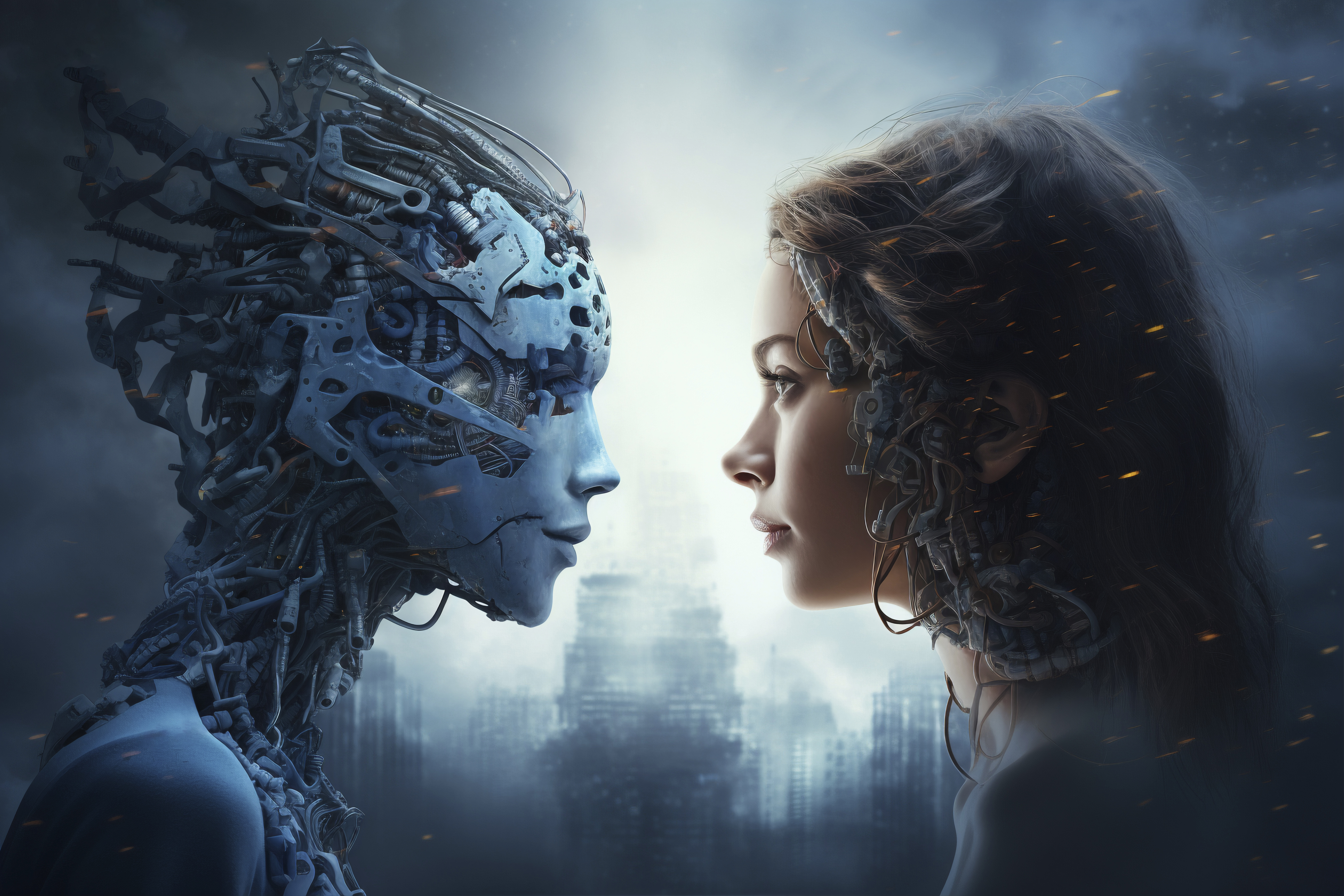
Human + Machine: Designing AI-Augmented Workplaces for Enhanced Productivity and Purpose
Introduction: From Automation to Augmentation
Artificial Intelligence is no longer a future concept—it is rapidly becoming a core component of how work is designed, executed, and evaluated. Yet, the most forward-looking organizations are discovering that the real value of AI does not lie in replacing human workers, but in augmenting human capability.
The AI-enabled workplace is evolving into a human + machine ecosystem, where intelligent systems enhance decision-making, accelerate productivity, and free employees to focus on creativity, judgment, and purpose-driven work. For organizations navigating this shift, the challenge is no longer whether to adopt AI, but how to design workplaces where humans and machines collaborate effectively, ethically, and meaningfully.
The Shift from Task Automation to Human Augmentation
Early AI adoption focused heavily on automating repetitive tasks—data entry, scheduling, reporting, and basic customer service. While this delivered efficiency gains, it often overlooked the broader opportunity: using AI to elevate human performance rather than replace it.
AI-augmented workplaces now leverage:
-
Predictive analytics to support strategic decisions
-
Generative AI to accelerate research, content creation, and ideation
-
Intelligent assistants to reduce cognitive overload
-
Automation tools that streamline workflows, not eliminate roles
The result is a workforce that is more productive, more engaged, and better aligned with organizational purpose.
Redesigning Jobs for Human–AI Collaboration
To fully realize AI’s potential, organizations must rethink how jobs are structured.
From Fixed Roles to Dynamic Capabilities
Traditional job descriptions are static. AI-augmented roles are dynamic—evolving based on what machines can do better and where human strengths are most valuable.
AI excels at:
-
Pattern recognition
-
Data processing at scale
-
Speed and consistency
Humans excel at:
-
Creativity and innovation
-
Emotional intelligence and empathy
-
Ethical judgment and complex decision-making
The future of work lies in intentional role design, where AI handles volume and speed, while humans focus on insight, leadership, and relationship-building.
Productivity Without Burnout: The New Performance Equation
One of the most compelling benefits of AI-augmented workplaces is the opportunity to redefine productivity.
Instead of measuring output by hours worked, organizations are shifting toward:
-
Outcome-based performance
-
Quality of decision-making
-
Speed to insight and innovation
AI tools can eliminate administrative friction—reducing meetings, emails, and manual reporting—allowing employees to focus on high-value work. When designed correctly, AI increases productivity without increasing burnout, a critical concern in hybrid and remote environments.
Purpose, Trust, and the Human Experience at Work
While AI can optimize efficiency, purpose remains a human need.
Employees are more likely to embrace AI when they:
-
Understand how it supports their work
-
Trust that it will not unfairly replace or surveil them
-
Feel included in how AI tools are designed and deployed
Organizations must therefore prioritize:
-
Transparent communication about AI use
-
Ethical AI governance and human oversight
-
Training programs that build confidence, not fear
A purpose-driven AI strategy reinforces trust, engagement, and long-term organizational resilience.
Leadership in the AI-Augmented Workplace
Leadership capabilities must also evolve.
Effective leaders in AI-enabled workplaces demonstrate:
-
AI literacy – understanding AI’s capabilities and limits
-
Change leadership – guiding teams through continuous transformation
-
Ethical stewardship – ensuring fairness, accountability, and inclusion
-
Human-centric thinking – keeping people at the center of innovation
AI does not eliminate leadership—it raises the standard for it.
Building an AI-Ready Workforce
AI-augmented workplaces require sustained investment in people.
Key priorities include:
-
Continuous upskilling and reskilling
-
Digital and data fluency across all roles
-
Strengthening human skills: creativity, empathy, adaptability
-
Cross-functional collaboration between HR, IT, and business leaders
Organizations that invest early in workforce readiness will unlock AI’s full value faster—and more responsibly.
Conclusion: Designing the Workplace of the Future
The future of work is not human or machine—it is human + machine.
Organizations that intentionally design AI-augmented workplaces will gain:
-
Higher productivity
-
Stronger employee engagement
-
Faster innovation
-
Sustainable competitive advantage
At H.G&W, we believe the organizations that succeed will be those that treat AI not as a cost-cutting tool, but as a strategic partner in human potential and purpose.







Leave a Reply