
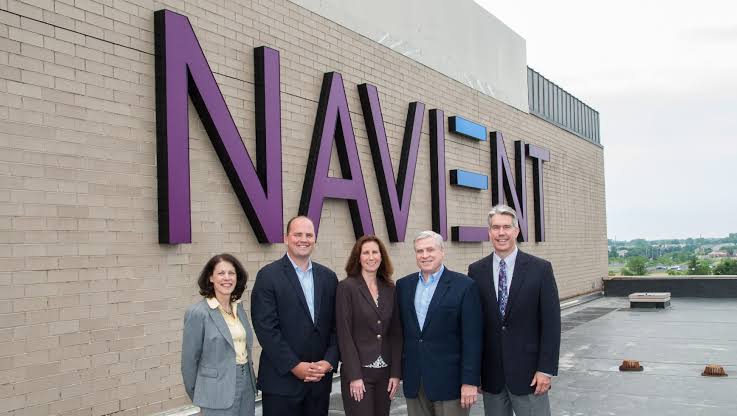
Navient: A Strategic Case Study in Reinvention Within Financial Services
From Student Loans to Strategic Reinvention: What Navient Teaches About Transformation in Financial Services
Executive Overview
Navient Corporation, headquartered in Herndon, Virginia, was established in 2014 following the separation of Sallie Mae into two independent entities: Sallie Mae Bank and Navient. The move allowed each organization to focus on distinct areas of the education finance market, with Navient concentrating on loan servicing, asset recovery, and business process solutions.
Over the years, Navient has experienced significant changes driven by regulatory reforms, shifts in federal student loan policies, and changing consumer expectations. These developments have required the company to rethink its operating model and diversify beyond its traditional business.
For business leaders, Navient represents an important example of how organizations can navigate disruption while repositioning for long-term relevance.
1. Strategic Separation Creates Strategic Focus
Corporate restructuring often enables organizations to sharpen their competitive positioning.
The separation from Sallie Mae allowed Navient to concentrate on:
- Loan servicing
- Customer account management
- Asset recovery solutions
- Technology-enabled business services
Rather than competing across multiple business models, the company was able to specialize in operational excellence.
Strategic Insight: Sometimes sustainable growth comes not from expanding business lines, but from narrowing focus and strengthening core capabilities.
2. The Changing Landscape of Student Finance
Higher education financing has undergone significant transformation over the past decade.
Changing government policies, evolving repayment programs, and increasing public scrutiny have altered the economics of student loan servicing.
Organizations operating in this environment must continuously adapt to:
- Regulatory reforms
- Borrower expectations
- Technology advancements
- Economic conditions
Navient’s experience highlights how industries tied closely to public policy must remain agile and responsive.
3. Regulation as a Strategic Business Factor
Financial services operate within one of the world’s most regulated environments.
For companies like Navient, regulatory compliance is not merely a legal obligation—it is a strategic necessity.
Strong governance helps organizations:
- Protect customer interests
- Reduce legal and operational risks
- Strengthen institutional credibility
- Build long-term investor confidence
The broader lesson is that governance and compliance should be viewed as drivers of resilience rather than barriers to growth.
4. Digital Transformation in Loan Servicing
Technology has fundamentally changed how financial institutions engage with customers.
Digital platforms enable:
- Faster loan servicing
- Self-service customer portals
- Automated payment management
- Data-driven customer support
Automation and analytics also improve operational efficiency while reducing servicing costs.
For financial institutions, digital capability is becoming a key differentiator in customer experience.
5. Trust Is the Foundation of Financial Services
Financial institutions operate on confidence.
Borrowers expect:
- Clear communication
- Fair treatment
- Data security
- Reliable service
Reputation has therefore become one of the industry’s most valuable intangible assets.
Navient’s experience underscores how customer trust must be continuously earned through transparency, accountability, and consistent service quality.
6. Reinvention Beyond Legacy Business Models
As the student loan servicing landscape evolves, financial services companies increasingly seek new sources of growth.
Diversification into technology-enabled business services, operational support, and broader financial solutions helps reduce dependence on legacy revenue streams.
This strategic evolution illustrates a broader principle:
Organizations that continually redefine their value proposition are better positioned to remain competitive in changing markets.
HG&W Strategic Conclusion
Navient’s journey demonstrates that long-term business success depends not only on operational expertise but also on adaptability.
Its experience offers valuable lessons in:
- Corporate transformation
- Regulatory resilience
- Customer trust
- Digital modernization
- Strategic diversification
For business leaders, the company reinforces an essential insight:
In highly regulated industries, sustainable competitive advantage comes from combining operational excellence with continuous strategic reinvention. Organizations that anticipate change—and adapt before change is forced upon them—are the ones most likely to remain relevant over the long term.











Leave a Reply