
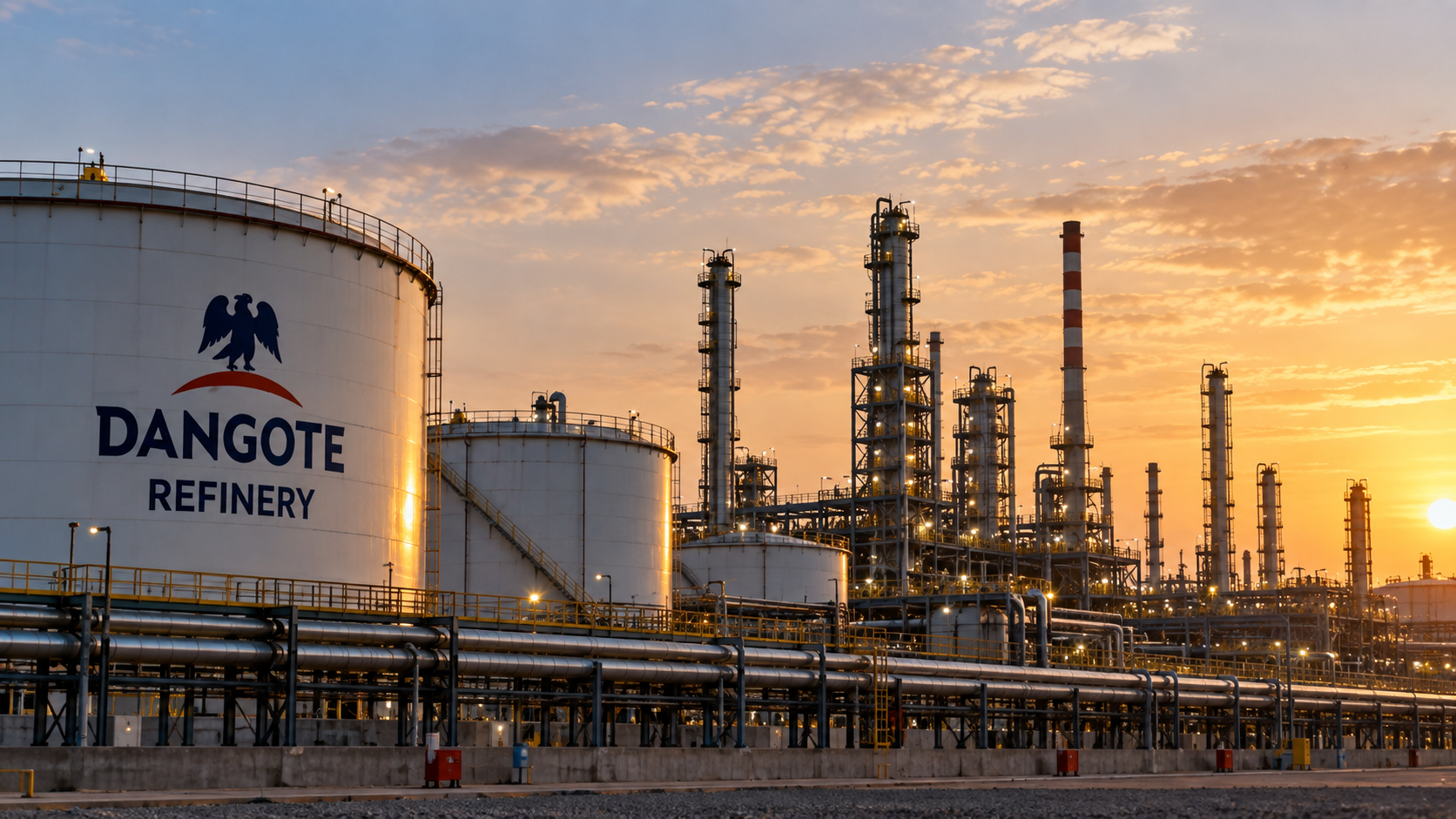
THE DANGOTE IPO: BEYOND THE ₦2.15 TRILLION
THE ECONOMIC IMPACT OF THE DANGOTE IPO
How Nigeria’s Largest Refinery Public Offering Could Reshape Capital Markets, Energy, Industrialisation and Wealth Creation
Executive Summary
The public offering of shares in Dangote Petroleum Refinery and Petrochemicals FZE represents one of the most significant transactions in Nigeria’s capital-market history.
The offer, which opened on 14 September 2026, comprises 4.1 billion ordinary shares at ₦525 per share, seeking to raise approximately ₦2.15 trillion. The minimum subscription is 10 shares, costing ₦5,250. The offer is scheduled to close on 13 October 2026, subject to the terms of the approved prospectus.
At the offer price, the refinery has an implied valuation of approximately ₦65.22 trillion, making it potentially the largest single company on the Nigerian Exchange once listed. NGX has described the transaction as the first refinery public offering in its 66-year history.
The economic significance extends far beyond the amount of money raised.
The IPO has the potential to:
- Deepen Nigeria’s capital market.
- Increase domestic ownership of a major industrial asset.
- Mobilise household and institutional savings into productive investment.
- Provide growth capital for refinery expansion.
- Strengthen Nigeria’s refining capacity and energy security.
- Support foreign-exchange conservation through reduced dependence on imported refined petroleum products.
- Increase the scale and diversity of the Nigerian Exchange.
- Create new opportunities for financial institutions and investment intermediaries.
- Strengthen the connection between Nigeria’s industrial economy and its capital markets.
But these benefits are potential economic effects, not guaranteed outcomes. The transaction also introduces risks, including concentration risk, commodity-price exposure, regulatory risk, operational risk, valuation risk, and the possibility that retail investors may make investment decisions without adequately understanding the underlying risks.
The bigger question is therefore not simply whether the Dangote IPO will be successful.
It is whether the transaction can become a model for converting African industrial assets into broadly owned, efficiently financed and sustainably governed businesses.
1. The IPO at a Glance
The Dangote Petroleum Refinery IPO is a public offer by Dangote Petroleum Refinery and Petrochemicals FZE.
Key figures
| Indicator | Details |
|---|---|
| Shares offered | 4.1 billion |
| Offer price | ₦525 per share |
| Minimum subscription | 10 shares |
| Minimum investment | ₦5,250 |
| Target proceeds | Approximately ₦2.15 trillion |
| Offer opened | 14 September 2026 |
| Offer closes | 13 October 2026 |
| Implied valuation | Approximately ₦65.22 trillion |
| Proposed market | Nigerian Exchange |
| Investor categories | Retail, institutional and eligible African investors |
These figures are based on the official IPO information and NGX announcements.
The scale is extraordinary.
The transaction is not simply another equity offering. It represents the conversion of a major privately controlled industrial asset into a publicly accessible investment opportunity.
That distinction matters.
2. From Industrial Project to Public Asset
The Dangote Refinery was conceived as a transformational industrial project designed to increase Nigeria’s domestic refining capacity.
The refinery has been built at enormous scale and has become an important component of Nigeria’s downstream petroleum industry.
According to NGX, the refinery reported approximately ₦19.47 trillion in revenue and ₦2.55 trillion in profit after tax in the first half of 2026.
The IPO therefore comes at a different stage from a typical startup or early-stage capital raise.
Investors are not simply financing an idea.
They are being offered exposure to an operating industrial asset with significant revenues, existing production capacity and expansion ambitions.
This changes the economic conversation from:
“Can this project work?”
to:
“How effectively can this industrial asset scale, create value and distribute that value across a wider ownership base?”
3. The First Major Economic Impact: Mobilising Nigerian Capital
One of the most important implications of the IPO is the potential mobilisation of domestic savings.
Nigeria has millions of individuals, businesses, pension funds, financial institutions and other investors with capital seeking productive investment opportunities.
The challenge is often connecting that capital with large-scale productive assets.
The Dangote IPO creates precisely that bridge.
Instead of capital remaining in savings accounts, fixed-income instruments, property or other assets, part of it can potentially move into equity ownership of a major industrial company.
This is important because economic development depends not only on how much money exists in an economy, but also on where capital is allocated.
Capital directed toward productive businesses can finance:
- Expansion.
- Equipment.
- Technology.
- Employment.
- Infrastructure.
- Research and development.
- Export capacity.
- Supply-chain development.
The IPO therefore represents an experiment in turning savings into industrial capital.
BusinessDay described the transaction as a test of whether Africa’s growing pools of domestic savings can finance major industrial assets.
4. Deepening Nigeria’s Capital Market
The transaction could significantly increase the size and diversity of the Nigerian Exchange.
BusinessDay estimates that the refinery’s listing could value the company at approximately ₦65.22 trillion and potentially push total NGX market capitalisation toward ₦225 trillion, although actual market capitalisation after listing will depend on market prices and other factors.
This matters for several reasons.
More market depth
A larger listed company creates greater market depth and potentially increases the number of investors participating in Nigerian equities.
Greater sectoral diversity
The Nigerian market has historically had significant exposure to banking, telecommunications, consumer goods, industrial goods and other sectors.
A major energy and petrochemical listing adds another large-scale industrial asset to the exchange.
Greater institutional participation
Large pension funds, asset managers, insurance companies and institutional investors may gain another substantial Nigerian equity in which to allocate capital, subject to their investment mandates and applicable regulations.
Improved capital-market visibility
A transaction of this size attracts international attention to Nigeria’s financial markets.
It demonstrates that Nigeria’s capital market can potentially support transactions involving very large African industrial businesses.
5. A New Ownership Model: From Consumers to Shareholders
Perhaps the most socially significant feature of the IPO is the low minimum subscription.
At ₦5,250 for 10 shares, the offer is structured to allow a much broader population to participate than would normally be possible with a large industrial asset.
This creates the possibility of a cultural shift:
From consuming businesses…
to
owning businesses.
For decades, ordinary Nigerians have largely participated in the economy as consumers, workers and savers.
Equity ownership creates another avenue: becoming shareholders.
NGX has explicitly framed the Dangote transaction within this broader idea of expanding ownership and connecting Nigerians with businesses shaping the economy.
If participation becomes widespread, the long-term significance could extend beyond this particular IPO.
It could encourage more Nigerians to:
- Learn about equities.
- Open investment accounts.
- Understand company financial statements.
- Participate in capital markets.
- Build long-term investment portfolios.
- Think about wealth creation through ownership rather than consumption alone.
However, accessibility must not be confused with guaranteed returns.
The official IPO website explicitly states that share values can rise or fall and that investors can lose some or all of their investment. Dividends are also not guaranteed.
6. The Impact on Nigeria’s Energy Security
The refinery’s economic significance goes beyond financial markets.
Nigeria has historically relied heavily on imported refined petroleum products despite being a major crude-oil producer.
Greater domestic refining capacity can reduce the country’s dependence on imported refined products.
That could potentially improve:
- Energy security.
- Supply reliability.
- Foreign-exchange management.
- Industrial productivity.
- Transportation-sector stability.
- Petrochemical development.
The refinery’s planned expansion is particularly significant.
Reuters reports that the IPO is intended to support expansion toward approximately 1.4 million barrels per day, compared with current production capacity of around 700,000 barrels per day.
If successfully executed, that expansion could substantially increase Nigeria’s refining capacity and potentially strengthen its position as a regional petroleum-products supplier.
7. Foreign Exchange: One of the Most Important Potential Effects
Nigeria’s foreign-exchange position is closely connected to its petroleum industry.
For years, the country exported crude oil while importing significant quantities of refined petroleum products.
This created a structural contradiction:
Nigeria produced the raw material but depended heavily on external capacity to process it.
Domestic refining changes that equation.
If domestic refineries can satisfy more local demand, Nigeria could potentially reduce the foreign currency required to import refined petroleum products.
The refinery could also generate export revenues by selling petroleum products into international and regional markets.
This creates two potential FX channels:
Import substitution
Less foreign exchange potentially spent importing refined products.
Export generation
More foreign exchange potentially earned from exporting refined products.
Neither outcome should be treated as automatic. They depend on refinery utilisation, domestic demand, international prices, logistics, product competitiveness, government policy and the refinery’s ability to operate efficiently.
Nevertheless, the economic opportunity is substantial.
8. The IPO Could Finance Further Industrialisation
The most important point about the ₦2.15 trillion fundraising is what happens after the money is raised.
NGX has reported that the proceeds are intended as growth capital for the refinery’s expansion rather than simply to repair the company’s balance sheet.
That distinction is critical.
Capital used for expansion can generate additional economic activity through:
- Construction.
- Engineering.
- Equipment procurement.
- Logistics.
- Employment.
- Technology.
- Maintenance.
- Industrial services.
- Petrochemical production.
- Export activity.
This creates a multiplier effect.
The refinery becomes not merely a company but an economic platform around which other businesses can grow.
9. Supply-Chain Effects
Large industrial facilities generate demand across extensive supply chains.
The refinery’s expansion could create opportunities for:
- Engineering firms.
- Construction companies.
- Equipment suppliers.
- Transportation companies.
- Marine logistics operators.
- Storage companies.
- Security providers.
- Technology companies.
- Environmental-service providers.
- Professional-services firms.
- Financial institutions.
- Insurance companies.
- Maintenance contractors.
For Nigerian SMEs, this could create one of the most significant indirect economic opportunities associated with the IPO.
The key challenge will be ensuring that local businesses have the capability, standards, financing and certification required to participate in these supply chains.
Industrialisation is most powerful when large projects create ecosystems of smaller businesses rather than functioning as isolated mega-projects.
10. Employment and Human Capital
The refinery and its broader ecosystem can support employment through both direct and indirect channels.
Direct employment
Jobs associated with refinery operations, engineering, management, technical services, administration and other functions.
Indirect employment
Jobs created among suppliers, contractors, logistics providers, maintenance companies and other businesses.
Induced employment
Additional economic activity created when workers spend their incomes across the wider economy.
The long-term human-capital effect could be even more important.
Large industrial operations create opportunities for Nigerians to develop expertise in:
- Refinery operations.
- Process engineering.
- Petrochemicals.
- Industrial automation.
- Maintenance.
- Safety management.
- Supply-chain management.
- Energy trading.
- Industrial technology.
Over time, these skills can become exportable African capabilities.
11. Regional Industrialisation
The economic impact does not necessarily stop at Nigeria’s borders.
A large, efficient refinery can potentially supply petroleum products to neighbouring African markets.
That creates opportunities for regional trade and could strengthen Nigeria’s position as an industrial hub.
The broader vision is not simply:
Nigeria produces petroleum products for Nigeria.
It could become:
Nigeria produces competitive petroleum and petrochemical products for Africa and international markets.
This matters because African countries collectively spend significant resources importing refined petroleum products and other manufactured goods from outside the continent.
Increasing intra-African industrial production could support regional economic integration.
12. The Petrochemical Opportunity
The refinery should not be viewed exclusively as a petrol and diesel producer.
The petrochemical component could become an equally important long-term economic opportunity.
Petrochemicals are inputs into industries including:
- Plastics.
- Packaging.
- Textiles.
- Agriculture.
- Pharmaceuticals.
- Construction.
- Manufacturing.
- Consumer products.
A stronger petrochemical base could reduce the need for some imported industrial inputs and encourage downstream manufacturing.
This creates the possibility of an industrial chain:
Crude oil → Refining → Petrochemicals → Manufacturing → Exports
The economic value increases as more stages of the value chain occur domestically.
13. Impact on Nigerian Businesses
The IPO could influence Nigerian businesses in another important way: it demonstrates the possibility of financing very large African companies through domestic capital markets.
For entrepreneurs, this creates a long-term aspiration.
A Nigerian company can potentially grow from:
Founder-owned → professionally managed → institutionally financed → publicly listed → broadly owned
This creates a potential pathway for Nigerian companies to scale without depending entirely on foreign ownership or bank lending.
For H.G.&W., this is particularly important from a corporate-strategy perspective.
The IPO raises questions around:
- Corporate governance.
- Financial reporting.
- Investor relations.
- Board accountability.
- Strategic transparency.
- Succession planning.
- Risk management.
- ESG.
- Stakeholder management.
Public ownership changes the relationship between a company and its stakeholders.
14. Corporate Governance Will Become More Important
Moving from private ownership to public ownership introduces a new level of accountability.
A listed company must communicate with investors, comply with capital-market rules, disclose relevant information and operate within a governance framework designed to protect shareholders.
This can strengthen institutional discipline.
But public listing does not automatically guarantee excellent governance.
The quality of governance will depend on:
- Board independence.
- Disclosure quality.
- Internal controls.
- Audit processes.
- Risk management.
- Minority shareholder protection.
- Regulatory oversight.
- Management accountability.
The Dangote IPO therefore represents not only a financing event but a significant corporate-governance transition.
15. What Does It Mean for Existing Investors?
The transaction may also change the structure of Nigeria’s investment market.
Institutional investors will have to evaluate the refinery alongside existing asset classes.
Portfolio managers may consider:
- Energy exposure.
- Inflation protection.
- Earnings potential.
- Currency exposure.
- Dividend prospects.
- Commodity cycles.
- Political and regulatory risks.
- Capital expenditure requirements.
- Valuation.
This could increase sophistication within Nigeria’s investment-management industry.
Financial advisers and fund managers will have to provide deeper analysis rather than simply selling the IPO based on its popularity.
16. The Risk of Hype
The enormous public attention surrounding the IPO creates an important danger: investment hype can overwhelm investment analysis.
The fact that an asset is strategically important does not mean its shares will automatically increase in value.
The fact that a company is associated with one of Africa’s largest industrial projects does not eliminate business risk.
Investors should distinguish between:
Economic importance
and
Investment return.
They are not the same thing.
The SEC has specifically warned prospective investors to use approved channels, verify investment platforms and carefully read the prospectus before subscribing.
The official IPO platform likewise warns that share values can fall and that dividends are not guaranteed.
This is particularly important because the offer is being marketed toward retail investors.
Financial inclusion must be accompanied by financial literacy.
17. Risks That Could Affect the Economic Impact
Several factors could limit the benefits of the IPO.
17.1 Commodity-price risk
Refinery economics are influenced by crude-oil prices, refined-product prices and refining margins.
17.2 Operational risk
Large industrial facilities require continuous maintenance, reliable infrastructure and highly skilled personnel.
17.3 Regulatory risk
Changes in petroleum policy, taxation, environmental requirements or market regulation can affect profitability.
17.4 Currency risk
The business operates in an economy where exchange-rate movements can affect equipment, financing, trade and input costs.
17.5 Market concentration
The growing scale of one industrial player could raise competition and market-structure questions.
17.6 Execution risk
Expansion from approximately 700,000 barrels per day toward 1.4 million barrels per day will require significant capital, engineering execution and operational discipline.
17.7 Retail-investor risk
New investors may enter the market without understanding volatility, valuation or portfolio diversification.
These risks do not invalidate the economic opportunity. They demonstrate why governance, regulation and professional investment analysis matter.
18. What the IPO Means for Nigeria’s Pension and Institutional Capital
One of the long-term questions is whether Nigeria can increasingly use its domestic institutional savings to finance domestic productive assets.
The country has substantial pools of pension and institutional capital.
If capital-market infrastructure continues to improve, large Nigerian projects could increasingly access domestic investors rather than depending exclusively on foreign capital or bank loans.
The Dangote IPO therefore forms part of a broader evolution:
Domestic savings → Capital markets → Industrial investment → Economic growth
That cycle is fundamental to the development of sophisticated economies.
19. Could This Change the Nigerian Exchange?
The Dangote IPO could create a new benchmark for the Nigerian capital market.
Its significance lies partly in scale, but also in precedent.
If the transaction performs effectively, other large private companies may become more comfortable considering public listings.
This could eventually create:
- More listed companies.
- Greater market depth.
- More investment options.
- Greater transparency.
- More institutional participation.
- More domestic ownership of major businesses.
Dangote Industries has also indicated an intention to pursue broader listings of operating businesses in the future, although the timing and structure of any future transactions remain separate questions.
20. The Bigger Economic Question: Can Nigeria Create an Ownership Economy?
The most interesting implication of the IPO may be philosophical.
Nigeria has historically had an economy where millions of people participate primarily through consumption.
The capital market offers another possibility:
Consumers can become owners.
A worker who buys shares in an industrial company becomes economically connected to that company’s growth.
A small business owner who invests part of their savings in productive assets participates differently in the economy.
This is the foundation of an ownership economy.
However, ownership must be meaningful.
That requires:
- Transparent markets.
- Investor education.
- Strong corporate governance.
- Reliable regulation.
- Accessible financial infrastructure.
- Protection of minority shareholders.
- Long-term investment culture.
The Dangote IPO provides an unusually visible opportunity to test whether Nigeria can move in that direction.
21. Strategic Implications for African Businesses
The transaction also offers a lesson for other African companies.
Africa needs more companies capable of moving from local operations to continental scale.
But scaling requires capital.
Traditional bank financing alone may not be sufficient for massive infrastructure, manufacturing, technology and energy projects.
Capital markets can provide another route.
The Dangote transaction therefore raises a strategic question for African business leaders:
What companies being built today could become tomorrow’s publicly owned African champions?
The answer will depend on whether entrepreneurs build companies with strong governance, scalable systems, institutional reporting and long-term strategic discipline.
22. H.G.&W. Strategic Perspective
From an H.G.&W. perspective, the Dangote IPO should be viewed through three interconnected lenses: capital, industry and ownership.
Capital
The transaction demonstrates the capacity of Nigeria’s capital market to mobilise substantial domestic and international investment for a major African industrial asset.
Industry
The refinery can potentially become an anchor for downstream petroleum, petrochemical and manufacturing ecosystems.
Ownership
The public offer creates an opportunity to broaden participation in the ownership of a major Nigerian industrial business.
The ultimate economic impact will depend on what happens after the IPO.
If the capital is efficiently deployed, production expands, exports grow, supply chains deepen and governance remains strong, the transaction could contribute meaningfully to Nigeria’s industrial transformation.
If the market focuses primarily on the excitement of the IPO while neglecting governance, productivity and long-term capital allocation, much of the potential value could be lost.
The real measure of success will therefore not be the amount raised on day one.
It will be the economic value created over the next decade.
23. What Stakeholders Should Watch
Government
- Energy security.
- Tax revenues.
- Foreign-exchange effects.
- Competition.
- Local-content development.
- Industrial policy.
Investors
- Earnings growth.
- Cash flow.
- Refining margins.
- Capital expenditure.
- Governance.
- Dividend policy.
- Valuation.
- Risk exposure.
Nigerian businesses
- Supply-chain opportunities.
- Industrial partnerships.
- Export opportunities.
- New financing models.
- Capital-market readiness.
Financial institutions
- Retail-investor education.
- Digital investment infrastructure.
- Corporate advisory.
- Asset management.
- Research capabilities.
Entrepreneurs
- Building scalable businesses.
- Institutional governance.
- Financial transparency.
- Long-term capital strategy.
Conclusion
The Dangote IPO is much bigger than a share offering.
At ₦2.15 trillion, it represents a major mobilisation of capital. At an implied valuation of approximately ₦65.22 trillion, it could transform the composition of the Nigerian Exchange. And with a minimum subscription of ₦5,250, it is designed to make participation possible for a much wider population of investors.
But the ultimate economic significance will be determined by what follows.
If the capital finances productive expansion, increased refining capacity, petrochemical development, exports and stronger supply chains, the IPO could become an important chapter in Nigeria’s industrialisation story.
If it also succeeds in bringing millions of Nigerians closer to long-term equity ownership, its impact could extend into the country’s wealth-creation culture.
For Nigeria, the deeper opportunity is clear:
Build industrial assets. Mobilise domestic capital. Broaden ownership. Create competitive businesses. Keep more value within the economy.
The Dangote IPO is therefore not merely a transaction to watch.
It is a test of whether Nigeria can increasingly transform its domestic savings and capital markets into engines of industrial growth.
And perhaps its most important question is not “How much money will the IPO raise?”
It is:
“What kind of economy can Nigeria build with the capital it is now learning to mobilise?”










Leave a Reply