
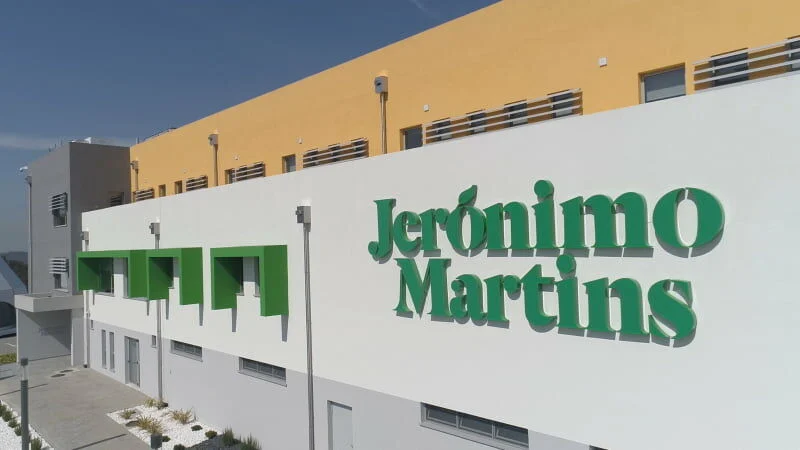
JERÓNIMO MARTINS: THE POWER OF LOW PRICES
Jerónimo Martins: The Retail Empire Built on Low Prices
How a 230-Year-Old Portuguese Business Built a Multinational Food Retail Platform
Executive Summary
Jerónimo Martins is one of Europe’s more interesting retail groups because its story is simultaneously one of scale, discipline, geographic diversification and strategic concentration.
The Portuguese group traces its roots back more than 230 years and today operates food distribution and specialised retail businesses across Poland, Portugal, Colombia, Slovakia, Czechia and Morocco. Its network exceeds 6,500 stores and it employed 147,709 people at the end of 2025. Food distribution accounts for more than 98% of consolidated sales.
But the headline geographic diversification can be misleading.
The economic heart of the Group is Biedronka, its Polish food-retail business. In 2025, Biedronka generated €25.343 billion of sales — approximately 70% of Group revenue — and €1.991 billion of EBITDA.
Meanwhile, Colombia’s Ara is becoming the Group’s most important growth story. Ara generated €3.228 billion of sales in 2025, grew local-currency sales by 17.4%, and ended the year with 1,653 stores.
Then came another strategic move: in March 2025, Biedronka crossed Poland’s borders for the first time by entering Slovakia.
The resulting business model is fascinating.
Jerónimo Martins is using the same basic formula — proximity, low prices, scale, private labels and logistics — across different markets, while adapting the execution to local consumers.
The challenge is whether that formula can continue producing attractive growth as the company becomes larger, competition intensifies and its capital requirements increase.
1. The Business Behind the Brand
Jerónimo Martins is not a conventional diversified conglomerate.
Its portfolio is concentrated around food and consumer retail.
The major businesses include:
- Biedronka — food retail in Poland and Slovakia
- Pingo Doce — food retail in Portugal
- Ara — food retail in Colombia
- Recheio — cash-and-carry food distribution in Portugal
- Hebe — health and beauty retail, principally in Poland
- Additional agricultural, specialised retail and other activities
In 2025, Group sales reached approximately €35.99 billion, while EBITDA reached €2.48 billion. Net income was approximately €646 million.
The Group also continued investing aggressively.
It opened 448 new stores and refurbished 281 locations during 2025. Total investment reached approximately €1.197 billion.
This tells us something important about Jerónimo Martins’ strategy.
The company is not trying to grow primarily through acquisitions.
It is largely pursuing organic, store-by-store expansion supported by increasingly sophisticated logistics infrastructure.
2. Biedronka: The Engine Room
If H.G.&W. wants to understand Jerónimo Martins, it should start with Biedronka.
The business began in Poland in 1995 and has grown into one of the country’s dominant food retailers.
By 2025, Biedronka generated:
- €25.343 billion in sales
- €1.991 billion in EBITDA
- Approximately 70% of Group sales
- Approximately 80% of Group EBITDA
Its 2025 sales grew 7.5% in euros and 5.9% in Polish złoty, while EBITDA increased 9.8%.
The business model is relatively simple to understand:
High volume + low prices + dense store network + purchasing scale + efficient logistics = competitive advantage.
But simple does not mean easy.
Maintaining this model requires continuous investment in:
- Store expansion
- Distribution centres
- Technology
- Procurement
- Workforce productivity
- Inventory management
- Pricing
- Customer data
- Private-label development
In 2025, Biedronka had more than 3,300 stores equipped with self-checkout technology and 28 micro-fulfilment centres supporting its Biek quick-commerce operation. It also expanded DHL parcel-locker infrastructure across its stores.
The supermarket is therefore increasingly becoming a technology-enabled logistics platform.
3. The Low-Price Strategy
Jerónimo Martins competes heavily on price.
This is particularly important because its customers are highly sensitive to food inflation and household purchasing power.
During periods of economic pressure, consumers tend to become more deliberate about where they shop and what they buy.
The Group’s response has been to strengthen its value proposition rather than retreat from competition.
Private brands are central to this strategy.
In 2025:
- Ara private brands represented 41% of sales
- Biedronka private brands represented 38%
- Pingo Doce private brands represented approximately 28%
- Recheio private brands represented 24%
The Group also launched 744 private-brand products during the year.
Private labels can provide several strategic advantages.
Price Competitiveness
The retailer has greater control over product specifications and pricing.
Differentiation
Customers cannot purchase an identical private-label product from another retailer.
Margin Management
The retailer can capture more of the value chain than it might with a fully branded product.
Customer Loyalty
Successful private brands become part of the customer’s normal shopping basket.
This makes private labels more than a merchandising tool.
They are part of Jerónimo Martins’ competitive architecture.
4. The Colombia Opportunity
If Biedronka represents the company’s established engine, Ara represents its growth experiment at scale.
Ara operates in Colombia and has been expanding rapidly.
In 2025:
- Sales reached €3.228 billion
- Sales increased 13.3% in euros
- Local-currency sales increased 17.4%
- Like-for-like sales increased 5.8%
- EBITDA increased 37.6%
- The network reached 1,653 stores
- 225 stores were opened during the year
- The company worked with more than 500 Colombian suppliers
Ara also opened a new distribution centre and began constructing what the Group described as its largest logistics centre in Colombia, in Girardota. That facility opened in early 2026.
This is important because retail expansion is not simply about opening stores.
Every additional store requires:
procurement → warehousing → transportation → inventory → staffing → pricing → replenishment → customer acquisition.
The logistics system must grow alongside the retail footprint.
Ara therefore provides a test of whether Jerónimo Martins can transfer its organisational capabilities from Europe to Latin America.
5. Can Biedronka’s Formula Travel?
This is perhaps the most interesting strategic question.
Jerónimo Martins’ Polish success was built around several interconnected capabilities:
- High-density store networks
- Strong procurement
- Private-label development
- Low-price positioning
- Efficient distribution
- Local supplier relationships
- Consumer data
- Standardised operating processes
Ara shows that these capabilities can potentially be exported.
But the company cannot simply copy Biedronka.
Colombia differs from Poland in:
- Consumer behaviour
- Income distribution
- Infrastructure
- Currency
- Supply chains
- Competition
- Urban geography
- Regulatory environment
The strategic challenge is therefore:
What should be standardised, and what must be localised?
The answer appears to be the operating philosophy rather than the exact store format.
The company can standardise procurement discipline, data usage, logistics principles and private-brand development while adapting assortment, pricing and customer experience to each market.
That is a powerful internationalisation model.
6. Biedronka Goes International
In 2025, Biedronka itself entered Slovakia.
This was strategically significant because it represented the first international expansion of Jerónimo Martins’ largest retail banner.
By the end of 2025, Biedronka had opened 15 stores and one distribution centre in Slovakia.
The significance goes beyond 15 stores.
Management is effectively testing whether a successful national retail formula can be replicated in another Central European market.
If the model works, Slovakia could become a platform for additional Central European expansion.
But internationalisation also creates risk.
A retailer must understand:
- Local consumer preferences
- Competitor pricing
- Real-estate economics
- Labour markets
- Supplier relationships
- Regulation
- Logistics
- Brand perception
The first phase therefore represents an organisational learning exercise as much as a growth initiative.
7. Portugal: The Mature Foundation
While Poland and Colombia attract more attention, Portugal remains important.
Pingo Doce generated approximately €5.342 billion in 2025 sales, with sales increasing 5.3%.
The banner opened nine stores and remodelled 52 locations.
It is also increasingly focused on convenience and food solutions.
Pingo Doce’s fresh-food and ready-made-food offering contributed significantly to its performance in 2025. The business also launched its own online store.
This illustrates another important strategic principle.
Mature markets do not necessarily require geographic expansion to remain valuable.
Growth can come from:
- Better store formats
- Higher customer frequency
- Fresh-food solutions
- Digital channels
- Private brands
- Productivity improvements
- Better customer experience
Pingo Doce provides stability while the Group takes greater growth risks elsewhere.
8. Technology Is Quietly Reshaping the Business
Retail technology often receives less attention than flashy consumer technology.
But for a company with thousands of stores, small technological improvements can produce substantial financial effects.
Jerónimo Martins is using technology across several areas.
Personalised Promotions
The Biedronka, Pingo Doce and Ara apps use shopping behaviour to provide personalised offers.
The Group recorded more than 1.4 billion “shakes” through its main food-retail apps in 2025.
Self-Checkout
Biedronka ended 2025 with more than 3,300 stores equipped with self-checkout systems.
Electronic Shelf Labels
These can improve pricing efficiency and reduce the operational burden associated with changing thousands of prices.
Quick Commerce
Biedronka’s Biek operation had 28 dedicated micro-fulfilment centres by the end of 2025.
Digital B2B
Recheio launched an app aimed at helping business customers manage their purchases and operations.
Technology is therefore being used primarily to improve the economics of the core business.
That is strategically different from creating technology businesses for their own sake.
9. The Economics of Scale
Retail is a scale business.
A retailer with thousands of stores can potentially negotiate better purchasing terms, spread logistics costs across larger volumes and invest more heavily in technology than smaller competitors.
But scale creates another advantage:
data.
Every transaction provides information about:
- Price sensitivity
- Product preferences
- Shopping frequency
- Promotion effectiveness
- Geographic demand
- Customer behaviour
The retailer can use this information to improve assortment and pricing.
Jerónimo Martins is therefore operating a feedback loop:
More stores → more customers → more data → better assortment/pricing → greater customer value → more sales → greater purchasing power → lower prices.
This is one of the most important elements of the Group’s business model.
10. The Hidden Risk: Concentration
Jerónimo Martins is geographically diversified, but economically it remains highly dependent on Poland.
Biedronka alone represented approximately 70% of Group sales in 2025.
This creates both strength and vulnerability.
Poland provides:
- Scale
- Strong market position
- Purchasing power
- Established infrastructure
- Brand recognition
But weakness in Polish food consumption, aggressive competition or prolonged price deflation can have a material Group-level impact.
This was visible in 2025.
Biedronka faced:
- Low basket inflation
- Rising wage costs
- Competitive pressure
- Weak food-consumption dynamics
The company responded with productivity measures and cost controls.
The lesson is important:
Geographic diversification does not automatically equal economic diversification.
A company can operate in six countries while still depending heavily on one market and one business.
11. 2026: Growth Meets Deflation
The first half of 2026 provides an interesting test of the model.
Jerónimo Martins reported:
- €18.282 billion in sales
- Sales growth of 5.1%
- €1.235 billion EBITDA
- EBITDA growth of 7.6%
- €260 million net profit attributable to Jerónimo Martins
However, net profit was down 3.5% from €269 million in H1 2025. Net financial costs increased 22.7%, while operating costs rose 6.7%.
This illustrates an important retail principle:
Revenue growth and EBITDA growth do not automatically translate into equivalent bottom-line growth.
The company is continuing to invest heavily while dealing with higher financing costs and working-capital demands.
H1 2026 cash flow was negative €332 million after approximately €591 million of capital expenditure payments and €504 million of working-capital absorption.
That does not necessarily indicate structural weakness.
It reflects the capital intensity of an expanding retail network.
But it does mean management must continually ensure that new stores and infrastructure generate adequate returns over time.
12. Capital Allocation: Invest, Then Reward Shareholders
Jerónimo Martins has maintained a relatively disciplined dividend policy.
The Group’s policy targets dividends equivalent to 40–50% of ordinary consolidated net earnings adjusted for IFRS 16 effects.
For 2025, shareholders approved a gross dividend of €0.65 per share, with total distribution of approximately €408.5 million.
The important strategic point is the balance.
Jerónimo Martins is simultaneously:
- Opening stores
- Building distribution centres
- Refurbishing existing stores
- Investing in technology
- Expanding internationally
- Paying dividends
This is a classic capital-allocation challenge.
Too much dividend distribution can constrain growth.
Too much reinvestment can frustrate shareholders.
The Group’s stated approach attempts to maintain both investment capacity and shareholder distributions.
13. Family Ownership and Long-Term Thinking
Jerónimo Martins is also interesting from a corporate-governance perspective.
At the end of 2025, Sociedade Francisco Manuel dos Santos held 56.14% of both the company’s capital and voting rights.
This controlling position can create a longer-term orientation because management and controlling shareholders have significant exposure to the long-term consequences of capital-allocation decisions.
It can also create governance considerations because minority shareholders operate alongside a dominant shareholder.
The Group’s 2025–2027 Board had 11 members, including four women; ten directors were non-executive, and the company reported 64% independent directors under its stated governance criteria.
The broader lesson for business leaders is that ownership structure can influence strategic time horizons.
A company thinking in decades may make different decisions from one focused primarily on the next quarter.
14. Sustainability: From Compliance to Retail Operations
Sustainability is increasingly embedded in Jerónimo Martins’ operating model.
In 2025, the company achieved a triple-A rating from CDP across Climate, Water and Forests, becoming the first multinational food retailer to receive the highest rating across all three categories according to the Group.
The Group also reported:
- Scope 1 and 2 emissions down 18.4% from its 2021 baseline
- More than 2,700 locations equipped with photovoltaic panels
- More than half of total energy consumption sourced from renewable sources
But sustainability in food retail goes well beyond energy.
It includes:
- Food waste
- Packaging
- Agricultural sourcing
- Deforestation
- Water
- Product nutrition
- Supplier standards
- Animal welfare
- Refrigeration
- Logistics
The company also changed private-brand recipes in 2025 to avoid approximately:
- 320 tonnes of sugar
- 39 tonnes of salt
- 275 tonnes of fats
This illustrates an increasingly important concept:
Sustainability in retail is not simply about reducing the company’s footprint; it also involves changing what millions of consumers purchase.
15. Local Suppliers and Economic Impact
Jerónimo Martins’ model also creates significant opportunities for local suppliers.
The Group reported that the percentage of food products sourced from local suppliers was:
- 81% in Portugal
- 94% in Poland
- 98% in Colombia
This matters because large retailers can influence entire agricultural and manufacturing ecosystems.
A major retailer can provide suppliers with:
- Stable demand
- Product-development opportunities
- Quality standards
- Distribution access
- Scale
- Export opportunities
But it can also exert considerable negotiating power.
The strategic challenge is therefore maintaining a supply ecosystem that remains productive and sustainable while preserving the retailer’s low-price proposition.
16. Key Risks Facing Jerónimo Martins
1. Competitive Pressure
Food retail is intensely competitive.
Price wars can increase sales volumes while simultaneously reducing margins.
2. Polish Concentration
Biedronka’s dominant contribution to Group earnings makes Poland particularly important.
3. Wage Inflation
Retail is labour intensive. Rising minimum wages and employee costs can pressure margins.
4. Food-Price Deflation
Deflation can benefit consumers but make nominal sales growth more difficult.
5. Capital Intensity
Store openings, distribution centres, refurbishments and technology require significant investment.
6. Currency Risk
The Group reports in euros but generates significant revenue in Polish złoty and Colombian pesos.
7. International Expansion Risk
The Biedronka Slovakia expansion and Ara’s Colombian growth introduce new operational and cultural challenges.
8. Supply-Chain Risk
Food retail depends on reliable agricultural production, transportation, energy and logistics.
9. Consumer Behaviour
Retailers must continuously adapt to changing shopping habits, digital adoption and demand for convenience.
17. Strategic Lessons for Business Leaders
Lesson 1: Low Price Is a Strategy, Not Just a Promotion
Jerónimo Martins demonstrates that price leadership requires procurement, logistics, private labels and operational efficiency working together.
Lesson 2: Build the Infrastructure Behind Growth
Opening stores without building the logistics network to support them can undermine expansion.
Lesson 3: Export Capabilities, Not Just Brands
The company’s international strategy works because it exports an operating system — not merely a store name.
Lesson 4: Diversification Should Reduce Risk Without Destroying Focus
Jerónimo Martins has expanded geographically while keeping food distribution at the centre of the business.
Lesson 5: Private Labels Can Become Strategic Assets
A strong private-brand portfolio can simultaneously support price competitiveness, differentiation and customer loyalty.
Lesson 6: Technology Should Improve the Core Business
Apps, self-checkout, electronic shelf labels and micro-fulfilment are valuable because they improve the economics of retail.
Lesson 7: Scale Must Translate Into Customer Value
The ultimate purpose of purchasing and logistics scale is not simply higher margins. It is the ability to provide better value while remaining profitable.
Lesson 8: Growth Requires Patience
Ara’s development demonstrates that international expansion requires years of store openings, logistics investment, supplier development and customer adoption before the economics fully mature.
Conclusion
Jerónimo Martins is a compelling example of how a traditional retailer can become a multinational business without losing its core identity.
The Group’s formula is remarkably consistent:
low prices + proximity + private brands + logistics + scale + local adaptation.
Biedronka remains the engine, generating roughly 70% of Group sales and around 80% of EBITDA. Portugal provides mature businesses and operational stability. Colombia offers the most visible long-term growth opportunity, while Slovakia represents a new test of whether the Biedronka model can travel beyond Poland.
The challenge is equally clear.
The larger Jerónimo Martins becomes, the more capital it must deploy. The more successful Biedronka becomes, the greater the Group’s dependence on Poland. And the more aggressively the company competes on price, the greater the pressure on margins.
Yet the underlying strategic lesson is powerful.
Jerónimo Martins has not built its competitive position through one spectacular innovation. It has built it through thousands of small operational advantages that reinforce one another.
In food retail, where customers can change stores with almost no switching cost, that discipline may be one of the most valuable competitive advantages of all.
This report is a business research review and does not constitute investment advice.







Leave a Reply