
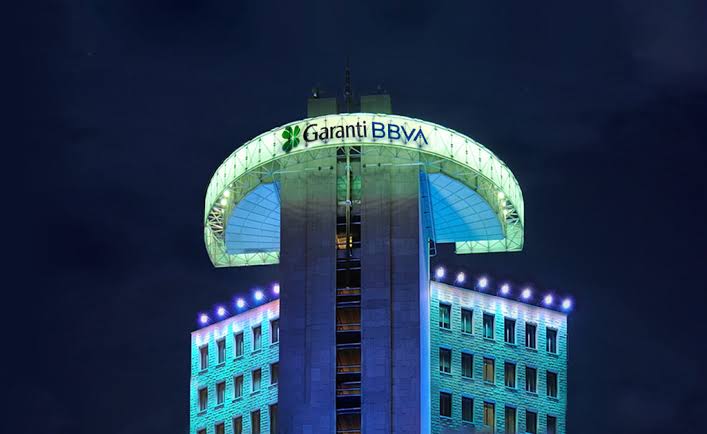
GARANTI BBVA: STRONG EARNINGS, DIGITAL SCALE AND THE RESILIENCE TEST
Garanti BBVA: Digital Banking Powerhouse or a Test of Resilience in Turkey’s Volatile Economy?
A strategic business review by H.G.&W Consulting
Executive Summary
Garanti BBVA has developed into one of Turkey’s most influential private banking institutions, combining the reach of a major domestic bank with the technology, international expertise and financial backing of Spain’s BBVA Group.
Founded in Ankara in 1946, the bank operates across retail, commercial, corporate, SME and investment banking. Its wider financial services activities include payments, leasing, factoring, insurance, pensions and investment management. BBVA owns 85.97% of the bank, giving it a controlling stake while Garanti BBVA remains a major Turkish banking franchise in its own right.
The financial performance is substantial. In 2025, Garanti BBVA reported consolidated net income of approximately ₺111.3 billion, compared with ₺92.2 billion in 2024. By 30 June 2026, its consolidated assets had reached ₺5.2 trillion, while net income for the first six months of 2026 stood at ₺64.4 billion. Its cash and non-cash lending to the economy reached approximately ₺3.9 trillion. These figures demonstrate the bank’s scale, earnings capacity and importance to Turkish households and businesses. Official 2025 results and first-half 2026 results.
Yet Garanti BBVA operates in an unusually demanding macroeconomic environment. Persistent inflation, currency volatility, elevated funding costs and regulatory limits on lending can complicate financial planning and put pressure on margins and borrowers. The bank’s capital adequacy ratio also declined from 17.5% at the end of 2025 to 15.9% at June 2026, while its non-performing loan ratio increased from 3.1% to 3.5% on the consolidated measure reported in its financial summary.
At the same time, digital banking, artificial intelligence, payments, SME finance and sustainable finance offer opportunities for further growth and differentiation.
The central strategic question is whether Garanti BBVA can maintain strong profitability and digital leadership while protecting asset quality, capital strength and customer trust in an economy undergoing continued adjustment.
1. Company Profile: A Turkish Banking Franchise with European Ownership
Garanti BBVA was established in 1946 and has grown into Turkey’s second-largest private bank. Its majority shareholder, Banco Bilbao Vizcaya Argentaria (BBVA), is a Spanish multinational banking group with operations across several international markets.
The ownership relationship is strategically important. BBVA provides international banking experience, technology capabilities, capital-market access and group-level expertise. Garanti BBVA, in turn, gives the group a major presence in the Turkish market, supported by a large customer base, an established brand and a broad domestic distribution network.
As of 30 June 2026, Garanti BBVA reported:
- Consolidated assets of approximately ₺5.2 trillion.
- A customer base of 31.2 million.
- Approximately 23,288 employees, including subsidiaries.
- 790 branches in Turkey, four in Cyprus and one in Malta, alongside a representative office abroad.
- A network of 6,562 ATMs.
- A cash and non-cash loan portfolio of approximately ₺3.9 trillion.
These figures illustrate the bank’s scale and reach. Its distribution model combines physical branches and ATMs with mobile, internet and other digital channels.
The challenge for a bank of this size is to make scale an economic advantage. A large customer base can lower the cost of customer acquisition, improve data-driven product design and support cross-selling. But size also increases operational complexity, technology requirements, compliance obligations and exposure to economic shocks.
Garanti BBVA’s competitive position will depend on how effectively it converts its reach and customer relationships into sustainable returns.
2. Financial Performance: Strong Earnings in a Challenging Economy
Garanti BBVA’s reported financial results demonstrate substantial nominal earnings growth over the past several years.
Selected financial indicators
| Indicator | 2024 | 2025 | First half of 2026 |
|---|---|---|---|
| Net income | ₺92.2bn | ₺111.3bn | ₺64.4bn |
| Total revenue* | ₺247.2bn | ₺374.4bn | ₺233.1bn |
| Total assets | ₺3.00tn | ₺4.55tn | ₺5.22tn |
| Performing loans | ₺1.74tn | ₺2.63tn | ₺2.89tn |
| Customer deposits** | ₺2.15tn | ₺3.15tn | ₺3.47tn |
| Return on average equity | 33.0% | 29.1% | 28.1% |
| Capital adequacy ratio | 18.2% | 17.5% | 15.9% |
| Non-performing loan ratio | 2.1% | 3.1% | 3.5% |
*Figures are based on the bank’s BRSA consolidated financial summary. Total revenue is a defined banking measure incorporating net interest income, fees and commissions, trading results and other specified income; it is not equivalent to conventional sales revenue in a manufacturing company.
*Deposit figures are rounded and may differ slightly by reporting presentation. The first-half 2026 column covers six months, not a full year.
Source: Garanti BBVA Investor Relations financial summary.
Net income increased from ₺92.2 billion in 2024 to ₺111.3 billion in 2025, an increase of approximately 20.7%. In the first half of 2026, the bank generated ₺64.4 billion in net income.
These are meaningful results, but their interpretation requires care. Turkey’s inflation and currency movements affect nominal financial statements, while the bank’s reporting basis and BBVA’s group-level inflation-accounting adjustments can affect how results appear across different reporting frameworks. Nominal growth should not automatically be interpreted as equivalent growth in real purchasing power or economic value.
Profitability ratios provide another perspective. Return on average equity was 29.1% in 2025 and 28.1% for the first half of 2026. The bank remains profitable, but the direction of these indicators deserves attention alongside earnings growth.
The capital adequacy ratio fell from 18.2% at the end of 2024 to 17.5% at the end of 2025 and 15.9% by June 2026. The ratio remained above the regulatory minimum cited in the bank’s reporting, but the decline highlights the importance of capital generation, risk-weighted asset growth and the capacity to absorb unexpected losses.
The strategic lesson: financial performance should be assessed through a combination of earnings, inflation-adjusted value, capital strength, funding stability and asset quality—not through net income alone.
3. The Turkish Economy: A Difficult Operating Environment
Garanti BBVA’s performance cannot be separated from Turkey’s macroeconomic conditions.
High inflation affects households’ purchasing power, businesses’ working-capital requirements and the bank’s funding costs. Currency volatility complicates decisions for companies with foreign-currency revenues or liabilities, while changes in monetary policy influence lending demand, deposit pricing and asset valuations.
Turkish banks have also operated under regulatory measures intended to support economic rebalancing and disinflation. These measures can affect how quickly lending grows and how banks price deposits and credit products.
In December 2025, Garanti BBVA’s chief executive described 2026 as another challenging year for Turkish banks, citing persistent restrictions, high inflation and the pressure of elevated funding costs. Reuters’ report on the banking outlook.
For Garanti BBVA, the challenge is to maintain a balance between supporting customers and protecting its own balance sheet. Rapid loan growth may increase income, but lending too aggressively during a period of economic uncertainty can weaken future asset quality. Conversely, excessive caution can restrict credit to viable businesses and households.
The bank therefore needs disciplined underwriting, accurate risk pricing, close monitoring of borrower cash flows and a funding model that can adapt to changing interest rates.
For business leaders more broadly, Garanti BBVA illustrates how macroeconomic volatility can make financial management a core strategic capability rather than a back-office function.
4. Digital Banking: Technology as a Competitive Advantage
Digital banking is one of Garanti BBVA’s strongest strategic differentiators.
The bank reported approximately 17.9 million active mobile users at the end of 2025. By March 2026, its corporate profile listed 18.1 million active mobile users and more than 30.6 million customers. Its digital assistant, UGİ, had reached approximately 8.8 million customers through mobile channels. The bank also reported that one in every five mobile banking transactions in Turkey took place through Garanti BBVA Mobile. Garanti BBVA corporate profile.
These figures suggest that mobile banking is not merely a supporting channel. It is central to customer engagement, service delivery and the bank’s operating model.
A mature digital platform can reduce reliance on costly manual processes, improve transaction convenience, support faster product distribution and help the bank identify customer needs. It can also make routine services available outside conventional branch hours.
The bank’s next opportunity lies in moving from digital transactions to more intelligent financial services. This includes proactive financial guidance, personalised offers, automated service resolution, more efficient credit assessment and improved support for small businesses.
However, digital adoption alone does not guarantee better customer outcomes. Technology investments must deliver measurable improvements in customer satisfaction, service reliability, fraud prevention, operational efficiency and revenue per customer.
The bank must also manage the risks associated with digital dependence, including cyberattacks, service outages, data privacy concerns, algorithmic bias and fraud.
A digital banking strategy is successful when technology makes the bank easier to use, safer to trust and more economical to operate.
5. Artificial Intelligence and Personalised Banking
Artificial intelligence is becoming an increasingly important part of Garanti BBVA’s customer strategy.
The bank’s 2025 reporting describes the use of data analytics and AI to provide faster, more personalised customer solutions. Its digital assistant UGİ was redesigned using generative AI, while its 2026 first-quarter disclosure highlighted a hyper-personalised service model that analyses customer activity to identify needs and offer relevant solutions.
These applications could help the bank move beyond reactive customer service towards anticipating financial needs. For example, AI-supported systems can help customers understand spending patterns, identify relevant banking products, receive timely reminders and navigate routine service requests.
For business clients, similar tools could support cash-flow visibility, payment management, risk monitoring and more efficient access to financial services.
The commercial case is compelling: better personalisation can improve customer retention, increase product relevance and reduce service costs.
But AI creates responsibilities that cannot be ignored. Banks handle highly sensitive financial data. Customers need confidence that their information is protected, that automated decisions can be explained where appropriate, and that errors can be challenged or corrected.
AI-supported credit decisions also require robust controls to prevent unfair outcomes. Human oversight remains important for complex or high-impact decisions, and models must be monitored as economic conditions change.
Garanti BBVA’s challenge is therefore not simply to deploy AI at scale. It is to make AI useful, secure, explainable and accountable.
6. SME and Corporate Banking: Financing the Real Economy
Garanti BBVA serves businesses across a wide spectrum, from small enterprises to large corporate clients.
Its corporate, commercial and SME activities provide an important link between financial services and the real economy. Access to working capital, trade finance, investment funding, payment infrastructure and foreign-exchange services can help businesses maintain operations, expand capacity and enter new markets.
For small and medium-sized enterprises, banking quality often matters as much as the availability of credit. Businesses need timely decisions, predictable repayment structures, efficient digital services and products aligned with their cash-flow cycles.
Garanti BBVA’s scale gives it the opportunity to combine traditional relationship banking with data-driven credit assessment and digital service delivery. This could help the bank serve a broader range of businesses while controlling acquisition and servicing costs.
However, SME lending can be vulnerable during periods of inflation and economic adjustment. Rising input costs, weaker consumer demand and currency movements can affect borrowers’ ability to repay. Banks must therefore distinguish between businesses facing temporary liquidity pressure and those experiencing more fundamental financial deterioration.
The increase in the reported non-performing loan ratio to 3.5% by June 2026 reinforces the need for careful credit monitoring. It does not, by itself, establish the causes of the increase or imply a systemic problem, but it is a signal that asset quality deserves close attention.
For Garanti BBVA, the opportunity is to remain a reliable financial partner to viable businesses while pricing and managing credit risk responsibly.
7. Sustainable Finance: Turning Commitments into Measurable Impact
Sustainable finance has become a significant component of Garanti BBVA’s strategy.
The bank announced a sustainable finance target of ₺3.5 trillion for the 2025–2029 period. Its 2025 Integrated Annual Report stated that sustainable finance volume had reached approximately ₺997 billion by the end of 2025. The bank subsequently reported that its contribution to sustainable development had reached approximately ₺1.6 trillion by the first half of 2026, according to its June 2026 corporate profile.
Its activities span areas such as renewable energy, energy efficiency, sustainable housing, lower-carbon industrial production, women’s entrepreneurship and social infrastructure. The bank has also highlighted its biodiversity and blue-themed bond issuance, as well as its participation in sustainability-linked financing transactions.
These initiatives can help direct capital towards projects that address environmental and social challenges while creating opportunities for financial institutions.
However, the scale of sustainable finance should not be confused with independently verified environmental impact. The quality of the portfolio depends on how projects are classified, how outcomes are measured and whether financed activities produce the intended benefits.
Banks also face transition risk through their lending portfolios. Financing carbon-intensive industries may create future credit and reputational exposure if borrowers cannot adapt to changing standards or market conditions.
Garanti BBVA’s long-term credibility will depend on transparent reporting, credible sectoral targets, careful assessment of environmental and social risks, and evidence that sustainable finance contributes to measurable outcomes.
8. Ownership and Governance: The Value of a Global Banking Group
BBVA’s 85.97% shareholding gives it control over Garanti BBVA while connecting the Turkish bank to a major international financial group.
This relationship can provide advantages in technology, risk management, capital-market access, digital product development, international expertise and governance practices. The Turkish franchise also contributes local market knowledge, customer relationships and an established domestic platform.
The relationship is not without complexity. Garanti BBVA operates under Turkish regulation and is exposed to the country’s economic conditions, while BBVA reports the performance of its Turkish operations within a broader multinational group. Currency translation, inflation accounting and group capital allocation can influence how the subsidiary’s results are viewed at the parent-company level.
Strong governance must therefore operate at two levels: the local bank must comply with Turkish law and manage its domestic risks, while the parent group must oversee capital, controls and risk exposure in a consistent manner.
Important areas for scrutiny include board oversight, executive accountability, related-party transactions, data governance, cybersecurity, regulatory compliance and transparent shareholder communication.
A controlling shareholder can support long-term strategic alignment, but it does not remove the need for independent oversight and clear accountability to minority shareholders and other stakeholders.
9. Competitive Position: Scale, Customer Loyalty and Service Quality
Garanti BBVA competes with major Turkish banks, including İşbank, Akbank and Yapı Kredi, as well as other domestic and international financial institutions operating in the market.
Its competitive strengths include brand recognition, customer reach, a broad product range, a large mobile banking base, payment systems and the backing of BBVA.
These strengths are valuable, but competition in banking is not determined by customer numbers alone. Customers can compare prices, convenience, service quality and product features more easily as digital channels mature. Fintech companies and payment providers can also compete for selected customer relationships without replicating the full range of traditional banking services.
Garanti BBVA must continue to invest in the parts of its business that make customers choose it as their primary financial partner. These include dependable mobile services, efficient customer support, transparent product terms, secure transactions and relevant financial products.
Its scale creates an opportunity to cross-sell services, but customer trust remains essential. Poor service or repeated digital failures can quickly undermine the advantages created by a large platform.
The competitive test is whether Garanti BBVA can consistently deliver a better customer experience while maintaining attractive risk-adjusted returns.
10. Principal Risks and Challenges
Garanti BBVA’s principal strategic risks include the following.
Macroeconomic volatility: Inflation, currency depreciation and changes in monetary policy can affect customer behaviour, funding costs, loan demand and financial reporting.
Credit quality: Financial pressure on households and businesses may increase defaults. The reported rise in the non-performing loan ratio warrants continued monitoring.
Capital pressure: Capital adequacy declined from 17.5% at year-end 2025 to 15.9% by June 2026. Continued growth, distributions and risk-weighted asset expansion must be balanced against capital resilience.
Funding costs and interest-rate risk: Competition for deposits and regulatory measures can keep funding costs elevated, putting pressure on net interest margins.
Technology and cyber risk: Greater reliance on digital banking increases exposure to cyberattacks, fraud, outages and third-party technology failures.
AI and data governance: Personalised banking creates opportunities but also requires strong safeguards for privacy, fairness, model reliability and customer consent.
Regulatory uncertainty: Changes to lending restrictions, capital rules, consumer protection and monetary policy may affect strategic planning.
Sustainability and transition risk: Climate-related credit exposure, changing standards and insufficient measurement of financed impacts could create financial or reputational risks.
The bank’s ability to manage these risks will be as important as its ability to grow income.
11. Strategic Priorities for the Next Phase
Garanti BBVA can strengthen its position by focusing on a set of measurable priorities.
1. Protect asset quality. Improve early-warning systems, monitor vulnerable sectors and ensure that lending growth reflects borrower repayment capacity.
2. Preserve capital flexibility. Align growth, dividends, funding and risk-weighted assets with a clear capital plan that can withstand adverse economic scenarios.
3. Make digital investments commercially accountable. Evaluate AI and mobile initiatives through customer outcomes, service costs, fraud rates, adoption, retention and incremental value.
4. Deepen SME relationships. Provide businesses with more useful cash-flow tools, trade-finance support and responsive credit products while maintaining disciplined underwriting.
5. Strengthen funding resilience. Maintain a diversified deposit base and manage the maturity, currency and interest-rate structure of funding.
6. Improve transparency around sustainability. Link sustainable finance commitments to clear definitions, sectoral objectives and measurable outcomes.
7. Use the BBVA relationship strategically. Translate group-level technology, governance and risk expertise into measurable improvements in the Turkish business, while respecting local regulatory and market realities.
12. Lessons for Business Leaders
Garanti BBVA offers several lessons for executives in banking and other industries.
Scale becomes an advantage only when it improves efficiency. A large customer base is valuable when it supports lower service costs, stronger retention and more relevant products.
Digital transformation must deliver business outcomes. Technology adoption is not the objective. Better service, stronger productivity and improved risk management are the outcomes that matter.
Growth must be balanced with resilience. Profits and lending volumes should be evaluated alongside capital, funding and asset quality.
Local knowledge and global capabilities can reinforce each other. International ownership can provide expertise and capital, but success still depends on understanding the local operating environment.
Trust is a competitive asset. In financial services, security, fairness, transparency and reliable service are central to customer loyalty.
Sustainability needs evidence. Large financing commitments are more credible when supported by clear definitions, transparent reporting and measurable impact.
Conclusion: Can Digital Strength Withstand Economic Pressure?
Garanti BBVA enters the second half of 2026 as a large, profitable and technologically advanced Turkish banking institution. Its reported earnings, extensive customer base and digital capabilities provide a strong platform for continued competition.
Yet the operating environment remains demanding. Inflation, currency risk, funding costs, regulatory constraints and asset-quality pressures require careful management. The bank must ensure that digital expansion and credit growth do not weaken the capital strength and risk discipline on which long-term performance depends.
Its future success will be determined not simply by the size of its balance sheet or the number of customers using its mobile app, but by its ability to convert scale, technology and international expertise into sustainable risk-adjusted returns.
For business leaders, Garanti BBVA illustrates a broader principle: a strong strategy must be capable of producing value in difficult conditions, not only when the economic environment is favourable.
The real test of Garanti BBVA is whether it can make digital leadership, financial resilience and customer trust reinforce one another—even in a volatile economy.
Disclaimer: This report is a business research and strategic review based on publicly available information. It is not investment advice. Financial figures are presented on the stated reporting basis and may differ under alternative accounting or consolidation frameworks.











Leave a Reply