
ANTHROPIC: CAN AI SAFETY BECOME THE NEXT GREAT COMPETITIVE ADVANTAGE?
ANTHROPIC: THE AI COMPANY REDEFINING THE FUTURE OF BUSINESS — CAN CLAUDE TURN AI SAFETY INTO A BILLION-DOLLAR COMPETITIVE ADVANTAGE?
An H.G.&W Business Review
1. Executive Summary
Artificial intelligence is rapidly changing how businesses operate, compete and create value. At the centre of this transformation is a growing group of technology companies developing increasingly powerful AI models. Among them, Anthropic has established a distinctive position by combining advanced AI research with a strong commitment to safety and responsible development.
Founded in 2021 by former OpenAI employees, including brothers Dario and Daniela Amodei, Anthropic is an American artificial intelligence public benefit corporation headquartered in San Francisco, California. It is best known for developing Claude, a family of large language models designed to support reasoning, writing, software development, research, analysis and business automation.
Unlike companies whose public positioning focuses primarily on technological performance and rapid adoption, Anthropic has placed AI safety and interpretability at the centre of its corporate identity. Its approach is based on the belief that powerful AI systems must be developed with appropriate safeguards, transparency and accountability.
The commercial opportunity is substantial. Anthropic’s IPO prospectus reported revenue of US$4.585 billion for 2025, compared with US$386 million in 2024. For the nine months ended September 30, 2026, revenue reached US$33.242 billion. The company also reported more than 11,900 customers generating at least US$100,000 in trailing-twelve-month revenue.
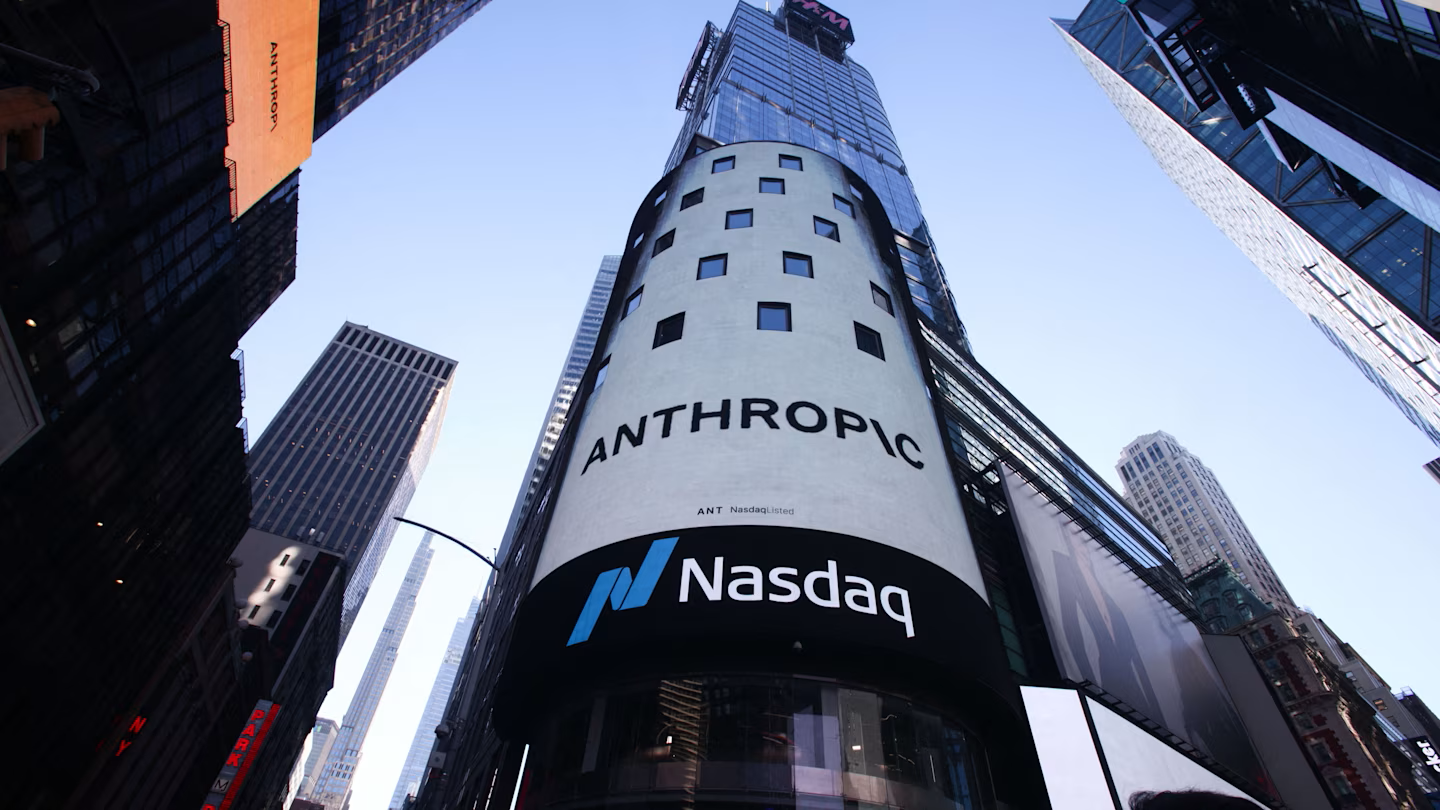
In November 2026, Anthropic entered the public markets through an initial public offering on the Nasdaq Global Select Market under the ticker symbol ANT. Its IPO was priced at US$83 per share, and its public offering generated approximately US$93.5 billion in gross proceeds, including the full exercise of the underwriters’ additional-share option.
The listing marked a significant moment for the AI industry: one of the world’s leading frontier AI developers became a publicly traded company, opening its financial performance and long-term strategy to greater public scrutiny.
However, Anthropic’s growth story comes with substantial challenges. The company must manage enormous computing costs, intense competition, AI safety risks, regulatory scrutiny and investor expectations.
This review examines Anthropic’s business model, Claude ecosystem, financial performance, corporate governance, competitive position, strategic partnerships and future opportunities. It also considers what its journey means for businesses navigating the AI economy.
2. Company Background: The Origins of Anthropic
Anthropic was founded in 2021 by a group of former OpenAI researchers and executives who wanted to build advanced AI systems with a stronger emphasis on safety and reliability.
The founding team included:
- Dario Amodei — Chief Executive Officer.
- Daniela Amodei — President.
- Jack Clark — Co-founder and Head of Public Benefit.
- Jared Kaplan — Co-founder and Chief Science Officer.
- Other founding members with backgrounds in AI research and engineering.
The founders believed that as AI systems became more capable, the risks associated with their development and deployment would also increase.
They established Anthropic to pursue frontier AI research while prioritising the development of systems that are helpful, honest and harmless.
The company initially attracted attention through its research on AI alignment, interpretability and Constitutional AI, an approach that uses a set of principles to guide AI behaviour.
In 2023, Anthropic introduced Claude, its family of AI assistants and large language models.
Claude quickly became a major competitor in the generative AI market, particularly among developers, researchers and enterprise customers.
The company’s development has been supported by substantial investments and strategic relationships with major technology companies, including Amazon and Google.
Its funding journey has included several large private investment rounds, reflecting investor interest in the commercial potential of enterprise AI.
By February 2026, Anthropic announced a US$30 billion Series G funding round at a US$380 billion post-money valuation. In May 2026, it announced a further US$65 billion Series H round at a US$965 billion post-money valuation.
Its subsequent IPO marked a transition from private-market financing to public-market ownership.
Sources:
3. The Claude Ecosystem: Anthropic’s Core Commercial Product
Claude is the foundation of Anthropic’s commercial strategy.
Rather than positioning Claude as simply a conversational chatbot, Anthropic has developed a broader family of models and applications intended to support different types of professional and business activities.
3.1 Claude for individuals
Claude provides users with AI assistance across activities such as:
- Writing and editing.
- Research and information analysis.
- Summarising documents.
- Brainstorming and problem-solving.
- Learning and education.
- Data interpretation.
- Planning and productivity.
This creates opportunities to serve individual consumers, professionals, students and entrepreneurs.
3.2 Claude for Enterprise
Enterprise AI is one of Anthropic’s most important commercial opportunities.
Businesses can use Claude to support internal knowledge management, document analysis, customer support, research, workflow automation and other organisational activities.
Claude’s enterprise offerings provide organisations with access to AI capabilities through business subscriptions and API integrations.
The strategic value is that companies can integrate AI into existing operations rather than treating it as a standalone application.
For example, a consulting company could use Claude to analyse research documents, develop initial report drafts, organise business intelligence and support internal knowledge retrieval.
A financial services company could use it to assist with document processing, customer service and operational workflows, subject to appropriate human oversight and regulatory controls.
3.3 Claude Code
Claude Code is one of Anthropic’s most commercially significant products.
It is an AI-powered coding tool that can assist developers with software development tasks, including understanding codebases, generating code, debugging, testing and modifying applications.
Its importance goes beyond helping individual programmers write code faster.
Claude Code represents the movement towards agentic software development, where AI systems can execute multi-step tasks, interact with development environments and support larger parts of the software engineering process.
Anthropic reported in February 2026 that Claude Code had exceeded US$2.5 billion in run-rate revenue, with enterprise adoption accounting for more than half of its revenue at that time.
This demonstrates the commercial value of AI tools that solve specific, high-value business problems.
3.4 Claude API
Anthropic provides API access that allows developers and organisations to integrate Claude’s capabilities into their own software products and business systems.
This is an important part of its business model because it enables Anthropic to earn revenue from companies building their own AI-powered applications.
Instead of requiring every business to use the Claude interface directly, Anthropic can provide the intelligence layer behind other products and services.
3.5 Claude Cowork and agentic workflows
Anthropic’s expansion into agentic AI and workplace productivity tools demonstrates its ambition to move beyond conversational assistance.
The goal is to develop AI systems that can undertake more complex tasks, interact with digital tools and support entire workflows.
This could transform how organisations manage administrative work, research, document production, project coordination and other knowledge-based activities.
The broader strategic opportunity is to become an essential productivity layer for businesses.
Source: Anthropic — Products and Claude.
4. Business Model: How Anthropic Makes Money
Anthropic operates a combination of subscription-based and consumption-based business models.
Its commercial structure is designed to generate revenue from individuals, developers, startups and large enterprises.
4.1 Consumption-based API revenue
Anthropic’s primary revenue model is usage-based.
Customers pay for the AI intelligence they consume, generally measured in tokens and priced according to the model and service selected.
This allows businesses to integrate Claude into applications and pay according to their usage.
The model is particularly attractive to developers and organisations that need flexible access to AI capabilities.
As customers build more products and workflows around Claude, their consumption can increase, creating opportunities for recurring revenue growth.
4.2 Subscription revenue
Anthropic also generates revenue through subscriptions to Claude’s applications.
Customers pay for access to specified capabilities and usage levels over a subscription period.
This provides a more predictable revenue stream than purely transactional usage, although subscriptions may include usage limits and additional consumption charges.
4.3 Enterprise contracts
Large businesses can enter into annual or multi-year commercial arrangements with Anthropic.
These relationships can include minimum spending commitments, negotiated pricing and enterprise support.
The benefit is that Anthropic can develop deeper customer relationships and more predictable commercial commitments.
Enterprise customers may also expand their use of Claude across multiple departments after initially adopting it for a specific task.
4.4 Strategic infrastructure partnerships
Anthropic’s partnerships with major cloud providers and chip companies support both its product distribution and infrastructure requirements.
These relationships help the company access the computing resources needed to train and operate advanced AI models.
They also allow customers to access Claude through established cloud platforms.
The commercial significance
Anthropic’s model benefits from a combination of recurring subscriptions, usage-based revenue and enterprise contracts.
However, the business must balance revenue growth against the cost of providing AI services.
Every additional customer and AI request requires computing resources, infrastructure and operational support.
Consequently, the company’s ability to improve model efficiency and manage inference costs will be critical to its long-term financial performance.
5. Financial Performance: The Growth Behind Anthropic’s IPO
Anthropic’s IPO prospectus provides a detailed picture of its commercial expansion.
The company reported the following financial performance:
| Financial indicator | 2023 | 2024 | 2025 |
|---|---|---|---|
| Revenue | US$41m | US$386m | US$4.585bn |
| Operating loss | US$551m | US$2.980bn | US$8.060bn |
| Net loss | US$1.531bn | US$8.309bn | US$41.965bn |
For the nine months ended September 30, 2026:
| Indicator | Nine months 2026 |
|---|---|
| Revenue | US$33.242bn |
| Operating expenses | US$34.502bn |
| Operating loss | US$1.260bn |
| Net loss | US$104.039bn |
| Adjusted operating income | US$4.081bn |
| Adjusted operating margin | 12% |
Source: Anthropic’s November 2026 IPO prospectus. All figures are in US dollars. Adjusted operating income and adjusted operating margin are non-GAAP measures and should not be treated as equivalent to reported GAAP operating profit.
What do these figures reveal?
First, Anthropic’s revenue growth has been extraordinary.
Revenue increased from US$41 million in 2023 to US$4.585 billion in 2025.
For the first nine months of 2026, the company generated US$33.242 billion, reflecting a dramatic increase in commercial adoption.
This growth demonstrates the speed at which enterprise AI has moved from experimentation into business deployment.
Second, enterprise adoption is becoming a major growth engine.
Anthropic reported more than 11,900 customers generating at least US$100,000 in trailing-twelve-month revenue as of September 30, 2026.
Its prospectus also showed that customers spending at least US$100,000 annually accounted for approximately 74% of revenue in the nine months ended September 2026.
This is important because large enterprise customers can provide substantial and recurring demand for AI services.
Third, profitability remains a central challenge.
Anthropic reported an operating loss of US$8.06 billion in 2025.
For the first nine months of 2026, it reported a GAAP operating loss of US$1.26 billion, alongside adjusted operating income of US$4.081 billion.
These measures tell different stories.
The adjusted figure excludes certain expenses and accounting items. It indicates that the company believes its underlying operating economics have improved, but it does not eliminate the importance of the reported operating loss.
The reported net loss of US$104.039 billion for the nine months ended September 2026 was heavily affected by non-cash changes in the fair value of convertible notes, derivative liabilities and other financing instruments as the company’s valuation increased. It should therefore not be interpreted as a straightforward measure of cash consumed by operations.
Fourth, infrastructure investment remains enormous.
Anthropic’s compute and infrastructure expenses reached US$18.808 billion in the first nine months of 2026.
This reflects the high cost of training, operating and improving frontier AI models.
The company’s ability to convert infrastructure spending into customer value and sustainable margins will be a major determinant of its long-term success.
Source: Anthropic IPO Prospectus.
6. The IPO: Anthropic Enters the Public Markets
Anthropic’s November 2026 public listing represents a major milestone in the development of the global AI industry.
Its Class A common stock began trading on the Nasdaq Global Select Market on 19 November 2026 under the ticker ANT.
The company priced its IPO at US$83 per share.
The offering included 1.127 billion Class A shares after the underwriters exercised their additional-share option in full.
According to Anthropic’s official announcement:
- Gross IPO proceeds were approximately US$93.5 billion.
- Approximately US$91.6 billion of the IPO proceeds went to Anthropic.
- The company also completed a US$26 billion concurrent private placement with strategic investors.
- Combined gross proceeds from the IPO and private placement were approximately US$119.5 billion.
The private placement included investments from major technology and infrastructure companies, including AMD, Broadcom, Google, Micron, Microsoft, NVIDIA and TSMC Partners.
The market debut
Anthropic’s shares opened at US$111.50 on their first trading day, significantly above the US$83 offer price.
They closed at US$97.17, representing a 17% gain from the IPO price.
Reuters reported that the company’s fully diluted valuation reached approximately US$2 trillion during its debut.
However, its share price fell on the following trading day amid wider market volatility and concerns about the economics of the AI industry.
This early price movement highlights an important distinction: strong demand for an IPO does not guarantee a stable share price.
Why the IPO matters
Access to capital: Public-market financing can support the company’s substantial investment requirements.
Greater transparency: Public investors will expect regular financial disclosures and clearer performance reporting.
Investor scrutiny: Revenue growth, operating margins, capital expenditure and cash generation will receive greater attention.
Industry benchmarking: As a publicly traded frontier AI company, Anthropic may become an important reference point for valuing other AI businesses.
Employee and shareholder liquidity: The IPO creates opportunities for existing shareholders and eligible employees to realise value from their holdings.
Anthropic’s transition to public ownership also introduces new governance and investor relations responsibilities.
Sources:
- Anthropic — IPO Closing Announcement.
- Nasdaq — Anthropic Marks its IPO.
- Reuters — Anthropic’s Blockbuster Debut.
7. AI Safety as a Business Strategy: Anthropic’s Differentiation
One of Anthropic’s most distinctive characteristics is its emphasis on AI safety.
The company believes that increasingly capable AI systems must be developed with safeguards that reduce the likelihood of harmful or unintended outcomes.
This approach is reflected in its research, model development practices, corporate structure and public communications.
Constitutional AI
Anthropic has developed and researched Constitutional AI, a method for training AI systems using a set of principles that guide their behaviour.
The objective is to encourage models to produce helpful responses while avoiding harmful or inappropriate outputs.
Rather than depending exclusively on human feedback for every decision, this approach uses explicit principles to guide parts of the training and evaluation process.
Interpretability research
Interpretability refers to efforts to understand how AI models process information and arrive at particular outputs.
Large AI models are often described as black boxes because their internal processes are difficult to interpret.
Anthropic has invested in research designed to understand the internal representations and mechanisms of neural networks.
This work is important because better understanding of AI systems may help researchers identify undesirable behaviours, vulnerabilities and emerging capabilities.
Responsible deployment
Anthropic’s safety strategy also involves evaluating models before and after deployment.
This includes assessing potential misuse, security vulnerabilities and capabilities that may create significant risks.
Its Responsible Scaling Policy provides a framework for determining how safety requirements should evolve as AI capabilities advance.
The commercial value of safety
AI safety can be understood as more than an ethical commitment.
For enterprise customers, reliability, security, predictable behaviour and effective safeguards are important purchasing considerations.
A bank, healthcare organisation or government agency may be reluctant to deploy an AI system that cannot meet its security, privacy and risk-management requirements.
Consequently, a credible safety programme can help strengthen enterprise relationships and differentiate a company in a competitive market.
However, safety claims must be supported by measurable performance, independent scrutiny and transparent reporting.
Anthropic’s challenge is to demonstrate that responsible AI development can coexist with rapid innovation and commercial success.
Source: Anthropic — Responsible Scaling Policy and Research.
8. Corporate Governance: What Makes Anthropic Different?
Anthropic is incorporated as a Delaware public benefit corporation.
This structure is significant because it formally requires the company to balance shareholder financial interests with the interests of stakeholders affected by its activities and its stated public benefit purpose.
Its public benefit purpose is the responsible development and maintenance of advanced AI for the long-term benefit of humanity.
The company has also established a Long-Term Benefit Trust.
The Trust is intended to provide an independent governance mechanism that helps ensure Anthropic remains committed to its public benefit objectives.
Why this structure matters
Traditional publicly traded companies are often judged primarily through shareholder returns, subject to their legal obligations.
Anthropic’s structure introduces an additional consideration: the potential long-term consequences of developing increasingly powerful AI systems.
Its governance arrangements are designed to preserve this objective even as the company grows and enters the public markets.
The governance challenge
The structure also creates questions for investors.
How should directors balance commercial pressure against safety considerations?
What happens when an AI safety decision conflicts with short-term financial performance?
How can public shareholders evaluate the effectiveness of a public benefit commitment?
Anthropic’s IPO prospectus explains that the Long-Term Benefit Trust has special rights concerning the election of a majority of the board, while the founders’ special Class F share carries 50.1% of general shareholder voting power.
This creates a governance arrangement in which economic ownership, ordinary shareholder voting and public-benefit oversight are not identical.
The model is innovative, but its long-term effectiveness will depend on the independence, accountability and decision-making quality of its governance institutions.
Source: Anthropic IPO Prospectus — Governance Structure.
9. Strategic Partnerships: The Infrastructure Behind Anthropic’s Growth
Developing frontier AI models requires enormous computing capacity.
Training advanced models involves specialised processors, large data centres, significant energy consumption and highly skilled research teams.
Anthropic’s partnerships with major technology companies are therefore central to its business strategy.
Amazon
Amazon has been one of Anthropic’s most important strategic partners and investors.
Through Amazon Web Services, Anthropic has access to cloud infrastructure and specialised AI computing resources.
The relationship also supports the distribution of Claude through Amazon Bedrock, allowing AWS customers to access Anthropic models within their existing cloud environments.
Google has invested in Anthropic and provides access to its cloud computing infrastructure and specialised AI chips.
The relationship strengthens Anthropic’s access to computing capacity and provides another channel for enterprise distribution through Google Cloud’s Vertex AI.
Microsoft
Microsoft has also become an important strategic partner and investor.
Claude’s availability through Microsoft Azure AI Foundry expands its reach among organisations already using Microsoft’s cloud ecosystem.
NVIDIA and other infrastructure partners
NVIDIA’s GPUs remain important to the development and operation of advanced AI models.
Anthropic’s relationships with other hardware and infrastructure providers, including Broadcom, Micron, Samsung and SK hynix, reflect the importance of diversified access to computing resources.
The company has also announced significant infrastructure arrangements involving Amazon, Google and Broadcom.
The strategic importance
These relationships provide three major advantages:
- Access to the computing resources needed to develop and operate advanced models.
- Access to large enterprise customer networks through established cloud platforms.
- Greater infrastructure flexibility through multiple hardware and cloud providers.
However, these partnerships also create potential conflicts of interest.
Some infrastructure providers are also investors and competitors in the broader AI market.
Anthropic must therefore manage commercial dependence, pricing negotiations, capacity commitments and the risk of relying too heavily on a limited number of providers.
Source: Anthropic Series H and Infrastructure Partnerships.
10. Competition: Anthropic in the Global AI Race
Anthropic operates in one of the most competitive technology markets in the world.
Its competitors include AI developers, technology giants, open-source model providers and companies building specialised AI applications.
OpenAI
OpenAI is one of Anthropic’s most direct competitors.
Its ChatGPT platform has strong consumer recognition, while its API and enterprise offerings serve developers and businesses.
OpenAI’s competitive advantages include brand recognition, broad product distribution, substantial infrastructure partnerships and an extensive AI ecosystem.
Google DeepMind
Google combines advanced AI research with a global cloud and consumer technology ecosystem.
Its Gemini models compete with Claude across reasoning, coding, multimodal applications and enterprise use cases.
Google’s access to specialised computing hardware and its distribution through Google Cloud and other products provide substantial competitive advantages.
Microsoft
Microsoft competes through its AI products and infrastructure, including Copilot, Azure AI and its broader enterprise software ecosystem.
Its strategy demonstrates the commercial power of integrating AI directly into existing business applications.
Meta
Meta’s AI strategy includes consumer-facing assistants and open-weight models.
Its Llama ecosystem has contributed to the expansion of open AI development and creates an alternative for businesses seeking greater control over model deployment.
xAI and other emerging competitors
Other companies, including xAI and specialist AI developers, continue to introduce new models and products.
Competition is also coming from Chinese AI developers and open-source communities.
Anthropic’s competitive advantages
Anthropic’s differentiation rests on several factors:
- Its reputation for AI safety and alignment research.
- Strong enterprise adoption.
- Claude’s performance in professional knowledge work and coding.
- Developer-friendly API products.
- Claude Code’s growing commercial importance.
- Partnerships with leading cloud and computing providers.
- Its public benefit corporate structure.
The competitive challenge
The AI market is changing rapidly.
A company that leads in model capability today may lose its advantage as competitors release more efficient or capable systems.
Anthropic must continuously improve its products, maintain competitive pricing, secure adequate computing capacity and demonstrate measurable value to customers.
Its challenge is not simply to build a powerful model, but to develop an ecosystem that customers will continue to rely on.
11. AI and the Future of Work: What Claude Means for Businesses
Anthropic’s growth is closely connected to a major shift in how businesses use artificial intelligence.
The first phase of generative AI adoption largely involved conversational tools that answered questions, generated text and summarised information.
The next phase is increasingly focused on systems that can complete tasks, interact with business applications and support entire workflows.
This is where agentic AI becomes important.
Software development
Claude Code illustrates how AI can change software engineering.
Developers can delegate parts of coding, testing, debugging and documentation to AI systems.
This may improve productivity and allow smaller teams to develop more sophisticated software.
Consulting and professional services
AI can support research, data analysis, report development, financial modelling and administrative activities.
Consulting firms may use AI to accelerate parts of their research and delivery processes.
However, human expertise remains important for interpreting findings, validating assumptions and providing strategic judgement.
Customer service
AI assistants can handle routine customer enquiries, support service teams and help businesses manage large volumes of communication.
Finance and administration
AI systems can assist with document processing, transaction analysis, internal reporting and workflow coordination.
Education and research
Claude can support learning, academic research, information synthesis and the development of educational resources.
The implications for business leaders
The greatest opportunity is not simply replacing employees with AI.
It is redesigning processes so that people and AI systems can work together more effectively.
Businesses that identify suitable workflows, establish clear governance and train their employees may achieve significant productivity improvements.
However, AI-generated outputs must be checked, particularly where decisions affect customers, finances, safety or regulatory compliance.
12. The Risks and Challenges Facing Anthropic
Anthropic’s commercial opportunities are substantial, but its long-term success is not guaranteed.
12.1 Enormous computing costs
Frontier AI development requires substantial investment in processors, data centres, energy and cloud infrastructure.
Anthropic’s IPO prospectus reported US$18.808 billion in compute and infrastructure expenses during the first nine months of 2026.
It also disclosed significant debt and long-term computing commitments.
The company must ensure that its infrastructure investment generates sufficient customer demand and revenue.
12.2 AI safety and alignment risks
As AI models become more capable, the consequences of unexpected behaviour may increase.
Risks include harmful outputs, misuse, unreliable reasoning, cybersecurity vulnerabilities and systems acting in ways that differ from their intended objectives.
Anthropic’s safety positioning creates high expectations. Any major failure could damage its reputation and enterprise relationships.
12.3 Competition and technological disruption
The AI market has relatively low switching costs for some customers.
Businesses may change providers if another model offers better performance, lower prices or more convenient integration.
Anthropic must therefore continue innovating to protect its market position.
12.4 Copyright and intellectual property disputes
AI developers face legal and commercial questions about the use of copyrighted material in model training and the ownership of AI-generated outputs.
These disputes may result in litigation costs, licensing expenses and changes to business practices.
12.5 Energy and environmental pressure
AI data centres require significant electricity and cooling resources.
As computing demand expands, infrastructure companies face challenges involving energy availability, water use, land requirements and environmental impact.
Anthropic’s ability to secure sustainable and affordable computing capacity will be important to its future expansion.
12.6 Regulatory uncertainty
Governments are introducing new rules and standards for AI development, data protection, transparency, security and accountability.
Different countries may adopt different approaches, creating compliance challenges for international AI companies.
12.7 Public-market expectations
As a listed company, Anthropic must meet investor expectations regarding growth, financial performance and corporate governance.
The pressure to deliver quarterly results may create tension with the long-term nature of AI safety research and infrastructure investment.
13. SWOT Analysis: Anthropic’s Strategic Position
| Strengths | Weaknesses |
|---|---|
| Strong reputation in AI safety research. | Very high infrastructure and computing costs. |
| Claude’s growing enterprise adoption. | Reported operating losses despite rapid revenue growth. |
| Strong developer ecosystem and Claude Code. | Dependence on major infrastructure partners. |
| Significant funding and strategic partnerships. | Complex governance and capital structure. |
| Public benefit corporate identity. | Rapid technological change creates ongoing investment requirements. |
| Opportunities | Threats |
|---|---|
| Growing enterprise AI adoption. | Intense competition from OpenAI, Google and others. |
| Agentic AI and workplace automation. | AI safety failures and reputational damage. |
| Expansion into software development and professional services. | Copyright and regulatory litigation. |
| Global cloud and enterprise distribution. | High energy and computing costs. |
| AI-powered business transformation. | Public-market volatility and changing investor sentiment. |
| Responsible AI as a competitive differentiator. | Open-source alternatives and model commoditisation. |
14. Future Outlook: Where Does Anthropic Go From Here?
Anthropic’s next phase will likely be defined by five strategic priorities.
1. Enterprise AI leadership
The company will continue expanding its presence among large organisations.
Its ability to integrate Claude into everyday business operations could create long-term customer relationships and predictable usage-based revenue.
2. Agentic AI and autonomous workflows
Claude Code and other agentic products point towards a future in which AI systems can perform increasingly complex tasks.
Anthropic has an opportunity to become a major provider of the intelligence powering these workflows.
3. Infrastructure efficiency
The company must continue improving the efficiency of training and running AI models.
Better model performance at lower computing costs could improve margins and strengthen its competitive position.
4. Global expansion
Enterprise AI demand exists across financial services, healthcare, education, manufacturing, government and professional services.
Anthropic can expand its reach through cloud partnerships, enterprise distribution and international market development.
5. Responsible AI leadership
Anthropic’s public benefit identity gives it an opportunity to influence how the AI industry approaches safety, governance and responsible deployment.
However, the company must demonstrate that its commitments can be maintained while competing in a demanding public market.
15. Strategic Lessons for African Entrepreneurs and Business Leaders
Anthropic’s journey offers several important lessons for businesses, particularly those seeking to compete in emerging technology markets.
Lesson 1: Build a business around a significant future problem.
Anthropic recognised that the development of increasingly powerful AI systems would create both commercial opportunities and safety challenges.
Its strategy is built around addressing both.
Entrepreneurs should look beyond immediate market trends and identify structural problems that will become increasingly important.
Lesson 2: Differentiation matters in crowded markets.
Anthropic did not attempt to compete solely through brand visibility.
It built a distinct identity around safety, reliability and enterprise applications.
Businesses need a clear reason why customers should choose them over competitors.
Lesson 3: Innovation must be supported by infrastructure.
Advanced AI requires computing resources, talent, research and capital.
The lesson for entrepreneurs is that ambitious technology products need a realistic infrastructure and financing strategy.
Lesson 4: Partnerships can accelerate market access.
Anthropic’s relationships with Amazon, Google and Microsoft provide access to infrastructure and enterprise customers.
Strategic partnerships can help smaller businesses overcome limitations in capital, distribution and technical capacity.
Lesson 5: Enterprise customers can create sustainable commercial opportunities.
Anthropic’s growth demonstrates the value of solving high-priority problems for businesses willing to pay for measurable results.
African startups should explore opportunities to build AI solutions that address specific operational challenges in finance, agriculture, logistics, healthcare, education and professional services.
Lesson 6: Governance is part of long-term competitiveness.
Anthropic’s public benefit structure demonstrates an attempt to align corporate growth with broader societal objectives.
Businesses developing powerful technologies must consider the consequences of their products and establish appropriate governance structures.
Lesson 7: Revenue growth and profitability must eventually align.
A company can attract substantial investment and generate impressive revenue while still facing significant financial challenges.
Entrepreneurs must understand their unit economics, infrastructure costs, operating margins and cash flow requirements.
Lesson 8: Prepare for the agentic AI economy.
AI is moving beyond content generation towards systems that can perform tasks and support business workflows.
African businesses should begin identifying processes that can be redesigned around AI rather than waiting until competitors have already adopted these capabilities.
16. H.G.&W Strategic Assessment
Anthropic represents one of the most significant developments in the global AI industry.
Its growth demonstrates the commercial potential of advanced AI models, particularly when they are developed into products that address important enterprise needs.
Claude has evolved beyond a conversational assistant into a wider ecosystem supporting software development, business productivity, research and automation.
The company’s financial performance reflects the scale of this opportunity. Revenue increased from US$386 million in 2024 to US$4.585 billion in 2025, before reaching US$33.242 billion in the first nine months of 2026.
Its November 2026 IPO marks another major transition, placing Anthropic among the most closely watched public technology companies.
Nevertheless, the company faces a difficult balancing act.
It must invest heavily in computing infrastructure, maintain technological leadership, improve operating efficiency, satisfy public investors and preserve its commitment to responsible AI development.
Its public benefit corporate structure offers a distinctive governance model, but its effectiveness will be judged by how well it balances commercial performance with long-term societal interests.
H.G.&W’s verdict: Anthropic is more than a company building AI models. It is attempting to establish itself as a foundational provider of intelligence for the global economy.
Its greatest competitive opportunity may lie in combining advanced AI capabilities with enterprise reliability and responsible development.
However, its long-term success will depend on proving that this approach can deliver sustainable financial returns without compromising the principles that distinguish the company.
17. Conclusion
Anthropic’s journey from an AI research startup in 2021 to a publicly traded technology company in 2026 illustrates the extraordinary speed of the artificial intelligence revolution.
Its Claude ecosystem is helping businesses rethink software development, research, productivity and automation.
Its commitment to AI safety has also created a distinctive position in an industry where technological power is increasing faster than society’s ability to understand and govern it.
The company’s IPO introduces a new chapter. Public investors will now have greater visibility into its financial performance, infrastructure commitments and long-term strategy.
But the real test will extend beyond the stock market.
Anthropic must demonstrate that it can remain technologically competitive, financially sustainable and committed to responsible AI development.
The bigger business lesson is this: the next generation of global technology leaders will not be defined only by how powerful their innovations become, but by how effectively they turn those innovations into trusted, sustainable and commercially valuable solutions.
Anthropic has positioned itself at the centre of that challenge.
Research note: This review draws on Anthropic’s November 2026 IPO prospectus, official company announcements, Nasdaq information and Reuters reporting. Financial figures are in US dollars. Revenue and GAAP operating results are distinguished from non-GAAP adjusted measures. IPO proceeds are gross figures before applicable fees and expenses. The fully diluted valuation reported during the first trading day includes certain equity awards and should not be confused with the company’s conventional market capitalisation. This report is for business information and is not investment advice.






Leave a Reply