
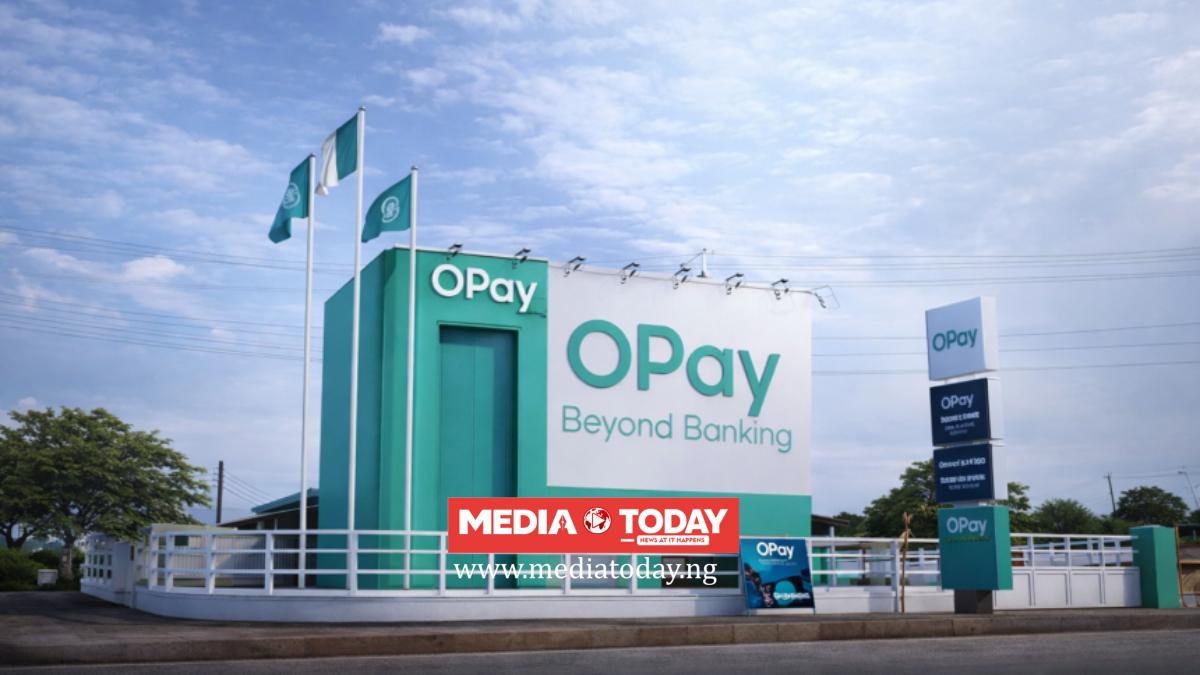
OPAY: FROM MOBILE WALLET TO FINANCIAL INFRASTRUCTURE
OPAY: FROM MOBILE WALLET TO FINANCIAL INFRASTRUCTURE
How a fintech platform is reshaping payments, financial inclusion and everyday commerce in Nigeria
Executive Summary
Nigeria’s financial-services industry is undergoing one of its most significant transformations in decades.
The bank branch is no longer the only gateway to financial services.
Today, Nigerians can transfer money, pay bills, receive payments, save, access financial products and operate businesses through smartphones, cards, USSD channels and neighbourhood agents.
Few companies illustrate this transformation more clearly than OPay.
Established in Nigeria in 2018, OPay has evolved from a fintech payments business into a broad digital financial-services platform. Its current offering encompasses payments, transfers, savings, financing, cards, bill payments and merchant services. The company says it now serves tens of millions of users, agents and merchants in Nigeria.
Its significance, however, goes beyond the size of its customer base.
OPay has helped demonstrate a fundamental lesson about financial technology in emerging markets:
Digital financial inclusion is not achieved through technology alone. It requires distribution.
That is why OPay’s combination of mobile technology, agent networks, merchants and digital payments is strategically important.
At the same time, the company operates in an increasingly demanding regulatory environment. The Central Bank of Nigeria continues to strengthen payment-system oversight, interoperability, consumer protection, security and agent-banking controls.
The next chapter of OPay’s story will therefore depend on whether it can turn scale into a durable competitive advantage while maintaining trust, security, compliance and sustainable economics.
1. The Problem OPay Was Built to Solve
Traditional banking has historically been constrained by physical infrastructure.
Branches cost money.
ATMs require capital and maintenance.
Opening a bank account can involve documentation and friction.
Serving customers in remote or low-income communities can be expensive.
Fintech changes that equation.
Instead of requiring every customer to visit a branch, financial services can be delivered through:
- Smartphones
- USSD
- Cards
- POS terminals
- Mobile applications
- Digital wallets
- Local agents
OPay’s stated mission is to make financial services more inclusive through technology.
That mission is particularly relevant in Nigeria, where millions of consumers and small businesses operate outside traditional banking channels or interact with formal finance only intermittently.
The opportunity is enormous.
But so is the challenge.
The company must make digital finance accessible enough for the mass market while secure enough for a regulated financial system.
2. OPay’s Real Competitive Advantage May Not Be Its App
The easiest way to understand OPay is to think of it as an app.
That may be the wrong mental model.
Its deeper competitive asset is its distribution ecosystem.
OPay operates across:
Consumers → Agents → Merchants → Payments → Financial services
This creates multiple points of interaction with the financial system.
The company’s merchant offering includes POS services, online payments, transaction reporting, settlement and reconciliation, inventory and employee-management tools.
This matters because the financial behaviour of Nigerians does not happen exclusively online.
A customer may:
- Receive money digitally.
- Withdraw through an agent.
- Use cash to purchase goods.
- Pay another business using a POS terminal.
- Transfer money through a mobile app.
- Pay an electricity or television bill digitally.
The winning fintech therefore may not be the company that eliminates physical finance.
It may be the company that connects physical and digital finance most effectively.
3. The Agent Network: OPay’s Physical-Digital Bridge
One of the most important insights from OPay’s model is that financial technology does not necessarily eliminate human intermediaries.
It can make them more powerful.
An OPay agent can provide services such as:
- Cash deposits
- Cash withdrawals
- Transfers
- Bill payments
- Airtime and data purchases
- Other financial transactions
The company’s merchant materials describe agents as providing neighbourhood-level financial services through POS devices.
This produces an important network effect.
More agents → greater accessibility.
Greater accessibility → more users.
More users → more transactions.
More transactions → stronger merchant economics.
Stronger economics → greater incentive to expand the network.
This is the classic flywheel of platform businesses.
But there is a second side to the equation:
Network scale also increases operational and regulatory complexity.
4. Financial Inclusion Is a Business Opportunity
Financial inclusion is often discussed as a social objective.
For fintech companies, it is also a commercial opportunity.
An underserved customer today may eventually need:
- Savings
- Credit
- Insurance
- Investment products
- Business accounts
- Merchant services
- International transfers
The first financial transaction can therefore become the beginning of a much larger customer relationship.
This explains why fintech platforms compete aggressively for:
the wallet + the phone number + the merchant + the transaction relationship.
OPay’s product ecosystem includes transfers, bill payments, cards, savings and financing products.
The strategic implication is clear:
The payment transaction can be the entry point into a broader financial relationship.
5. From Payments to the Financial Super-App
The original fintech opportunity was relatively straightforward:
Move money digitally.
But the competitive landscape has evolved.
Today’s financial platforms increasingly want to own more of the customer’s financial life.
OPay’s current service catalogue includes:
- Transfers
- Deposits and withdrawals
- Utility payments
- Cards
- Savings products
- Financing
- Merchant payments
- Business reporting
- Settlement and reconciliation
- POS services
This creates the possibility of a financial super-app.
The logic is powerful.
If a customer already uses one platform for transfers, there is a lower barrier to offering that customer another financial product.
The challenge is avoiding product sprawl.
Adding more products does not necessarily create more value.
Each product must solve a real customer problem and remain economically sustainable.
6. The Merchant Opportunity May Be Even Bigger
Consumers are only one side of the equation.
Small businesses are arguably even more important.
Nigeria’s informal and SME economy requires simple tools for:
- Receiving payments
- Making payments
- Managing employees
- Tracking transactions
- Reconciling accounts
- Managing inventory
- Accessing finance
OPay’s merchant platform explicitly promotes business reporting, settlement, reconciliation, store and employee management, and inventory-related tools.
This changes the proposition.
Instead of selling a POS terminal, a fintech can attempt to become the operating layer for a small business.
That is a much bigger market opportunity.
7. The Economics of the POS Revolution
Nigeria’s POS ecosystem has transformed how millions of people access financial services.
The POS terminal effectively became a mini bank branch.
But the economics are more complicated than simply selling devices.
The platform operator must manage:
- Terminal acquisition
- Agent recruitment
- Agent liquidity
- Network availability
- Transaction processing
- Customer support
- Fraud monitoring
- Compliance
- Settlement
- Hardware maintenance
Therefore, the quality of the network becomes as important as the quality of the application.
A fintech with a sophisticated app but unreliable agent liquidity will struggle.
Likewise, a fintech with excellent agents but poor digital infrastructure will struggle.
The winning model requires both.
8. Regulation Is Becoming a Competitive Variable
Nigeria’s fintech industry is moving into a more mature regulatory era.
The CBN’s Payments System Vision 2025 emphasizes safety, reliability, resilience, financial inclusion, consumer protection and interoperability.
The regulator also maintains oversight across mobile money operators, payment service providers, switching companies, payment-terminal service providers and other payment-system participants.
OPay is listed by the CBN among licensed mobile money operators.
This matters because fintech growth cannot be separated from regulatory compliance.
As the industry matures, regulators increasingly want:
- Better identification
- Stronger transaction monitoring
- Improved consumer protection
- Fraud controls
- Interoperability
- Data security
- Greater transparency
The strategic lesson for fintech leaders is:
Regulation is not simply a constraint. It is becoming part of the competitive infrastructure.
Companies that build compliance capabilities early can potentially turn regulatory complexity into an advantage.
9. The New POS Regulation: A Case Study in Regulatory Evolution
In 2025, the CBN introduced measures requiring payment terminals to be geographically identified, with operators required to geo-tag POS terminals and strengthen oversight of terminal locations. The measures were aimed at improving transparency and combating fraud and unauthorized POS activity. OPay was among the operators specifically referenced in the regulatory communication.
This development illustrates the direction of travel.
The era of simply distributing millions of payment terminals without sophisticated monitoring is ending.
The next phase requires:
Scale + visibility + accountability.
For large fintech platforms, that means technology must increasingly support regulators as well as customers.
10. Trust Is the Real Currency
A bank can lose customers if its branch is inconvenient.
A fintech can lose customers after a single failed transaction.
Why?
Because digital finance is built around instantaneous expectations.
Customers expect:
- Fast transfers
- Accurate balances
- Reliable transaction confirmation
- Quick dispute resolution
- Secure accounts
- Accessible customer service
OPay itself emphasizes transaction reliability and 24/7 customer support in its merchant proposition.
This is strategically important.
In financial technology:
Convenience attracts customers.
Reliability retains them.
Trust creates loyalty.
The companies that win long term will therefore be those that treat customer experience as a core operational function—not merely a marketing function.
11. Fraud and Cybersecurity: The Price of Scale
Every financial platform becomes more attractive to fraudsters as it grows.
The more transactions a network processes, the more valuable it becomes as a target.
Threats include:
- Account takeover
- Social engineering
- SIM-related attacks
- Phishing
- Fake customer-support channels
- Agent fraud
- Identity theft
- Unauthorized transactions
- Device compromise
The CBN’s Payments System Vision specifically emphasizes stronger security requirements, authentication and fraud controls.
This creates a difficult balancing act.
Security must be:
Strong enough to prevent fraud, but simple enough not to frustrate legitimate customers.
That is one of the central product-management challenges in fintech.
12. OPay’s Data Advantage
A successful digital financial platform can potentially generate enormous amounts of transactional data.
Every payment can provide information about:
- Frequency
- Timing
- Location
- Merchant relationships
- Spending patterns
- Cash-flow behaviour
- Business activity
When responsibly governed and used within applicable laws and regulations, such data can support:
- Fraud detection
- Personalization
- Credit assessment
- Product design
- Merchant insights
- Risk management
This creates another potential competitive moat.
But it also creates responsibility.
Financial data is among the most sensitive categories of consumer information.
Therefore:
More data = more analytical power + more governance responsibility.
13. The Competitive Battlefield
OPay does not operate in isolation.
Nigeria’s digital financial-services market contains:
- Traditional banks
- Mobile money operators
- Payment processors
- Fintech startups
- Merchant platforms
- Telecom operators
- Digital lenders
- Payment aggregators
The competition is therefore no longer simply:
Bank vs fintech.
It is increasingly:
Platform vs platform.
Every major player wants to control more of the customer relationship.
That means future competition will increasingly involve:
Distribution
Who has the strongest physical and digital network?
Product
Who solves the most customer problems?
Reliability
Who experiences the fewest failures?
Economics
Who can deliver services profitably?
Trust
Who do customers believe will protect their money?
Compliance
Who can scale without regulatory disruption?
14. The Network-Effects Opportunity
OPay’s model contains the ingredients of a platform network.
Imagine the ecosystem:
More users → more transactions
More transactions → more merchants
More merchants → greater utility
Greater utility → more users
More agents → greater accessibility
Greater accessibility → more transactions
This creates a potential flywheel.
But network effects are not permanent.
Competitors can replicate features.
Users can maintain multiple wallets.
Agents can work with multiple platforms.
Merchants can accept multiple payment methods.
Therefore, OPay must continually strengthen the quality—not simply the size—of its network.
15. The Challenge of Profitability
Scale can be deceptive.
A fintech can have:
- Millions of users
- Millions of transactions
- Thousands of agents
- Large payment volumes
…and still struggle to generate attractive returns.
Why?
Because payments can be low-margin businesses.
The economics depend on:
- Transaction fees
- Merchant services
- Financial products
- Customer acquisition costs
- Agent incentives
- Technology costs
- Fraud losses
- Compliance costs
- Customer support
This makes monetization a crucial strategic question.
OPay’s move into savings, financing, cards and broader merchant services can therefore be interpreted partly as an attempt to deepen customer relationships and expand the economic value of each user and business relationship.
16. The Bigger Opportunity: Becoming Financial Infrastructure
This may be the most important strategic shift.
A fintech begins as a product.
Then it becomes a platform.
Eventually, the most successful platforms can become infrastructure.
Infrastructure is different.
Customers may not think about the underlying system.
They simply expect it to work.
The ambition behind OPay’s model is therefore larger than:
“Download our app.”
The bigger opportunity is:
“Use us whenever money moves.”
If OPay can occupy that position across consumers, merchants and agents, its strategic importance could extend far beyond mobile payments.
17. OPay and Nigeria’s Informal Economy
Nigeria’s informal economy is enormous.
Millions of businesses operate through:
- Cash
- Personal relationships
- Small shops
- Open markets
- Informal records
- Local agents
Digital financial platforms can gradually formalize parts of this ecosystem.
A merchant that begins with a POS terminal may eventually adopt:
- Digital records
- Business payments
- Digital settlement
- Inventory tools
- Financial services
- Credit
This creates a pathway:
Informal transaction → digital transaction → digital record → financial history → broader financial access.
That is one of fintech’s most important potential contributions to economic development.
18. What OPay Must Get Right Next
The first phase was about growth.
The next phase is about quality of growth.
Five priorities stand out.
1. Trust
Customers must know that their money is safe and transactions are dependable.
2. Security
Fraud prevention must keep pace with transaction growth.
3. Compliance
Regulatory requirements will become increasingly sophisticated.
4. Monetization
Large transaction volumes must translate into sustainable economics.
5. Product depth
The platform must offer genuine value rather than simply accumulating features.
HG&W Strategic Assessment
OPay provides several important lessons for business leaders.
Lesson 1: Distribution can beat technology alone
The best software does not automatically win.
In emerging markets, access and distribution can be equally important.
Lesson 2: Platforms become powerful when multiple stakeholders benefit
Users, agents and merchants all need reasons to remain within the ecosystem.
Lesson 3: Financial inclusion can be commercially sustainable
Serving underserved consumers can create large markets when the business model is designed for scale.
Lesson 4: Trust is infrastructure
In financial services, reliability and security are not optional features.
They are part of the product itself.
Lesson 5: Regulation should be designed into the business
Compliance cannot simply be added after rapid growth.
Lesson 6: Scale creates both advantage and responsibility
A larger network creates stronger network effects—but also larger systemic, operational and reputational risks.
Conclusion
OPay’s journey reflects a much larger transformation occurring across Nigeria.
Money is becoming increasingly:
digital, mobile, instantaneous and interconnected.
But the real revolution is not the smartphone application.
It is the infrastructure underneath it.
Agents.
Merchants.
POS terminals.
Payment networks.
Customer-support systems.
Fraud controls.
Data systems.
Regulatory frameworks.
Together, these components are creating a new financial ecosystem.
OPay’s stated ambition is to become a highly respected financial technology company and, by 2031, serve one billion users and ten million merchants globally.
That is an enormous ambition.
Whether it becomes achievable will depend on the company’s ability to evolve from a high-growth fintech into a trusted, profitable, secure and institutionally resilient financial platform.
The first fintech revolution was about putting payments on phones.
The next one will be about building the financial infrastructure of everyday life.
OPay is already competing for that future.
And Nigeria is one of the world’s most interesting markets in which to watch the competition unfold.







Leave a Reply