
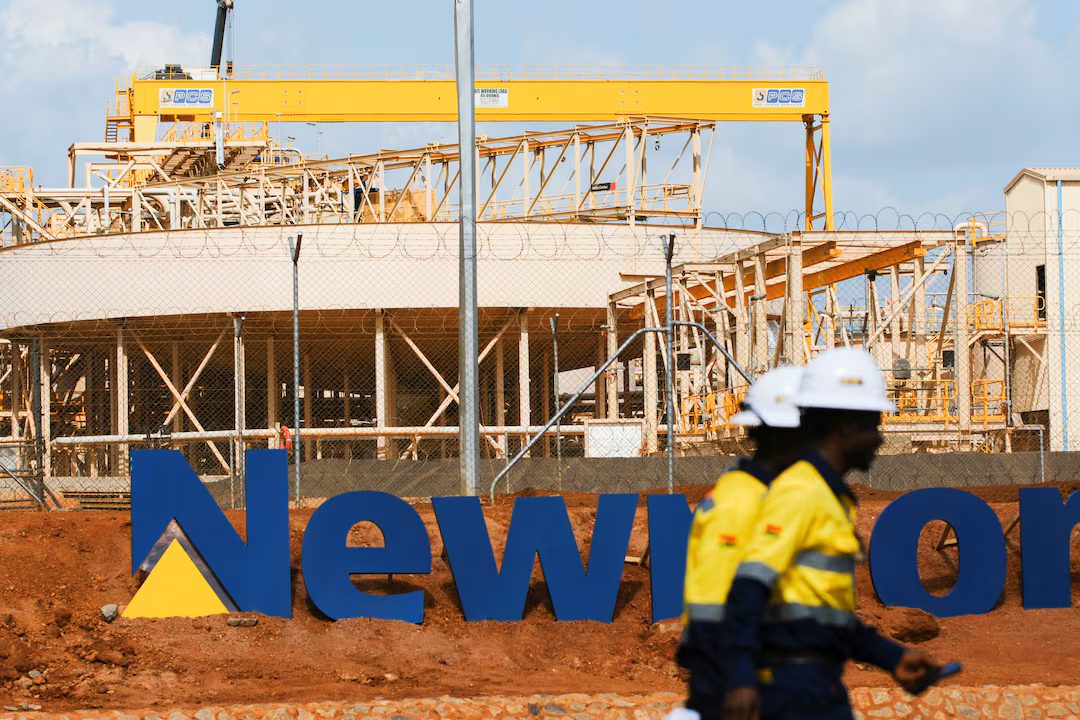
NEWMONT GHANA: THE ECONOMICS OF LASTING VALUE
Newmont in Ghana: Gold, Growth and the Challenge of Creating Lasting Value
Executive Summary
Newmont Corporation’s Ghana operations provide a useful case study in the opportunities and complexities of modern gold mining.
For decades, Newmont has been one of the most important participants in Ghana’s gold industry. Its Ahafo operation has become the company’s principal mining district in the country, combining open-pit and underground production with large-scale processing infrastructure, exploration activity and community-development programmes.
The company’s Ghana strategy entered a new phase in 2025. Newmont completed the divestment of its Akyem mine to Zijin Mining and achieved commercial production at Ahafo North. The new operation is expected to increase the combined Ahafo district’s production capacity to approximately 750,000 ounces of gold annually during its initial operating period.
However, the Newmont story is not simply about producing more gold. It is about whether a mining company can convert mineral resources into sustainable economic value while managing rising operating costs, regulatory expectations, environmental responsibilities, local-content requirements and the finite life of its assets.
The central question is therefore:
Can Newmont’s Ghana operations deliver lasting value for shareholders, employees, communities and the Ghanaian economy at the same time?
1. Company and Operations at a Glance
Newmont Corporation is one of the world’s leading gold producers, with operations and projects across several continents. Ghana remains a strategically important jurisdiction because of its established mining ecosystem, geological potential, skilled workforce and long history of gold production.
Newmont’s Ahafo South mine is located approximately 290 kilometres northwest of Accra in Ghana’s Ahafo Region. Commercial production began in 2006. The mine combines open-pit and underground operations and has produced more than 10 million ounces of gold to date.
Ahafo South includes:
- Open-pit mining operations
- Underground mining
- A large processing plant
- Crushing and grinding facilities
- Carbon-in-leach processing circuits
- Tailings and water-treatment infrastructure
- Exploration and mine-life extension activities
As of the end of 2025, Ahafo South reported approximately 4.1 million ounces of gold reserves and 7.4 million ounces of gold resources. The decline in reserves reflected depletion, while the increase in resources was supported by exploration activity.
These figures illustrate an important reality in mining: production reduces available reserves, so continuous exploration and development are essential to maintaining the long-term economic life of an operation.
2. Ahafo North: Newmont’s Major Growth Investment
The most significant recent development in Newmont’s Ghana portfolio is the commissioning of Ahafo North.
Newmont announced commercial production at Ahafo North in the fourth quarter of 2025. The project is located approximately 50 kilometres northeast of Ahafo South and represents a major expansion of the Ahafo mining district.
The company expects Ahafo North to:
- Produce approximately 50,000 ounces during its initial partial year of production
- Ramp up through 2026
- Produce between 275,000 and 325,000 ounces annually over its first five years
- Operate over an expected 13-year mine life
- Strengthen Ghana’s contribution to Newmont’s global production portfolio
The project also created significant economic activity during construction. Newmont reported that construction generated approximately 4,500 jobs, while ongoing operations are expected to support around 1,560 roles.
Why Ahafo North Matters
Ahafo North is important for three reasons.
First, it supports production growth.
As mature mining assets experience depletion, new projects are necessary to sustain output.
Second, it improves district-level efficiency.
Operating two nearby mines can create opportunities for shared infrastructure, technical expertise, procurement, logistics and processing resources.
Third, it demonstrates the importance of long-term capital investment.
Mining growth requires substantial upfront spending before revenue begins to flow. Ahafo North reflects Newmont’s willingness to invest in a major project despite construction, execution and commodity-price risks.
The project’s success will depend not only on reaching planned production levels, but also on controlling costs, maintaining operational reliability and extending the district’s productive life through exploration.
3. Newmont’s Ghana Portfolio Has Become More Focused
Newmont’s Ghana strategy has changed following the sale of Akyem to Zijin Mining in April 2025.
Before the divestment, Newmont operated two major mines in Ghana: Ahafo and Akyem. After the transaction, Ahafo became the company’s second operational site in Ghana and its primary national production platform.
This is a strategic portfolio decision rather than simply a change in asset ownership.
Newmont has been reshaping its global portfolio to focus on assets that can deliver stronger long-term value, competitive production costs and attractive returns. The divestment of Akyem allows the company to concentrate more resources and management attention on Ahafo, especially with Ahafo North entering production.
However, greater concentration also creates exposure. Ahafo now carries more importance within Newmont’s Ghana strategy, meaning operational disruptions, labour issues, power shortages, regulatory changes or community disputes could have a more pronounced effect on the company’s Ghana performance.
A focused portfolio can improve efficiency, but it also increases the importance of operational resilience.
4. The Economics of Gold Mining: High Prices Do Not Remove Operational Risks
Gold mining is often perceived as a straightforward business: extract gold, sell it at the prevailing market price and generate profit.
In reality, the economics are considerably more complex.
A gold producer must manage:
- Ore grades
- Recovery rates
- Mining volumes
- Energy costs
- Labour and contractor costs
- Equipment maintenance
- Processing capacity
- Fuel and logistics
- Royalties and taxes
- Environmental obligations
- Capital expenditure
- Mine closure and rehabilitation liabilities
Higher gold prices can improve revenue and margins, but they can also increase expectations from governments, communities, employees, suppliers and investors.
Newmont’s 2025 annual report highlights the sensitivity of its Ghana operations to government policy. Ghana announced plans to amend its mineral royalty regime from a flat 5% rate to a sliding scale of between 5% and 12%, linked to gold prices. The final structure and implementation remain subject to legislative processes, but such a change could increase operating costs during periods of high gold prices.
This creates a strategic balancing act.
The government wants a greater share of national mineral wealth. Mining companies need sufficient returns to justify exploration, development, maintenance and future investment. Communities expect jobs, infrastructure and economic opportunities. Investors expect disciplined capital allocation.
The long-term sustainability of the sector depends on finding a workable balance among these interests.
5. Local Content: Moving Beyond Extraction
One of the most important developments in Ghana’s mining sector is the increasing emphasis on local participation.
In 2025, Ghana introduced requirements designed to increase Ghanaian ownership and participation in mining contracting. Surface mining operations are expected to shift toward Ghanaian-owned contractors, while underground operations are expected to involve joint ventures with significant Ghanaian ownership by the end of 2026.
The policy reflects a broader concern across resource-rich countries: mineral production may generate significant export revenue without creating enough domestic industrial capacity.
For Newmont, local content is therefore more than a compliance issue. It is a strategic operating consideration involving:
- Contractor selection
- Procurement
- Workforce development
- Technical training
- Supplier financing
- Safety standards
- Cost management
- Community relationships
- Domestic enterprise development
The opportunity is substantial. Local contractors and suppliers can retain more value within Ghana, create additional jobs and support the development of technical capabilities.
However, local participation must be implemented carefully. If contractors are selected mainly on the basis of low prices, there may be risks to worker welfare, training, equipment quality and safety. Ghanaian officials and industry representatives have already raised concerns about aggressive underbidding and the potential effect on working conditions.
The most effective approach is not simply to increase local ownership on paper. It is to build competitive Ghanaian businesses that can meet international standards for safety, reliability, productivity and environmental performance.
6. Sustainability and the Social Licence to Operate
Mining companies do not operate in isolation. Their long-term success depends on maintaining a social licence to operate—the continuing acceptance and trust of host communities, regulators, employees and other stakeholders.
Newmont’s sustainability reporting places emphasis on:
- Health and safety
- Human rights
- Community engagement
- Local economic development
- Environmental management
- Water stewardship
- Tailings management
- Responsible supply chains
- Workforce inclusion
- Mine closure planning
Newmont reported that it launched its “Always Safe” approach in 2025 to standardise safety practices, strengthen risk management and reinforce leadership accountability. The company also reported zero fatalities in 2025, although it acknowledged the continuing need for vigilance following a fatality at another operation in early 2026.
At Ahafo, sustainability must be understood in practical terms. It includes the quality of employment, the reliability of community commitments, land access, resettlement, water protection, local procurement and the management of environmental impacts.
The company’s published human-rights information also includes a standalone assessment of Ahafo North. This is significant because new mining developments can create both economic opportunities and social pressures, particularly around land, livelihoods, expectations and community access to benefits.
A strong sustainability strategy should therefore answer three questions:
- Are environmental and social risks being identified early?
- Are affected communities participating meaningfully in decisions?
- Are the economic benefits durable beyond the life of the mine?
7. Electricity and Infrastructure as Competitive Factors
Large-scale mining is heavily dependent on reliable infrastructure.
Ahafo South sources its electricity from Ghana’s national electricity market under a long-term power arrangement with the Volta River Authority. The existing power supply contract is scheduled to expire in 2028 and includes an extension option.
This makes energy security an important strategic issue.
Mining operations require continuous power for:
- Crushing
- Grinding
- Processing
- Water treatment
- Ventilation
- Underground operations
- Maintenance systems
- Digital monitoring
- Safety infrastructure
Power interruptions can reduce production, damage equipment, increase costs and disrupt delivery schedules.
For Ghana, this creates a wider policy lesson: the competitiveness of the mining sector depends not only on geology and investment incentives, but also on reliable electricity, roads, ports, telecommunications and industrial services.
For Newmont, securing dependable power and managing energy costs will remain central to operational performance.
8. The Role of Exploration and Mine-Life Extension
A mine is a wasting asset. Every ounce produced reduces the remaining reserve base unless new reserves are discovered or existing resources are converted into economically mineable reserves.
Newmont’s Ahafo strategy therefore includes ongoing exploration and development work. At Ahafo South, the company is exploring opportunities for underground growth beneath Subika and Apensu, while also advancing other brownfield exploration activities.
This is strategically important because exploration can:
- Extend mine life
- Improve asset utilisation
- Preserve employment
- Support infrastructure efficiency
- Reduce the need for entirely new projects
- Strengthen regional economic continuity
The challenge is that exploration expenditure does not guarantee commercial discovery. Companies must decide how much capital to allocate to exploration while also funding production, maintenance, environmental obligations and shareholder returns.
The strongest mining companies treat exploration not as an optional expense, but as part of the core business model.
9. Key Risks Facing Newmont’s Ghana Operations
Despite the positive outlook associated with Ahafo North, several risks remain.
Regulatory and Fiscal Risk
Changes to royalties, taxes, local-content rules and permitting requirements can materially affect operating costs and investment returns.
Operational Risk
Mining depends on equipment availability, ore quality, processing performance, energy supply and workforce capability. Disruptions can quickly affect production and cash flow.
Community and Social Risk
Land access, resettlement, employment expectations and local development commitments can become sources of conflict if not managed transparently.
Environmental Risk
Water management, tailings storage, land disturbance, biodiversity and rehabilitation remain major responsibilities throughout the mine life and after closure.
Commodity-Price Risk
Gold prices can support strong financial performance, but prices remain influenced by interest rates, currency movements, geopolitical tensions, central-bank demand and investor sentiment.
Contractor and Local-Content Risk
The transition toward greater Ghanaian participation may create opportunities, but it may also introduce execution, cost and capability challenges if contractors are not adequately prepared.
Concentration Risk
With Ahafo now representing Newmont’s principal Ghana platform, operational or regulatory problems at the complex could have greater national significance for the company.
10. Strategic Lessons for Business Leaders
Newmont’s Ghana experience offers several lessons that extend beyond mining.
1. Growth Must Be Supported by Capability
A new project creates value only when the organisation has the people, systems, infrastructure and management discipline to operate it effectively.
2. Capital Investment Requires Long-Term Thinking
Ahafo North demonstrates that major investments may take years to develop but can support production and economic value for more than a decade.
3. Stakeholder Value Is Part of Business Strategy
Government, communities, employees, suppliers and investors are not peripheral to the business. Their expectations can directly affect operating continuity.
4. Local Participation Should Build Competitiveness
Local-content policies are most effective when they develop capable domestic enterprises rather than simply redistribute contracts.
5. Sustainability Must Be Operational
Sustainability is not only about reports and targets. It must influence procurement, engineering, safety, land management, water use, workforce decisions and capital allocation.
6. Portfolio Focus Can Improve Performance
Divesting non-core assets can allow a company to concentrate resources on stronger opportunities. However, concentration also increases the importance of resilience within the remaining portfolio.
7. Resource Wealth Requires Institutional Discipline
High commodity prices create opportunities, but durable value depends on prudent investment, transparent governance, sound regulation and responsible resource management.
Conclusion
Newmont’s Ghana operations represent one of the most important examples of large-scale gold mining in West Africa.
The Ahafo complex has already established itself as a major gold-producing district, and Ahafo North creates a new platform for growth. Yet the company’s future success will not be determined by production volume alone.
Newmont must continue to manage the economics of depletion, rising expectations around local participation, environmental and social responsibilities, energy reliability, regulatory change and long-term capital investment.
For Ghana, the larger question is how to ensure that gold mining creates value beyond the export of bullion. That means stronger local suppliers, better technical skills, reliable infrastructure, transparent revenue management, environmental protection and economic opportunities that survive beyond the mine’s operating life.
The real measure of a successful mining company is not simply how much gold it extracts, but how much lasting value it creates while doing so.
This report is a business research review and does not constitute investment advice.






Leave a Reply